
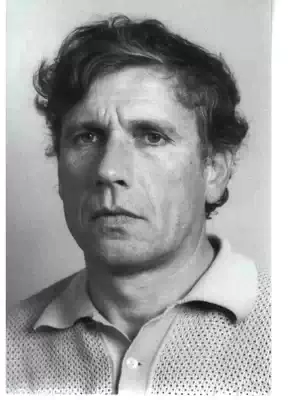
Gerard Reve
1923–2006
· lived 82 years
 NL
NL
NL
Gerard Reve was a prominent Dutch writer, known for his innovative and often controversial literary work. His writing is marked by a unique style, combining the everyday with the spiritual and the grotesque, exploring themes such as loneliness, love, death, and the search for meaning in a changing society. Reve is considered a central figure in post-war Dutch literature, whose work continues to provoke and inspire readers.
n. 1923-12-14, Amesterdão · m. 2006-04-08, Zulte
35
Views
Bio
Identification and Basic Context
Gerard Reve, whose birth name was Gerard Cornelis van het Reve Jr., was one of the most important Dutch writers of the 20th century. He often used the pseudonym "Simon van het Oosten." Born in Amsterdam, he lived most of his life in the Netherlands, although he spent significant periods abroad. His work reflects Dutch and European society in the post-war period, marked by profound social and cultural changes.Childhood and Education
Gerard Reve was born into a family of intellectuals with strong communist convictions. His father was a writer and his mother a journalist. This background provided him with a culturally rich environment, but also one marked by ideological tensions. Reve attended high school and showed an early inclination for writing, although his formal education was interrupted by health and vocational problems. He was strongly influenced by English and American literature, as well as by philosophical and religious currents that explored mysticism and the nature of existence.Literary Career
Reve's literary career began to take shape in the 1950s with the publication of his first short stories and novels. His novel "De avonden" (The Evenings) from 1947, published in 1957, was a landmark and launched him to fame. Throughout his career, Reve explored various genres, including fiction, poetry, and essays. His work evolved from a more realistic and introspective observation to a deeper exploration of spiritual and existential themes, often shrouded in irony and dark humor. He collaborated in various literary publications and magazines, consolidating his position as a key author.Work, Style, and Literary Characteristics
Gerard Reve's works address themes such as loneliness, homosexuality, religion (with a very personal and mystical view), death, the nature of evil, and the search for paradise or redemption. His style is characterized by clear and precise prose, sometimes laconic, which contrasts with the depth and complexity of the themes addressed. He frequently uses dark humor, irony, and absurdity to confront the reader with their own fragilities and existential anxieties. His poetic voice is simultaneously confessional and universal, exploring the human condition with brutal honesty and unusual sensitivity. Reve is associated with the literary movement "Vijftigers" (The Fiftiers), which sought to renew Dutch literature after World War II, although his style is quite unique.Cultural and Historical Context
Gerard Reve lived in a period of great transformations in Dutch and European society, including post-war reconstruction, the emergence of new ideologies, the liberalization of customs, and the questioning of traditional institutions. His work reflects these changes, addressing themes considered taboo at the time, such as homosexuality and criticism of official religion. He was an author who provoked intense debates and, at times, controversies, but who also earned a prominent place in the Dutch literary landscape, engaging with tradition but also marking a break from it.Personal Life
Gerard Reve's personal life was marked by complex emotional relationships, existential crises, and a deep spiritual search. His homosexuality, lived openly at a time when it was still viewed with reservation, was a recurring theme in his work and life. He maintained significant relationships with other writers and artists, and his personal experiences, including moments of suffering and doubt, were an inexhaustible source of inspiration for his writing. He lived a life dedicated to art, although at times marked by financial difficulties and health problems.Recognition and Reception
Gerard Reve is widely recognized as one of the greatest Dutch writers of the 20th century. He received several literary awards throughout his career, including the prestigious Constantijn Huygens Prize. His work has been the subject of academic study, and his influence extends to several generations of writers. Although he faced criticism and controversies, his popularity with the public remained high, and his work continues to be read and discussed.Influences and Legacy
Reve was influenced by authors such as Edgar Allan Poe, T.S. Eliot, and William Blake. His legacy in Dutch literature is immense, having opened new paths for the exploration of subjectivity, spirituality, and language. He influenced numerous contemporary and later writers, and his work continues to be translated and appreciated internationally. He is considered a master of prose and an explorer of the depths of the human soul.Interpretation and Critical Analysis
Gerard Reve's work has been the subject of numerous critical interpretations. Some analysts highlight its spiritual and mystical dimension, seeing in his writing a relentless search for the sacred and for redemption. Others focus on his social critique and his exploration of the human condition, marked by loneliness and the search for meaning. Debates surrounding his work often revolve around the relationship between the author's personal life and his literary production, as well as his transgressive approach to religious and sexual themes.Curiosities and Lesser-Known Aspects
Gerard Reve was known for his eccentric personality and provocative statements. He had a pet cat named "Hotsjietoo," who frequently appeared in his photographs and writings, symbolizing companionship and refuge. Reve believed in the existence of spiritual entities and maintained a very personal relationship with God, often expressed through prayers and visions. His house in Greontersweg became a pilgrimage site for admirers and scholars of his work.Death and Memory
Gerard Reve passed away in 2006, at the age of 76, at his residence in Greontersweg. His death marked the end of an era in Dutch literature. After his death, interest in his work continued, with posthumous publications and in-depth studies of his life and writing. Reve's memory is kept alive through the reading and analysis of his work, which remains a powerful testament to the complexity of the human experience.Poems
0No poems found
Videos
50
Comments (0)
Log in
to post a comment.
No comments yet. Be the first to comment.