
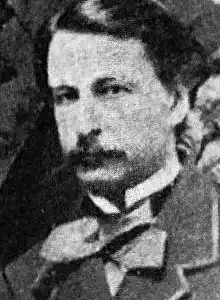
Gonçalves de Magalhães
1811–1882
· lived 70 years
 BR
BR
BR
Gonçalves de Magalhães was a Brazilian poet, writer, and politician, a central figure of Romanticism in Brazil. Recognized as the introducer of the movement in Brazil, his work stood out for its exaltation of nature, the indigenous people, and national sentiment, in addition to themes such as love and religiosity. His lyrical poetry and his role in the founding of the Brazilian Academy of Letters profoundly marked the literary and cultural history of the country.
n. 1811-08-13, Rio de Janeiro · m. 1882-07-10, Roma
44
Views
Bio
Identification and Basic Context
Full name: Antônio Gonçalves de Magalhães Date and place of birth: August 4, 1810, Rio de Janeiro Date and place of death: July 10, 1882, Rio de Janeiro Family origin, social class, and cultural context of origin: Born into a wealthy family in Rio de Janeiro, with a military and political tradition. His father, João Gonçalves de Magalhães, was a military man and politician. This provided him with access to quality education and influential social circles. Nationality and language of writing: Brazilian, wrote in Portuguese. Historical context in which he lived: Lived during the Brazilian Empire period, from the final years of the Regency to the end of the Second Reign. He witnessed Brazil's Independence, the struggles for the consolidation of the national state, the development of the abolitionist movement, and the social and political transformations of the time. His period of greatest literary activity coincides with the consolidation of Romanticism in Brazil.Childhood and Education
Family origin and social environment: Coming from a family of social and economic prominence, he had access to a privileged education and an intellectually stimulating environment. Formal education and self-teaching: Studied Law at the Faculty of Olinda (Pernambuco), graduating in 1830. He was a student of Manuel de Jesus Valdetaro, who introduced him to classical and modern literature. Early influences: He was strongly influenced by European Romantic literature, especially French and Portuguese. Authors such as Victor Hugo, Lamartine, Goethe, and Almeida Garrett were important references. The growing nationalism in Brazil also shaped his work. Literary, philosophical, or artistic movements he absorbed: He absorbed the spirit of European Romanticism, adapting it to the Brazilian reality. Romantic idealism, the exaltation of feelings, the appreciation of nature and historical past (especially the colonial period and the figure of the indigenous people) are striking characteristics. Defining events in his youth: His trip to Europe, especially Paris, where he came into direct contact with the Romantic cultural ferment, was a landmark in his formation and literary perception.Literary Career
Beginning of writing: He began writing poetry during his formative years in Olinda, influenced by the authors he read and the cultural environment of the time. Evolution over time: His work evolved from poetry of classical inspiration to more sentimental and nationalist poetry. His most mature phase, after his trip to Europe, established him as the main exponent of Brazilian Romanticism. Chronological evolution of his work: Published "Primeiros Cantos" (1830), considered the initial mark of Romanticism in Brazil. It was followed by "Suspiros Poéticos e Saudades" (1836) and "Oração aos Brasileiros" (1838). Later, he wrote "O Brasil" (epic poem, 1857) and "Obras Poéticas" (1879). Collaborations in magazines, newspapers, and anthologies: Collaborated with various literary publications of the time, such as *Revista Brasileira* and *Jornal do Comércio*. Activity as a critic, translator, or editor: Besides being a poet, he was an important literary and political critic, defending Romantic ideas and nationalism. He also worked as a translator and diplomat.Work, Style, and Literary Characteristics
Main works: "Primeiros Cantos" (1830), "Suspiros Poéticos e Saudades" (1836), "O Brasil" (1857). Dominant themes: Exaltation of Brazilian nature, idealization of the indigenous people as national heroes, platonic and sentimental love, saudade (longing), religiosity (with a strong Catholic component), patriotism, and social criticism. Form and structure: He used various poetic forms, including the sonnet, but also free verse in his longer, narrative poems. His meter is generally regular and musical. Poetic devices: Use of elevated language, bucolic and sentimental imagery, metaphors, and comparisons that evoke Brazil's lush nature and the deep feelings of the soul. Poetic voice: The poetic voice is generally lyrical, sentimental, and confessional, expressing the anxieties and desires of the lyrical self. In his civic and historical poems, he adopts a more epic and patriotic tone. Language and style: Cultured but accessible language, with a rich and expressive vocabulary. His style is marked by musicality, clarity, and emotionality. Formal or thematic innovations introduced in literature: He is considered the introducer of Romanticism in Brazil, bringing the themes and sensibilities of the European movement to Brazilian literature, adapting them to the national reality and establishing the foundations for Brazilian Romantic poetry. Relationship with tradition and modernity: He sought to break with academicism and Arcadianism, embracing the new Romantic currents, but maintained a dialogue with classical tradition in terms of form and meter. Associated literary movements: Brazilian Romanticism (first generation, known as Indianist/nationalist). Lesser-known or unpublished works: Although his main poetic works are known, his vast prose production, including political and literary essays, and his diplomatic career also deserve attention.Work, Style, and Literary Characteristics
Cultural and historical context Relationship with historical events: Brazil's Independence and the need to build a national identity were crucial to his work. His poem "O Brasil" is an example of literary nationalism. Relationship with other writers or literary circles: He was a contemporary of other important Romantic writers, such as Álvares de Azevedo and Casimiro de Abreu, although his style is more conservative and nationalist. He was one of the founders of the Brazilian Academy of Letters. Generation or movement to which he belongs: First generation of Brazilian Romanticism. Political or philosophical position: A defender of the Empire and nationalism, his political positions were conservative. He believed in the importance of literature for the formation of national identity. Influence of society and culture on his work: Imperial Brazilian society, with its literate elite, its social contradictions, and the search for its own identity, is the backdrop of his work. Dialogues and tensions with contemporaries: Although part of the Romantic movement, his more explicit nationalism and less inclination towards High Romanticism distinguished him from some contemporaries. Critical reception during his lifetime vs. posthumous recognition: He was widely recognized during his lifetime as Brazil's great Romantic poet. His legacy as the founder of Brazilian Romanticism and as one of the first academicians is unquestionable.Work, Style, and Literary Characteristics
Personal life Significant affective and family relationships and how they shaped his work: Details of his personal life are less explored in literary historiography, but his connection to Rio de Janeiro and his upbringing in a prominent family certainly influenced his worldview and work. Friendships and literary rivalries: He maintained contact with other intellectuals and writers of his time, participating in the literary circles of Rio de Janeiro. Personal experiences, crises, illnesses, or conflicts: Little is known about specific personal crises. His diplomatic career led him to reside in London for several years. Parallel professions: He was a career diplomat, serving the Brazilian Empire on various missions abroad, especially in London. He also held political office and was a professor. Religious, spiritual, or philosophical beliefs: His work demonstrates a strong religiosity, influenced by Catholicism, and a firm faith in Brazil's identity and destiny. Political positions and civic involvement: He was a staunch monarchist and a fervent nationalist. He believed in the role of literature in nation-building.Work, Style, and Literary Characteristics
Recognition and reception Place in national and international literature: He is a fundamental figure in the history of Brazilian literature, considered the father of Romanticism in Brazil. His work is studied as an inaugural landmark. Awards, distinctions, and institutional recognition: As a man of letters and a diplomat, he received various honors. He was one of the founders and the first president of the Brazilian Academy of Letters. Critical reception during his lifetime and over time: During his lifetime, he was hailed as the greatest Brazilian poet. Over time, his work has been critically analyzed, recognizing its historical importance and the quality of his poetry, albeit with reservations about a certain conservatism compared to later phases of Romanticism. Popularity vs. academic recognition: His recognition is strongest in the academic and historical spheres due to his importance as the introducer of the movement. Direct popularity among modern readers is less compared to other Romantic poets.Work, Style, and Literary Characteristics
Influences and legacy Authors who influenced him: Almeida Garrett, Victor Hugo, Lamartine, Goethe. Poets and movements he influenced: He paved the way for all Brazilian Romantic poetry, especially the first generation (Indianist/nationalist). His exaltation of the homeland and nature served as a model. Impact on national and world literature and later generations of poets: His main impact was on Brazilian literature, establishing the foundations for Romanticism and the construction of a national literary identity. His work is a testament to the search for this identity. Entry into the literary canon: An unavoidable figure in the canon of Brazilian literature. Translations and international dissemination: His work, especially his poetry, had little international dissemination outside the Portuguese-speaking sphere. Adaptations: There are no significant records of adaptations of his work for other media. Academic studies dedicated to his work: His work is the subject of studies in Brazilian literature courses, analyzing his founding role in Romanticism and his stylistic characteristics.Work, Style, and Literary Characteristics
Interpretation and critical analysis Possible interpretations of his work: He can be read as a precursor to Brazilian literary nationalism, a defender of the Empire's values, and a poet who sought to express the soul and landscape of Brazil. Philosophical and existential themes: His work addresses the idealization of nature and the past, saudade, faith, and the search for meaning in individual and collective existence, within a defined moral and religious framework. Controversies or critical debates: There have been debates about how original his contribution was, with some critics pointing to a strong dependence on European models. His formal rigidity and exaggerated nationalism were also points of discussion.Work, Style, and Literary Characteristics
Curiosities and lesser-known aspects Lesser-known aspects of his personality: He was described as a man of great culture, elegance, and dedication to diplomacy and literature. Contradictions between life and work: There are no notable contradictions; his life as a diplomat and politician aligned with his nationalism and conservative values. Defining or anecdotal episodes that illuminate the author's profile: His appointment as the first president of the Brazilian Academy of Letters, in 1897, was a recognition of his importance in the Brazilian intellectual scene. Objects, places, or rituals associated with poetic creation: The Rio de Janeiro of his time, the idealized Brazilian landscape, and literary salons were important settings. His European experience also influenced his vision. Writing habits: He wrote in a period when poetry was valued as the highest expression of national culture and identity. Curious episodes: His diplomatic career brought him into contact with European courts, where he represented the Brazilian Empire. Manuscripts, diaries, or correspondence: His correspondence and documents related to his diplomatic and academic career are important sources for the study of his life and work.Work, Style, and Literary Characteristics
Death and memory Circumstances of death: Died in Rio de Janeiro, due to an illness. Posthumous publications: His main poetic work had already been compiled during his lifetime. The memory of Gonçalves de Magalhães is primarily maintained through his founding role in Brazilian Romanticism and the Brazilian Academy of Letters.Poems
0No poems found
Comments (0)
Log in
to post a comment.
No comments yet. Be the first to comment.