
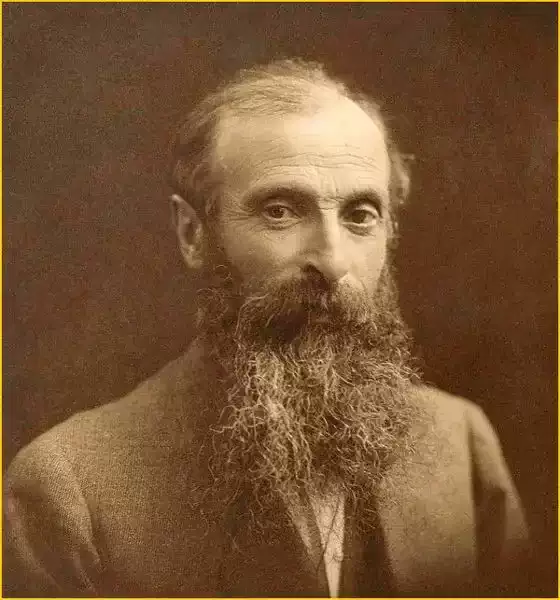
Guerra Junqueiro
1850–1923
· lived 72 years
 PT
PT
PT
Abílio Manuel Guerra Junqueiro was a Portuguese poet, a prominent figure of the Parnassian and Symbolist movements. Known for his satirical vein and social criticism, his work addresses themes such as religion, politics, and the customs of the time, often with an ironic and biting tone. Despite his critical bent, he also explored amorous lyricism and religiosity with sensitivity.
n. 1850-09-17, Freixo de Espada à Cinta · m. 1923-07-07, Lisboa
33
Views
Bio
Identification and Basic Context
Abílio Manuel Guerra Junqueiro, better known as Guerra Junqueiro, was one of the most important Portuguese poets. He was born on September 24, 1850, in Trás-os-Montes and died on February 18, 1923, in Lisbon. He was the son of a wealthy family of the rural minor nobility. He was a fervent defender of the monarchy and a fierce critic of the Republic.Childhood and Education
He spent his childhood and adolescence in his hometown, where he received an excellent education. He attended the Seminary of Viseu and, later, studied Law at the University of Coimbra. In Coimbra, he became involved in academic and literary activities, being one of the founders of the "Academia dos Efémeros".Literary Career
His literary career began in the academic environment of Coimbra, where he published his first poems. His work evolved from Parnassianism to Symbolism, although he always maintained a strong personal mark and a critical tone. His poetry is marked by a chronological evolution that goes from initial lyricism to biting social criticism and religious reflection.Work, Style, and Literary Characteristics
His main works include "A Velhice do Padre Amaro" (1885), "O Fim do Século" (1890), and, especially, "A Morte de D. João" (1874) and "Pátria" (1896). The dominant themes are criticism of religious and social hypocrisy, love, death, religiosity, and patriotism. His style is characterized by formal mastery, with frequent use of sonnets and traditional metrics, but also by innovation in the treatment of themes. His language is rich, expressive, and the tone oscillates between the lyrical, the satirical, the elegiac, and the epic. He is recognized for his powerful metaphors and striking rhythm. He is associated with Parnassianism and Symbolism.Work, Style, and Literary Characteristics
Cultural and Historical Context Guerra Junqueiro lived in a period of great cultural and political effervescence in Portugal, marked by the fall of the Monarchy and the establishment of the Republic. He was a chronicler of his time, frequently intervening in public life through his writing. He maintained relationships with other great names in Portuguese literature, such as Eça de Queirós and Antero de Quental.Work, Style, and Literary Characteristics
Personal Life In his personal life, Junqueiro was a passionate and interventionist man. He had significant romantic relationships and maintained deep friendships, but also literary and political enmities. His religiosity was complex, oscillating between faith and doubt, which is reflected in his work.Work, Style, and Literary Characteristics
Recognition and Reception During his lifetime, Guerra Junqueiro enjoyed great recognition. He was considered one of the greatest Portuguese poets of his time. His works were widely read and discussed, and his name features in the pantheon of national literature.Work, Style, and Literary Characteristics
Influences and Legacy Influenced by poets like Victor Hugo, Junqueiro, in turn, influenced generations of Portuguese poets, especially those dedicated to social intervention and critical poetry. His legacy is his ability to combine formal excellence with thematic depth, being one of the pillars of modern Portuguese poetry.Work, Style, and Literary Characteristics
Interpretation and Critical Analysis Junqueiro's work is often analyzed for its fierce critique of the Church and Portuguese society of his time, but also for its lyrical and religious sensitivity. The duality between the sacred and the profane, love and death, is a central theme in critical analyses.Work, Style, and Literary Characteristics
Curiosities and Lesser-Known Aspects A curiosity is his intense activity as a translator, being responsible for the translation of important works. His figure is marked by a strong personality and a combative spirit.Work, Style, and Literary Characteristics
Death and Memory Guerra Junqueiro died in Lisbon in 1923, leaving an unavoidable poetic legacy. His work continues to be studied and valued, ensuring his memory as one of the great figures of Portuguese literature.Poems
0No poems found
Comments (0)
Log in
to post a comment.
No comments yet. Be the first to comment.