
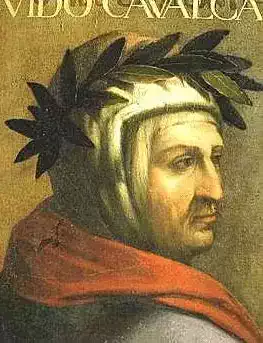
Guido Cavalcanti
1255–1300
· lived 45 years
 IT
IT
IT
Guido Cavalcanti was an Italian poet and philosopher, a prominent figure of the Dolce Stil Novo movement. His poetry is marked by the intensity of love, the psychological analysis of its effects, and the exploration of philosophical and spiritual themes. With an erudite language and an innovative style, Cavalcanti profoundly influenced Italian poetry, including the work of Dante Alighieri, and left a body of writings that continue to be studied for their complexity and depth.
n. 1255, Florença · m. 1300-08-29, Florença
26
Views
Bio
Identification and Basic Context
Guido Cavalcanti was an Italian poet of the Dolce Stil Novo, born in Florence around 1255 and died in 1300. He was the son of Cavalcante de' Cavalcanti, an Averroist philosopher. Cavalcanti was known not only for his poetry but also for his philosophical convictions and his involvement in the turbulent political life of Florence.Childhood and Education
Coming from a noble and cultured family, Guido Cavalcanti received a meticulous education. His training included the study of philosophy, especially the works of Aristotle and Averroes, and literature. It is likely that he had contact with the intellectual currents of the time and with Provençal and Sicilian poetry.Literary Career
Cavalcanti is considered one of the greatest exponents of the Dolce Stil Novo, a poetic movement that flourished in Italy in the late 13th century. His work, characterized by psychological depth and analysis of love, significantly influenced other poets, notably Dante Alighieri. His poetic output is relatively scarce, but of great quality and impact.Work, Style, and Literary Characteristics
Guido Cavalcanti's poetry is dominated by the theme of love, understood as an overwhelming and often destructive force. He describes love as a passion that consumes the poet, generating suffering and inner torment. His style is marked by erudite language, conceptual density, and metaphorical complexity. His poem "Donna me prega, perch'eo voglio dire" is famous, in which he expounds his philosophical theory of love. **Main Work:** * "Rime" (collection of his poems, compiled posthumously). **Themes:** Love as an intense and disturbing passion, the analysis of the soul and mind, the philosophy of love, the pursuit of ideal beauty. **Style:** Sophisticated language, use of complex metaphors, intellectual rigor, sometimes somber and introspective tone.Work, Style, and Literary Characteristics
Cultural and Historical Context Cavalcanti lived in a time of intense political struggles in Florence, between White and Black Guelphs. He belonged to the White Guelph faction, and his political involvement led to his temporary exile. The intellectual environment of the time was marked by philosophical debate, especially around the works of Aristotle and Averroes, which influenced his thought.Work, Style, and Literary Characteristics
Personal Life He was a man of strong and proud character, known for his erudition and his active participation in the political life of his city. He had significant relationships with other intellectuals and poets of the time, his friendship with Dante Alighieri being particularly notable.Work, Style, and Literary Characteristics
Recognition and Reception During his lifetime, Guido Cavalcanti enjoyed great prestige as a poet and thinker. His work was admired and commented on by his contemporaries, including Dante, who portrays him in the "Divine Comedy." His recognition endures as one of the great names in Italian lyric poetry.Work, Style, and Literary Characteristics
Influences and Legacy Cavalcanti was a fundamental influence on the Dolce Stil Novo and on subsequent Italian poetry. His psychological analysis of love and his innovative language opened new paths for poetic expression. His legacy lies in his ability to give literary form to the complexities of amorous feeling and philosophical thought.Work, Style, and Literary Characteristics
Interpretation and Critical Analysis Cavalcanti's work is subject to critical analysis due to its philosophical complexity and its sometimes pessimistic view of love. His theories on love have been discussed and reinterpreted over the centuries, consolidating his place as a poet of deep reflection.Work, Style, and Literary Characteristics
Curiosities and Lesser-Known Aspects Cavalcanti was known for being a man of difficult temperament and for having a notable interest in natural philosophy and astrology.Work, Style, and Literary Characteristics
Death and Memory Guido Cavalcanti died in 1300, after a period of exile in Sarzana, where he was sent due to political conflicts. His death was lamented by his friends and admirers, and his work continued to be celebrated and studied, perpetuating his memory as one of the pioneers of Italian poetry.Poems
0No poems found
Comments (0)
Log in
to post a comment.
No comments yet. Be the first to comment.