
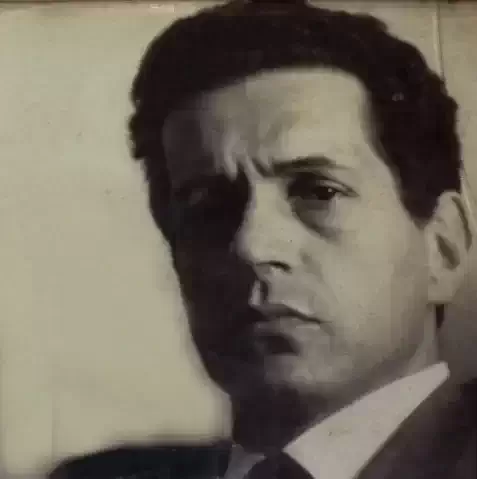
Hélio Pellegrino
1924–1988
· lived 64 years
 BR
BR
BR
Hélio Pellegrino was a Brazilian physician, psychoanalyst, writer, and activist, known for his multifaceted work that spans poetry, fiction, and essays on social and psychoanalytic themes. His writing, often marked by deep sensitivity and a critical eye on the human condition and Brazilian society, explored the complexities of the psyche, love, death, and the search for meaning. Pellegrino left a significant legacy as an engaged intellectual and sensitive artist.
n. 1924-01-05, Belo Horizonte · m. 1988-03-23, Rio de Janeiro
56
Views
Bio
Identification and Basic Context
Hélio Pellegrino was born in Rio de Janeiro in 1924. Although known by his registered name, his public identity was intrinsically linked to his various professional and artistic activities. He was Brazilian and wrote in Portuguese. He lived most of his life in Brazil, a country in constant social and political transformation throughout the 20th century, a period that strongly influenced his worldview and his work.Childhood and Education
Few details are widely publicized about his childhood, but his academic and professional training was solid. Hélio Pellegrino graduated in Medicine, specializing in Psychiatry and Psychoanalysis. This training had a determining influence on his perspective on human beings, the mind, and social relationships, elements that are evident in his literary and essayistic work.Literary Career
Hélio Pellegrino's literary career developed parallel to his medical and psychoanalytic practice. He began publishing in the 1960s and 1970s, distinguishing himself in both poetry and prose. His literary work was not limited to a single genre, encompassing poems, short stories, and novels, demonstrating a versatility that allowed him to explore different facets of the human experience. He actively participated in the intellectual and cultural debates of his time.Work, Style, and Literary Characteristics
Hélio Pellegrino's work is characterized by psychological depth and the exploration of themes such as love, loneliness, death, sexuality, and existential anguish. In poetry, his style is lyrical and introspective, with an often melancholic and reflective rhythm. In prose, his short stories and novels delve into the complexities of human relationships and social criticism. The language is refined, sometimes erudite, but always accessible, with a strong emotional charge. His works reflect a deep understanding of the human psyche, influenced by psychoanalysis, and a critical view of society.Cultural and Historical Context
Hélio Pellegrino lived and produced work during a period marked by great transformations in Brazil, including the military dictatorship, which undoubtedly influenced his critical vision and social engagement. He was part of an intellectual circle that intensely debated the country's social, political, and cultural issues. His psychoanalytic training also connected him to discussions about the mind and human behavior in a social context.Personal Life
As a physician and psychoanalyst, Hélio Pellegrino's personal life was naturally linked to his reflections on the human condition. His interpersonal relationships and his keen observation of society shaped his work. Although intimate details of his personal life are not widely known publicly, his work demonstrates great empathy and deep concern for human suffering.Recognition and Reception
Although perhaps not achieving the fame of other internationally renowned Brazilian authors, Hélio Pellegrino is respected in the Brazilian literary and intellectual circles. His work is appreciated for its literary quality and the depth of its reflections. He is an author valued by those who seek literature that combines artistic sensitivity and analytical insight.Influences and Legacy
His psychoanalytic training certainly influenced him, as did Brazilian and universal literature that explored the depths of the human soul. Hélio Pellegrino's legacy lies in his ability to build bridges between medicine, psychoanalysis, and art, offering a unique perspective on the complexity of life and society. He influenced readers and writers who value a more introspective and analytical approach to literature.Interpretation and Critical Analysis
Pellegrino's work allows for multiple readings, focusing on both the psychological and existential aspects as well as implicit social critiques. His psychoanalytic approach to analyzing characters and situations is a point of critical interest, as is the way he translates complex concepts into accessible and moving literary language.Curiosities and Lesser-Known Aspects
The duality between his clinical practice and his literary creation is a fascinating aspect. Hélio Pellegrino demonstrated that medicine and art can engage in deep dialogue, enriching the understanding of both fields. The way he used his understanding of the human mind to create complex characters and narratives is a testament to his genius.Death and Memory
Hélio Pellegrino passed away in 1987. His memory is preserved through his work, which continues to be read and appreciated, especially by those interested in the intersection of psychology, philosophy, and literature.Poems
0No poems found
Comments (0)
Log in
to post a comment.
No comments yet. Be the first to comment.