
Poems List

Time and space are fragments of the infinite for the use of finite creatures.
8
Analysis kills spontaneity. The grain once ground into flour springs and germinates no more.
4
A thousand things advance; nine hundred and ninety-nine retreat: that is progress.
3
Man never knows what he wants; he aspires to penetrate mysteries and as soon as he has, wants to re-establish them. Ignorance irritates him and knowledge cloys.
4
Man becomes man only by the intelligence, but he is man only by the heart.
4
Let us be true: this is the highest maxim of art and of life, the secret of eloquence and of virtue, and of all moral authority.
3
We are always making God our accomplice, that so we may legalize our own iniquities. Every successful massacre is consecrated by a Te Deum, and the clergy have never been wanting in benedictions for any victorious enormity.
5
To learn new habits is everything, for it is to reach the substance of life. Life is but a tissue of habits.
2
He who is too much afraid of being duped has lost the power of being magnanimous.
2
How True it is that our destinies are decided by nothings and that a small imprudence helped by some insignificant accident, as an acorn is fertilized by a drop of rain, may raise the trees on which perhaps we and others shall be crucified.
2

Comments (0)

Log in to post a comment.

NoComments

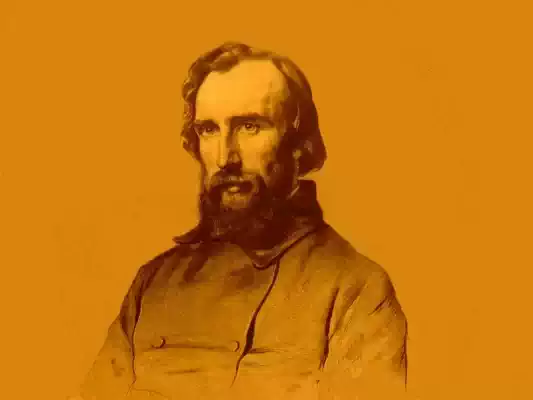
Henri-Frédéric Amiel (1821-1881) was a Swiss intellectual whose main work, the "Intimate Journal", published posthumously, revealed a profound explorer of the human condition. Born in Geneva into a Huguenot family, Amiel showed an early sharp intelligence and an introspective nature. After completing his studies in philosophy and law in Switzerland and Germany, he returned to Geneva, where he became a professor of aesthetics and French literature at the University. His "Intimate Journal" is a monumental work, with over 18,000 pages, written over more than forty years. Through it, Amiel explored his existential doubts, his artistic and philosophical aspirations, and his difficulty in reconciling his inner life with the outside world. The work, although fragmentary and never intended for publication by the author, gained international fame and is admired for its brutal honesty and its penetrating analysis of the human soul. Amiel struggled with inaction and the incessant search for perfection, which prevented him from producing significant published works during his lifetime. His legacy therefore lies in his ability to articulate the complexities of human consciousness and experience, making him a unique figure in 19th-century literature and philosophy.