
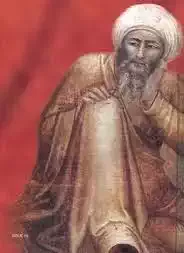
Ibn Ammar
 ES
ES
Ibn Ammar was an Arab poet from Al-Andalus, known for his skill in praise poetry and satire. His work, written in classical Arabic, reflects life in the courts and the complexity of political and social relations of the time. He was a highly renowned poet in his day, appreciated for his technical mastery and the vivacity of his compositions. His poetry, although often tied to the commissions of patrons, reveals a sharp insight into human observation and a remarkable command of poetic language. His legacy lies in his contribution to the rich Andalusian poetic tradition.
n. 1031, Almuñécar · m. , Sevilha
Bio
Identification and basic context
**Full name:** Abu Ammar Yasir ibn Rustam al-Tujibi **Pseudonym:** Ibn Ammar **Nationality:** Andalusian (Al-Andalus) **Period:** 11th century **Historical context:** Lived during a period of political fragmentation in Al-Andalus, known as the Taifa kingdoms period.Childhood and education
Ibn Ammar was born in Almería, Andalusia. Details of his childhood and specific education are not widely documented, but it is known that he received an education that allowed him to master the classical Arabic language and literary arts, including poetry. His intelligence and poetic talent were evident from an early age.Literary career
Ibn Ammar began his poetic career in the service of various rulers in Andalusia. He was a court poet, excelling in his ability to compose poems of praise (madīḥ) for his patrons, but also for his mastery in satirical poetry (hijāʾ). His adaptability and intelligence allowed him to navigate the complex and sometimes dangerous political intrigues of the Taifa kingdoms' courts. His work is a testament to the social and political dynamics of the era.Work, style, and literary characteristics
Ibn Ammar's work is vast and diverse, encompassing praise poetry, satire, erotic poetry, and descriptions of nature. It stands out for its technical mastery, the richness of classical Arabic vocabulary, and the vivacity of its imagery. His praise poetry was crafted to exalt the deeds and generosity of his patrons, while his satirical poetry was known for its biting wit and insight in criticizing customs and individuals. He was capable of transitioning between serious and humorous tones, demonstrating a deep understanding of the human condition. His language is elegant and expressive, with a strong sense of rhythm and musicality.Cultural and historical context
Ibn Ammar lived during a turbulent period in the history of Al-Andalus, marked by the disintegration of the Caliphate of Córdoba and the emergence of the Taifa kingdoms. This context of political instability and rivalries between rulers provided fertile ground for court poetry, where poets played a crucial role in legitimizing and glorifying their lords. Ibn Ammar interacted with other prominent figures of the time, and his poetry reflects the ambitions, intrigues, and customs of the Andalusian aristocracy.Personal life
Information about Ibn Ammar's personal life is scarce and often intertwined with his literary activity. It is known that he maintained relationships with powerful figures, which implied a courtly life with its complexities and dangers. His ability to handle the demands of patrons and his social adaptability are aspects that shaped his career.Recognition and reception
Ibn Ammar was a highly respected and recognized poet during his lifetime. His poetic skill secured him influential patrons and considerable reputation in the Andalusian courts. His work continued to be appreciated and studied by later generations of Arab literature scholars, consolidating his place in the history of Islamic poetry.Influences and legacy
Ibn Ammar was influenced by the rich pre-Islamic and Umayyad Arab poetic tradition. In turn, his legacy is significant for Andalusian poetry, having contributed with his technical mastery and his ability to address various themes with insight and originality. His work serves as a valuable document on the cultural and political life of Al-Andalus in the 11th century.Interpretation and critical analysis
Ibn Ammar's work is a mirror of the complexities of life in the courts of Al-Andalus. Critical analysis of his poetry reveals the poet's skill in maneuvering between flattery and veiled criticism, exaltation and biting satire. His poetry offers a unique perspective on power relations, human ambition, and the customs of the era.Curiosities and lesser-known aspects
A curiosity about Ibn Ammar is his relationship with the ruler Al-Mu'tasim of Almería. Ibn Ammar allegedly wrote poems in praise of Al-Mu'tasim, but his later satires about this same ruler (or others) show the duality of his poetic expression and his ability to attract both favor and enmity.Death and memory
The exact circumstances of Ibn Ammar's death are not known in detail, but it is believed that he passed away in the mid-11th century. His memory endures through the manuscripts that preserve his poetry, allowing his literary voice to resonate through the ages and continue to be studied and admired.Poems
0No poems found
Comments (0)
No comments yet. Be the first to comment.