
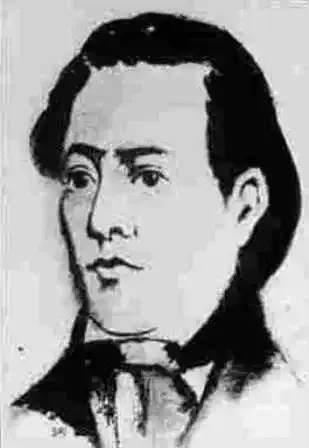
Inácio José de Alvarenga Peixoto
 BR
BR
Inácio José de Alvarenga Peixoto was a Brazilian poet and military man, a prominent figure of Arcadianism in Minas Gerais. He stood out for his participation in the Inconfidência Mineira, which led to his imprisonment and exile to Angola, where he would later die. His poetic work, although not extensive, reflects the spirit of the time, with pastoral themes and veiled social criticism. He was one of the representatives of the so-called "generation of 1770" of Brazilian poetry, marked by a feeling of revolt against colonial rule.
n. 1742, Rio de Janeiro · m. 1792-08-27, Ambaca
Bio
Identification and Basic Context
Inácio José de Alvarenga Peixoto, also known by the pseudonym "Alvarenga Peixoto", was a Brazilian poet and military man. He was born in Rio das Mortes, in the then Captaincy of Minas Gerais, and died in Luanda, Angola. He was the son of a landowner and a lady of means. His nationality was Brazilian and his written language was Portuguese.Childhood and Education
Alvarenga Peixoto received an excellent education for the time, studying at the University of Coimbra, in Portugal, where he graduated in Law. During his studies in Coimbra, he came into contact with the Enlightenment ideas circulating in Europe, influencing his thinking and his future political and literary actions.Literary Career
Alvarenga Peixoto's writing began to coincide with his period of education and his insertion into the intellectual and political circles of Colonial Brazil. His poetic work, concentrated in his youth and early maturity, is marked by pastoral themes, common to Arcadianism, but also by a tone of social criticism and a feeling of dissatisfaction with the political and economic situation of the colony. He actively participated in the literary life of Minas Gerais, collaborating in poetic and intellectual manifestations of the period, although he did not have a vast production.Work, Style, and Literary Characteristics
Alvarenga Peixoto's best-known works are set in the context of Minas Gerais Arcadianism. His poems frequently explore pastoral themes, with references to idealized nature, but also bring allusions to the social and political reality of the colony, anticipating a feeling of nationalism and dissatisfaction. He frequently used the sonnet and other traditional poetic forms, with a vocabulary that sought clarity and elegance, in line with Arcadian precepts. His poetic voice oscillates between bucolic lyricism and a tone of reflection on freedom and the homeland. His work, though not extensive, is representative of the Arcadian movement in Minas Gerais, with careful language and regular meter. Some of his most notable poems were gathered in posthumous anthologies.Cultural and Historical Context
Alvarenga Peixoto lived in a period of intense political and intellectual effervescence in Colonial Brazil, especially in Minas Gerais. He was a contemporary and active participant in the Inconfidência Mineira, a separatist movement that aimed for the region's independence. This participation put him on a collision course with Portuguese colonial power, culminating in his imprisonment and exile. His generation, known as the "generation of 1770", was marked by the influences of European Enlightenment and a growing sense of national identity. Tensions with Portuguese rule and the pursuit of freedom were central themes in his context.Personal Life
Alvarenga Peixoto's life was profoundly marked by his political engagement. His participation in the Inconfidência Mineira had devastating consequences in his personal life, leading to his isolation and death in exile. He was a man of means and had a solid intellectual background, which allowed him to circulate in prominent intellectual and political circles. There is not much detailed information about his affective or family relationships, but it is certain that his fate was sealed by his convictions.Recognition and Reception
During his lifetime, Alvarenga Peixoto's recognition was linked to his circle of friends and fellow conspirators. After his death, his work began to be gradually valued as an important record of Minas Gerais Arcadianism and the libertarian thought of the time. His figure as a conspirator and poet contributed to his inclusion in the pantheon of historical and literary figures of Brazil, although his academic and popular recognition is lesser compared to other poets of his generation.Influences and Legacy
Alvarenga Peixoto was influenced by Enlightenment ideas and the European Arcadian movement, as evidenced by his studies in Coimbra and his literary production. His actions and his poetry, even if on a smaller scale, influenced the perception of Minas Gerais poetry and the feeling of national identity in subsequent generations. He is remembered as one of the poets of Brazilian Arcadianism and a martyr for the cause of independence, a legacy that transcends his literary work.Interpretation and Critical Analysis
Alvarenga Peixoto's work can be interpreted in light of the Arcadian context and the aspirations for freedom that led him to the Inconfidência Mineira. His pastoral poems, although conventional in form, can be seen as a refuge or a veiled way of expressing a desire for a freer and more harmonious life, in contrast to colonial oppression. The implicit social criticism in some of his verses is a point of interest for analysis.Curiosities and Lesser-Known Aspects
A curious aspect of Alvarenga Peixoto's life is his direct link between poetry and political action. His pen served both to compose bucolic verses and to express revolutionary ideals, culminating in a tragic fate. There are not many anecdotal accounts of his writing habits or creative rituals, his figure being better known for his historical role and his concise literary production.Death and Memory
Alvarenga Peixoto died in Luanda, Angola, where he was exiled after the discovery of the Inconfidência Mineira. His death occurred in 1791. Posthumous publications of his work, along with that of other conspirators, helped perpetuate his memory as a poet and patriot.Poems
0No poems found
Comments (0)
No comments yet. Be the first to comment.