
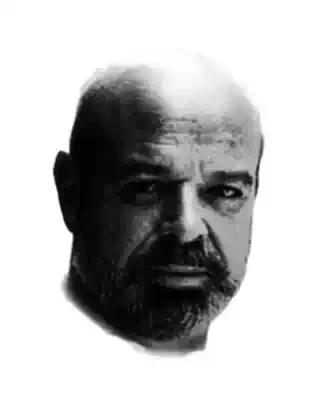
Jaime Gil de Biedma
1929–1990
· lived 60 years
 ES
ES
ES
Jaime Gil de Biedma was a Spanish poet, a prominent figure of the Generation of the 50s, known for his lyrical and confessional poetry that addresses themes such as love, death, the passage of time, melancholy, and identity. His work, characterized by clear language, formal precision, and deep emotional honesty, had a notable influence on later Spanish poetry. Despite a relatively scarce poetic output, largely published posthumously, his impact on literature is undeniable.
n. 1929-11-13, Barcelona · m. 1990-01-08, Barcelona
27
Views
Bio
Identification and basic context
Jaime Gil de Biedma was a Spanish poet, born in Barcelona and died in the same city. He was a central figure of the so-called Generation of the 50s or Generation of the mid-century, a group of writers who emerged in post-war Spain. He wrote in Castilian Spanish. His historical context was that of Francoist Spain, a period of political and cultural repression that influenced his work, leading him to a certain hermeticism and introspection.Childhood and education
Born into a Catalan aristocratic family, Gil de Biedma had a privileged education. He studied Law at the University of Barcelona and completed his education with internships in London, where he came into contact with Anglo-Saxon literature and culture, which would influence his writing. This international experience profoundly marked his worldview and his literary style.Literary career
His literary activity began in the university environment and in intellectual circles of Barcelona. His poetic work, although largely published posthumously, began to be written in the 1950s. He published some poems in literary magazines and anthologies of the time, but the compilation and dissemination of his work were consolidated after his death. His poetic evolution is marked by a growing formal refinement and greater existential depth.Work, style, and literary characteristics
Jaime Gil de Biedma's best-known works include "Variaciones sobre tema amoroso" (1954), "El pie de la letra" (1957), and "Moralitats" (1960), which were later compiled in "Poesía completa" (1974). The central themes of his work are love (often homosexual and unrequited), death, the inexorable passage of time, melancholy, solitude, memory, and the search for an authentic identity in a repressive social context. His style is characterized by clarity, lexical precision, the use of free but rigorous verse, and brutal honesty in the expression of his feelings and anxieties. His poetic voice is personal and confessional, yet achieves a universal dimension. His language is stripped of excessive ornamentation, prioritizing emotional intensity and reflection.Work, style, and literary characteristics
Cultural and historical context Gil de Biedma lived most of his life under the Franco regime, a period of great censorship and cultural isolation for Spain. Despite this, he maintained contact with international literary production, especially Anglo-Saxon. He belonged to the Generation of the 50s, which sought to renew Spanish poetry, moving away from excessive lyricism and approaching a more colloquial and direct language, without, however, abandoning expressive depth.Work, style, and literary characteristics
Personal life Jaime Gil de Biedma had a personal life marked by complex emotional relationships and the awareness of his homosexuality in a conservative social context. He worked in copyright in a publishing house, which allowed him close contact with the literary world. He suffered from a chronic illness (cancer) that accompanied him in his final years, a theme reflected in some of his compositions.Work, style, and literary characteristics
Recognition and reception Although his work was largely published posthumously, Jaime Gil de Biedma is today considered one of the most important poets in 20th-century Spanish literature. His poetry, initially known in restricted circles, gained wide dissemination and academic recognition, being studied and admired for its modernity, lyrical force, and integrity.Work, style, and literary characteristics
Influences and legacy He was influenced by poets such as W. H. Auden, T. S. Eliot, and Federico García Lorca. His legacy is notable for how he introduced a genuinely modern and confessional poetic voice into Spanish poetry, paving the way for later poets who explored intimacy and personal experience with frankness. His work is considered a milestone in contemporary Spanish-language poetry.Work, style, and literary characteristics
Interpretation and critical analysis Gil de Biedma's work is often analyzed from the perspective of his experience as a homosexual in Francoist Spain, his fight against illness, and his profound meditation on the ephemerality of life and the search for meaning. His reflections on memory and identity are central to critical interpretations.Work, style, and literary characteristics
Curiosities and lesser-known aspects Jaime Gil de Biedma was known for his sharp intelligence, ironic humor, and elegance. A curious aspect is his relationship with the business world, contrasting with his poetic sensitivity. His correspondence and diaries, when published, reveal a man of great depth and complexity.Work, style, and literary characteristics
Death and memory He died in Barcelona from cancer. His premature death accentuated the recognition of his work, promoting the posthumous publication of "Poesía completa," which became a reference book. His memory is kept alive through studies, editions, and his continuous presence in anthologies of Spanish poetry.Poems
0No poems found
Comments (0)
Log in
to post a comment.
No comments yet. Be the first to comment.