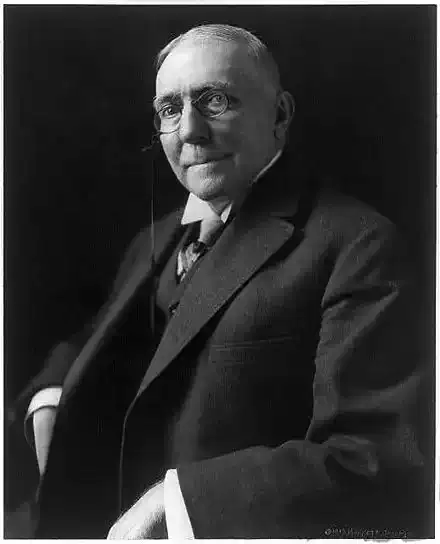
Writin' Back To The Home-Folks
Writin' Back To The Home-Folks
My dear old friends--It jes beats all,
The way you write a letter
So's ever' _last_ line beats the _first_,
And ever' _next_-un's better!-W'y,
ever' fool-thing you putt down
You make so inte_rest_in',
A feller, readin' of 'em all,
Can't tell which is the _best_-un.
It's all so comfortin' and good,
'Pears-like I almost _hear_ ye
And git more sociabler, you know,
And hitch my cheer up near ye
And jes smile on ye like the sun
Acrosst the whole per-rairies
In Aprile when the thaw's begun
And country couples marries.
It's all so good-old-fashioned like
To _talk_ jes like we're _thinkin'_,
Without no hidin' back o' fans
And giggle-un and winkin',
Ner sizin' how each-other's dressed--
Like some is allus doin',-'_
Is_ Marthy Ellen's basque ben _turned_
Er shore-enough a new-un!'--
Er 'ef Steve's city-friend haint jes
'A _lee_tle kindo'-sorto''--
Er 'wears them-air blame eye-glasses
Jes 'cause he hadn't ort to?'
And so straight on, _dad-libitum_,
Tel all of us feels, _some_way,
Jes like our 'comp'ny' wuz the best
When we git up to come 'way!
That's why I like _old_ friends like you,--
Jes 'cause you're so _abidin'_.--
Ef I was built to live '_fer keeps_,'
My principul residin'
Would be amongst the folks 'at kep'
Me allus _thinkin'_ of 'em,
And sorto' eechin' all the time
To tell 'em how I love 'em.--
Sich folks, you know, I jes love so
I wouldn't live without 'em,
Er couldn't even drap asleep
But what I _dreamp'_ about 'em,--
And ef we minded God, I guess
We'd _all_ love one-another
Jes like one fam'bly,--me and Pap
And Madaline and Mother.
Who Santy-Claus Wuz
Who Santy-Claus Wuz
Jes' a little bit o' feller--I remember still--
Ust to almost cry fer Christmas, like a youngster will.
Fourth o' July's nothin' to it!--New Year's ain't a smell!
Easter-Sunday--Circus-day--jes' all dead in the shell!
Lawzy, though! at night, you know, to set around an' hear
The old folks work the story off about the sledge an' deer,
An' 'Santy' skootin' round the roof, all wrapt in fur an' fuzz--
Long afore
I knowed who
'Santy-Claus' wuz!
Ust to wait, an' set up late, a week er two ahead;
Couldn't hardly keep awake, ner wouldn't go to bed;
Kittle stewin' on the fire, an' Mother settin' here
Darnin' socks, an' rockin' in the skreeky rockin'-cheer;
Pap gap', an' wonder where it wuz the money went,
An' quar'l with his frosted heels, an' spill his liniment;
An' me a-dreamin' sleigh-bells when the clock 'ud whir an' buzz,
Long afore
I knowed who
'Santy-Claus' wuz!
Size the fire-place up an' figger how 'Ole Santy' could
Manage to come down the chimbly, like they said he would;
Wisht 'at I could hide an' see him--wunderd what he'd say
Ef he ketched a feller layin' fer him thataway!
But I _bet_ on him, an' _liked_ him, same as ef he had
Turned to pat me on the back an' say, 'Look here, my lad,
Here's my pack,--jes' he'p yourse'f, like all good boys does!'
Long afore
I knowed who
'Santy-Claus' wuz!
Wisht that yarn was true about him, as it 'peared to be--
Truth made out o' lies like that-un's good enough fer me!--
Wisht I still wuz so confidin' I could jes' go wild
Over hangin' up my stockin's, like the little child
Climbin' in my lap to-night, an' beggin' me to tell
'Bout them reindeers, and 'Old Santy' that she loves so well
I'm half sorry fer this little-girl-sweetheart of his--
Long afore
She knows who
'Santy-Claus' is!
With Hale Affection And Abiding Faith These Rhymes And Pictures Are
With Hale Affection And Abiding Faith These Rhymes And Pictures Are
Inscribed To The Children Everywhere
_He owns the bird-songs of the hills--
The laughter of the April rills;
And his are all the diamonds set
In Morning's dewy coronet,--
And his the Dusk's first minted stars
That twinkle through the pasture-bars
And litter all the skies at night
With glittering scraps of silver light;--
The rainbow's bar, from rim to rim,
In beaten gold, belongs to him._
While The Musician Played
While The Musician Played
O it was but a dream I had
While the musician played!--
And here the sky, and here the glad
Old ocean kissed the glade--
And here the laughing ripples ran,
And here the roses grew
That threw a kiss to every man
That voyaged with the crew.
Our silken sails in lazy folds
Drooped in the breathless breeze:
As o'er a field of marigolds
Our eyes swam o'er the seas;
While here the eddies lisped and purled
Around the island's rim,
And up from out the underworld
We saw the mermen swim.
And it was dawn and middle-day
And midnight--for the moon
On silver rounds across the bay
Had climbed the skies of June--
And there the glowing, glorious king
Of day ruled o'er his realm,
With stars of midnight glittering
About his diadem.
The seagull reeled on languid wing
In circles round the mast,
We heard the songs the sirens sing
As we went sailing past;
And up and down the golden sands
A thousand fairy throngs
Flung at us from their flashing hands
The echoes of their songs.
O it was but a dream I had
While the musician played--
For here the sky, and here the glad
Old ocean kissed the glade;
And here the laughing ripples ran,
And here the roses grew
That threw a kiss to every man
That voyaged with the crew.
Where The Children Used To Play
Where The Children Used To Play
The old farm-home is Mother's yet and mine,
And filled it is with plenty and to spare--,
But we are lonely here in life's decline,
Though fortune smiles around us everywhere:
We look across the gold
Of the harvests, as of old--
The corn, the fragrant clover, and the hay;
But most we turn our gaze,
As with eyes of other days,
To the orchard where the children used to play.
O from our life's full measure
And rich hoard of worldly treasure
We often turn our weary eyes away,
And hand in hand we wander
Down the old path winding yonder
To the orchard where the children used to play.
Our sloping pasture-lands are filled with herds;
The barn and granary-bins are bulging o'ver;
The grove's a paradise of singing birds--
The woodland brook leaps laughing by the door;
Yet lonely, lonely still,
Let us prosper as we will,
Our old hearts seem so empty everyway--
We can only through a mist
See the faces we have kissed
In the orchard where the children used to play.
O from our life's full measure
And rich hoard of worldly treasure
We often turn our weary eyes away,
And hand in hand we wander
Down the old path winding yonder
To the orchard where the children used to play.
When The Hearse Comes Back
When The Hearse Comes Back
A thing 'at's 'bout as tryin' as a healthy man kin meet
Is some poor feller's funeral a-joggin' 'long the street:
The slow hearse and the hosses-- slow enough, to say at least,
Fer to even tax the patience of gentleman deceased!
The low scrunch of the gravel-- and the slow grind of the wheels--,
The slow, slow go of ev'ry woe 'at ev'rybody feels!
So I ruther like the contrast when I hear the whip-lash crack
A quickstep fer the hosses,
When the
Hearse
Comes
Back!
Meet it goin' to'rds the cimet'ry, you'll want to drap yer eyes--
But ef the plumes don't fetch you, it'll ketch you otherwise-You'll
haf to see the caskit, though you'd ort to look away
And 'conomize and save yer sighs fer any other day!
Yer sympathizin' won't wake up the sleeper from his rest--
Yer tears won't thaw them hands o' his 'at's froze acrost his breast!
And this is why-- when airth and sky's a gittin blurred and black--
I like the flash and hurry
When the
Hearse
Comes
Back!
It's not 'cause I don't 'preciate it ain't no time fer jokes,
Ner 'cause I' got no common human feelin' fer the folks--;
I've went to funerals myse'f, and tuk on some, perhaps--
Fer my hearth's 'bout as mal'able as any other chap's--,
I've buried father, mother-- But I'll haf to jes' git you
To 'excuse me,' as the feller says--. The p'int I'm drivin' to
Is simply when we're plum broke down and all knocked out o' whack,
It he'ps to shape us up like,
When the
Hearse
Comes
Back!
The idy! Wadin round here over shoe-mouth deep in woe,
When they's a graded 'pike o' joy and sunshine don't you know!
When evening strikes the pastur', cows'll pull out fer the bars,
And skittish-like from out the night'll prance the happy stars.
And so when my time comes to die, and I've got ary friend
'At wants expressed my last request-- I'll mebby, rickommend
To drive slow, ef they haf to, goin' 'long the out'ard track,
But I'll smile and say, 'You speed 'em
When the
Hearse
Comes
Back!'
When The Frost Is On The Punkin
When The Frost Is On The Punkin
When the frost is on the punkin and the fodder's in the shock
And you hear the kyouck and gobble of the struttin' turkey cock
And the clackin' of the guineys, and the cluckin' of the hens
And the rooster's hallylooyer as he tiptoes on the fence
O, it's then's the times a feller is a-feelin' at his best
With the risin' sun to greet him from a night of peaceful rest
As he leaves the house, bareheaded, and goes out to feed the stock
When the frost is on the punkin and the fodder's in the shock
They's something kindo' harty-like about the atmusfere
When the heat of summer's over and the coolin' fall is here
Of course we miss the flowers, and the blossums on the trees
And the mumble of the hummin'-birds and buzzin' of the bees
But the air's so appetizin'; and the landscape through the haze
Of a crisp and sunny morning of the airly autumn days
Is a pictur' that no painter has the colorin' to mock
When the frost is on the punkin and the fodder's in the shock.
The husky, rusty russel of the tossels of the corn,
And the raspin' of the tangled leaves, as golden as the morn;
The stubble in the furries kindo' lonesome-like, but still
A-preachin' sermuns to us of the barns they growed to fill;
The strawstack in the medder, and the reaper in the shed;
The hosses in theyr stalls below the clover over-head!
O, it sets my hart a-clickin' like the tickin' of a clock,
When the frost is on the punkin and the fodder's in the shock!
Then your apples all is gethered, and the ones a feller keeps
Is poured around the celler-floor in red and yeller heaps;
And your cider-makin' 's over, and your wimmern-folks is through
With their mince and apple butter, and theyr souse and saussage, too!
I don't know how to tell it but ef sich a thing could be
As the Angels wantin' boardin', and they'd call around on me
I'd want to 'commodate 'em all the whole-indurin' flock
When the frost is on the punkin and the fodder's in the shock!
When Old Jack Died
When Old Jack Died
I.
When old Jack died, we staid from school (they said,
At home, we needn't go that day), and none
Of us ate any breakfast--only one,
And that was Papa--and his eyes were red
When he came round where we were, by the shed
Where Jack was lying, half way in the sun
And half way in the shade. When we begun
To cry out loud, Pa turned and dropped his head
And went away; and Mamma, she went back
Into the kitchen. Then, for a long while,
All to ourselves, like, we stood there and cried.
We thought so many good things of Old Jack,
And funny things--although we didn't smile--We
couldn't only cry when Old Jack died.
II.
When Old Jack died, it seemed a human friend
Had suddenly gone from us; that some face
That we had loved to fondle and embrace
From babyhood, no more would condescend
To smile on us forever. We might bend
With tearful eyes above him, interlace
Our chubby fingers o'er him, romp and race,
Plead with him, call and coax--aye, we might send
The old halloo up for him, whistle, hist,
(If sobs had let us) or, as wildly vain,
Snapped thumbs, called 'speak,' and he had not replied;
We might have gone down on our knees and kissed
The tousled ears, and yet they must remain
Deaf, motionless, we knew--when Old Jack died.
III.
When Old Jack died, it seemed to us, some way,
That all the other dogs in town were pained
With our bereavement, and some that were chained,
Even, unslipped their collars on that day
To visit Jack in state, as though to pay
A last, sad tribute there, while neighbors craned
Their heads above the high board fence, and deigned
To sigh 'Poor dog!' remembering how they
Had cuffed him, when alive, perchance, because,
For love of them he leaped to lick their hands--
Now, that he could not, were they satisfied?
We children thought that, as we crossed his paws,
And o'er his grave, 'way down the bottom-lands,
Wrote 'Our First Love Lies Here,' when Old Jack died.
When Mother Combed My Hair
When Mother Combed My Hair
When Memory, with gentle hand,
Has led me to that foreign land
Of childhood days, I long to be
Again the boy on bended knee,
With head a-bow, and drowsy smile
Hid in a mother's lap the while,
With tender touch and kindly care,
She bends above and combs my hair.
Ere threats of Time, or ghosts of cares
Had paled it to the hue it wears,
Its tangled threads of amber light
Fell o'er a forehead, fair and white,
That only knew the light caress
Of loving hands, or sudden press
Of kisses that were sifted there
The times when mother combed my hair.
But its last gleams of gold have slipped
Away; and Sorrow's manuscript
Is fashioned of the snowy brow--
So lined and underscored now
That you, to see it, scarce would guess
It e'er had felt the fond caress
Of loving lips, or known the care
Of those dear hands that combed my hair.
. . . . . . . .
I am so tired! Let me be
A moment at my mother's knee;
One moment--that I may forget
The trials waiting for me yet:
One moment free from every pain--
O! Mother! Comb my hair again!
And I will, oh, so humbly bow,
For I've a wife that combs it now.
When June Is Here
When June Is Here
When June is here--what art have we to sing
The whiteness of the lilies midst the green
Of noon-tranced lawns? Or flash of roses seen
Like redbirds' wings? Or earliest ripening
Prince-Harvest apples, where the cloyed bees cling
Round winey juices oozing down between
The peckings of the robin, while we lean
In under-grasses, lost in marveling.
Or the cool term of morning, and the stir
Of odorous breaths from wood and meadow walks,
The bobwhite's liquid yodel, and the whir
Of sudden flight; and, where the milkmaid talks
Across the bars, on tilted barley-stalks
The dewdrops' glint in webs of gossamer.