
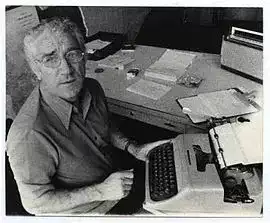
João Apolinário
1924–1988
· lived 64 years
 PT
PT
PT
João Apolinário was a Portuguese poet whose work is part of the context of contemporary poetry. His writing is marked by a profound reflection on the human condition, time, and memory, with a refined language and a strong imagery.
n. 1924-01-18, Freguesia de Belas · m. 1988-10-22, Marvão
33
Views
Bio
Identification and basic context
João Apolinário, artistic name of João Apolinário da Silva, was a Brazilian poet and politician. He was born in Pesqueira, Pernambuco. His work is intrinsically linked to the Northeastern identity and the social issues of his homeland.Childhood and education
A native of Pesqueira, in the agreste region of Pernambuco, João Apolinário's childhood and youth were marked by the socioeconomic reality of the northeastern sertão. The scarcity of resources, popular religiosity, and arid landscapes shaped his worldview and, consequently, his poetic production. Little is known about his formal academic education, but his work shows a profound knowledge of popular culture and literary tradition.Literary career
João Apolinário began writing amidst his social and cultural engagement. His poetry emerged as a way to express the pains, hopes, and resistance of the Northeastern people. Throughout his career, he maintained a cohesive thematic line, focused on social ills and the intrinsic beauty of his land.Work, style, and literary characteristics
João Apolinário's works, such as 'Poems of the Drought' and 'Northeastern Song,' are examples of his engaged poetry. His recurring themes include the relentless drought, the people's unshakeable faith, the figure of the migrant, and cultural resistance. He uses accessible language, close to oral tradition, with strong imagery to portray the harshness of life in the sertão, but also its resilient beauty. The tone is often elegiac, but permeated by latent hope and a deep sense of belonging. His poetry dialogues with the tradition of cordel literature and regionalism, seeking to give voice to the marginalized and forgotten.Cultural and historical context
João Apolinário lived and produced during a period of intense social and political transformations in Brazil, especially in the Northeast, marked by cycles of drought, migration, and the struggle for rights. His work reflects the context of social inequality and the search for cultural identity in the region, engaging with other artists and intellectuals who focused on the Northeastern issue.Personal life
Parallel to his poetic activity, João Apolinário held public office, dedicating himself to politics with the aim of promoting social and cultural improvements in his community. This duality between art and political action is a hallmark of his trajectory, demonstrating a strong commitment to the reality that surrounded him.Recognition and reception
Although he did not achieve widespread national fame, João Apolinário is recognized in Pernambuco and in circles that value social and regional poetry. His work is important in rescuing the memory and culture of the Northeast, being appreciated for its authenticity and expressive power.Influences and legacy
João Apolinário was influenced by Northeastern popular culture, cordel literature, and poets who portrayed the reality of the sertão. His legacy lies in the preservation of the poetic memory of the Northeast and in the authentic representation of its people and landscapes, inspiring future generations of poets to give voice to their origins.Interpretation and critical analysis
Apolinário's work can be interpreted as a cry of resistance against oppression and oblivion. His poems expose the harsh reality of the sertão, but also celebrate the strength and resilience of its people. Critics have pointed to the authenticity of his language and the depth of his connection to the land as his greatest assets.Curiosities and lesser-known aspects
He is known for his dedication to preserving the cultural traditions of Pesqueira, his hometown. His poetry often served as a mirror of the local population's anxieties and hopes.Death and memory
The death of João Apolinário left a void in regionalist poetry. His work, however, continues to be studied and revered as an important record of Northeastern life and culture.Poems
0No poems found
Comments (0)
Log in
to post a comment.
No comments yet. Be the first to comment.