
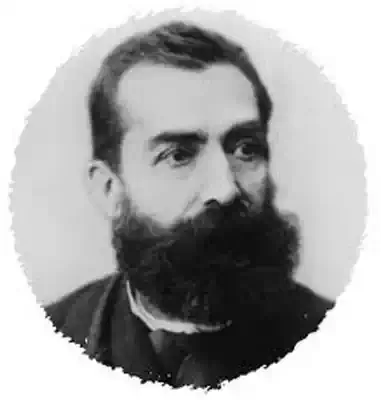
João de Deus de Nogueira Ramos
 PT
PT
João de Deus de Nogueira Ramos, better known as João de Deus, was a Portuguese poet of the 19th century, whose work is an exponent of Romanticism in Portugal. He distinguished himself by his lyricism with a strong sentimental and spiritual bent, exploring themes such as love, religion, and nature with a musical and melancholic language. His poetry, marked by deep religiosity and a yearning for the infinite, captivated generations of readers and established him as an important figure in Portuguese literature.
n. 1830-03-08, São Bartolomeu de Messines · m. 1896-01-10, Lisboa
Bio
Identification and Basic Context
João de Deus de Nogueira Ramos, widely known as João de Deus, was born in São Bartolomeu de Messines, in the Algarve region of Portugal. He was a notable poet of Portuguese Romanticism, celebrating nature, religion, and love in his works. His life and writing were deeply influenced by the historical and cultural context of the 19th century in Portugal, a period of great political and social transformations.Childhood and Education
Coming from a humble family, João de Deus's childhood was marked by poverty and a strong connection to the land and popular traditions of the Algarve. His initial education was modest, but his thirst for knowledge led him to fervent self-study. Religious readings and the exuberant nature of his homeland were his first and most important influences, shaping his poetic sensibility.Literary Career
João de Deus's literary career began more consistently in his youth, when he started to give form to his feelings and visions through poetry. His work evolved with the deepening of his religiosity and his love for his homeland and nature. He collaborated in various periodicals of the time, disseminating his poems and gaining notoriety.Work, Style, and Literary Characteristics
The most emblematic work of João de Deus is "Campo do Vento" (1861), a book of poems that expresses his lyrical and spiritual soul. The dominant themes in his poetry include divine and human love, saudade (longing), nature as a mirror of the soul, and the search for spiritual transcendence. His poetic form is often marked by musicality, rhythm, and a melancholic and tender use of language. His style is characterized by simplicity and emotional depth, aligning with the ideals of Romanticism.Cultural and Historical Context
João de Deus lived through the Portuguese 19th century, a period of political instability and the affirmation of nationalism. His work reflects a deep love for Portugal and its popular culture. He belonged to the Romantic generation, which valued emotion, individuality, and connection to national history and traditions. His poetry echoed the spiritual and sentimental yearnings of the era.Personal Life
João de Deus's personal life was marked by a deep faith and religious devotion that directly influenced his writing. His affective and family relationships, though less documented, were certainly a source of inspiration for his sentimental lyricism. He was a man of unwavering faith, whose life became a reflection of his own poetry.Recognition and Reception
João de Deus achieved significant recognition during his lifetime, being considered one of the greatest Portuguese Romantic poets. His work was enthusiastically received by the public and critics of the time, who valued his authenticity and sincere expression of feelings. His popularity endured, consolidating his place in national literature.Influences and Legacy
João de Deus was influenced by the Portuguese literary tradition and the European Romantic movement. His legacy lies in his ability to express the Portuguese soul with pure and emotive language, inspiring later poets to explore similar themes with sensitivity and depth.Interpretation and Critical Analysis
João de Deus's work is often analyzed from the perspective of his religiosity and lyricism. Interpretations highlight his search for inner peace and his vision of the world as a reflection of the divine. His poetry invites serene contemplation and a dive into the depths of human feeling.Curiosities and Lesser-Known Aspects
A curiosity about João de Deus is his deep connection to the Algarve, his homeland, which he celebrated in many of his verses. His simplicity and authenticity were distinctive marks of his personality, reflected in the purity of his work.Death and Memory
João de Deus passed away in Lisbon. His death marked the end of an era for Portuguese Romantic poetry, but his work continued to be celebrated and to inspire, keeping his memory alive among literature lovers.Poems
0No poems found
Comments (0)
No comments yet. Be the first to comment.