
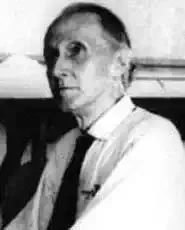
Joaquim Cardozo
1897–1978
· lived 81 years
 BR
BR
BR
Joaquim Cardozo was an influential Brazilian poet and art critic, known for his poetry that explores themes such as faith, reason, art, and the human condition. His work, marked by erudition and philosophical depth, dialogues with classical tradition and modernity, presenting rigorous language and striking imagery. Cardozo also distinguished himself by his keen vision as an art critic, masterfully analyzing the works of various artists and leaving an important legacy for the understanding of modern art in Brazil.
n. 1897-08-26, Recife · m. 1978-11-04, Olinda
26
Views
Bio
Identification and Basic Context
Joaquim de Almeida Cardoso was born in Rio de Janeiro. He was a Brazilian poet, professor, and art critic. He stood out for his poetic work and his role as an intellectual, with a production that encompassed poetry, art criticism, and reflection on faith and reason.Childhood and Education
Cardozo had a solid education, with a great interest in philosophy and theology. His youth was marked by a path of intense faith, which would deeply reflect in his later work. He studied in Portugal, where he deepened his knowledge in the areas that would become central to his intellectual life.Literary Career
The beginning of his literary activity occurred with the publication of poems that already revealed his inclination for existential and spiritual themes. Throughout his career, his poetry evolved towards greater formal and thematic complexity, consolidating itself as a unique voice in Brazilian poetry. He was also an active art critic, commenting on exhibitions and works by artists of his time.Work, Style, and Literary Characteristics
Joaquim Cardozo's work is marked by a profound reflection on faith, art, and the human condition. His poems explore the tension between the sacred and the profane, the spiritual and the material, reason and mystery. He frequently uses the sonnet and other traditional poetic forms, but with modern language and an erudite vocabulary. His poetry is characterized by its imagistic density, musicality, and a tone that is sometimes meditative, sometimes confessional. Cardozo sought to integrate his religious beliefs with a contemporary vision of the world, influenced by classical tradition and modern artistic movements.Cultural and Historical Context
Joaquim Cardozo lived in a period of cultural effervescence in Brazil, with the development of Modernism and the consolidation of new artistic and literary currents. His work dialogues with this context but maintains a strong individuality, moving away from radical experimentalism in favor of poetry with a more philosophical and spiritual nature. He was friends with important intellectuals and artists of his generation.Personal Life
Cardozo was a man of deep spirituality, who dedicated a large part of his life to reflecting on faith. His personal relationships, although less publicized, shaped his worldview and his poetic sensibility. He was a professor, also dedicating himself to teaching and disseminating knowledge.Recognition and Reception
His poetic work, although perhaps less known to the general public than that of other poets of his generation, is highly respected in academic and literary circles. His intellectual rigor and the depth of his reflections have earned him a prominent place in Brazilian literature. His art criticism is also recognized for its quality and relevance.Influences and Legacy
Joaquim Cardozo was influenced by classical poets and the Christian tradition, but he also engaged with modernity. His legacy lies in his ability to reconcile erudition, spirituality, and rigorous poetic language, paving the way for poetry that explores the great existential questions with depth and beauty.Interpretation and Critical Analysis
Cardozo's work is often analyzed from the perspective of his relationship between faith and reason, spirituality and art. His poetry invites attentive reading, which unveils the layers of meaning and the cultural and philosophical references present in his verses. The tensions between the transcendent and the immanent are recurring themes in his critical analysis.Curiosities and Lesser-Known Aspects
Cardozo was known for his discretion and the depth of his inner life. His passion for art and poetry was accompanied by an intense dedication to study and reflection. His writing habits, although not widely documented, suggest a meticulous and highly rigorous creative process.Death and Memory
He passed away in Rio de Janeiro. His memory is preserved through his work, which continues to be studied and appreciated by those interested in poetry of greater intellectual and spiritual depth.Poems
0No poems found
Comments (0)
Log in
to post a comment.
No comments yet. Be the first to comment.