
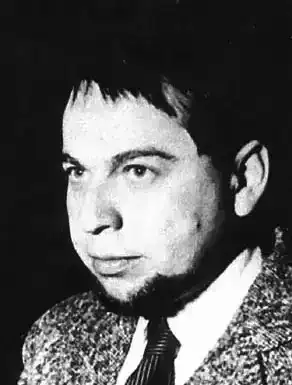
Jorge Gaitán Durán
 CO
CO
Jorge Gaitán Durán was a prominent Colombian poet and diplomat, whose work is part of the modernist and social poetry current. His writing is characterized by a deep social sensitivity, a commitment to the realities of his time, and a remarkable ability to capture the beauty of language. Recognized for his lyrical style and ethical commitment, Gaitán Durán left a poetic legacy that addresses both the intimacy of the self and the complexities of society. His figure is emblematic of a poet who managed to unite artistic vocation with public service.
n. 1924-02-12, Pamplona · m. 1962-06-21, França
Bio
Identification and Basic Context
Full Name: Jorge Gaitán Durán. Date and Place of Birth: August 7, 1921, Cúcuta, Colombia. Family Background, Social Class, and Cultural Context of Origin: Hailing from an elite intellectual and political family in Cúcuta, his father was the renowned politician and lawyer Jorge Eliécer Gaitán. He grew up in an environment conducive to intellectual and artistic development. Nationality and Language(s) of Writing: Colombian, he wrote in Spanish. Historical Context in Which He Lived: He lived in a period of profound social and political transformations in Colombia and Latin America, marked by partisan violence and the search for national identities.Childhood and Education
Family Background and Social Environment: His childhood was marked by the influence of his father, a public figure of great relevance, which undoubtedly influenced his worldview and his early inclination towards letters and thought. Formal Education and Self-Education: He completed his high school education and later enrolled in the Faculty of Law at the National University of Colombia, although his literary vocation led him to explore other paths. He was an avid reader, which constituted a fundamental part of his self-taught education. Initial Influences (Readings, Culture, Religion, Politics): The reading of classical and contemporary poets, as well as the philosophical and political thought of his time, shaped his early concerns. Literary, Philosophical, or Artistic Movements He Assimilated: He drew from various currents, although his work tends towards a personal and profound expression that transcends strict classifications. Defining Events in His Youth: The political and social turmoil in Colombia, especially the assassination of his father in 1948, had a profound impact on his life and work.Literary Career
Beginning of Writing (When and How He Started): His literary vocation manifested itself from a young age, writing poetry and essays. Evolution Over Time (Stages, Style Changes): His work evolved towards greater existential depth and formal refinement, always maintaining thematic and stylistic coherence. Chronological Evolution of His Work: His production solidified in the central decades of the 20th century, with works that reflect his intellectual and poetic maturity. Collaborations in Magazines, Newspapers, and Anthologies: He published in important literary and cultural magazines in Colombia and Latin America. Activity as a Critic, Translator, or Editor: He also ventured into literary criticism and essays, offering valuable reflections on literature and culture.Work, Style, and Literary Characteristics
Main Works with Dates and Production Context: * *La rama de sauce* (The Willow Branch) * *El tiempo y el silencio* (Time and Silence) * *Odas a la vida* (Odes to Life) Dominant Themes — Love, Death, Time, Nature, Identity, Homeland, Spirituality, etc.: He explores solitude, the transience of time, the melancholy of memory, the search for meaning, and the confrontation with human finitude. Love and death are recurring axes. Form and Structure — Use of Sonnet, Free Verse, Fixed Form, Metrical Experimentation: While he used traditional forms, he also leaned towards free verse, seeking a musicality and rhythm that suited the expression of his moods and reflections. Poetic Resources (Metaphor, Rhythm, Musicality): He is noted for his use of original and suggestive metaphors, refined language, and careful musicality in his verses. Tone and Poetic Voice — Lyrical, Satirical, Elegiac, Epic, Ironic, Confessional: Predominantly lyrical and elegiac, with an introspective and reflective tone, often tinged with melancholy. Poetic Voice (Personal, Universal, Fragmented, etc.): His poetic voice is eminently personal, but it manages to transcend the individual to become a universal expression of the human experience. Language and Style — Vocabulary, Imagery Density, Preferred Rhetorical Devices: His language is precise, evocative, and highly plastic in its imagery. He prefers metaphor and sensory imagery to convey emotions and thoughts. Formal or Thematic Innovations Introduced in Literature: He brought a new sensibility to Colombian poetry, deepening existential introspection and refining poetic language. Relationship with Tradition and Modernity: He is situated in the continuity of the great lyrical poetry of the Hispanic tradition, while also assimilating the concerns and experiments of literary modernity. Associated Literary Movements (e.g., Symbolism, Modernism): Although not adhering to a specific movement, his work dialogues with the legacy of Modernism and the poetic currents of the 20th century. Lesser-Known or Unpublished Works: There are scattered works and writings that still await exhaustive study.Cultural and Historical Context
Relationship with Historical Events (Wars, Revolutions, Regimes): The assassination of his father and the period of violence in Colombia profoundly marked his worldview and his work. Relationship with Other Writers or Literary Circles: He maintained contact with important literary figures of his time, forming part of the Colombian cultural effervescence. Generation or Movement to Which He Belongs (e.g., Romanticism, Modernism, Surrealism): He is associated with the so-called Generation of 1930 or the Surrealism Generation in Colombia, although his work transcends these labels. Political or Philosophical Stance: Influenced by his father's liberal ideas, his thought leaned towards social and political reflection, although his poetic work focuses more on the existential. Influence of Society and Culture on His Work: The social and political turbulence of his country is reflected in his work through an introspective gaze and profound reflection on the human condition. Dialogues and Tensions with Contemporaries: He actively participated in the literary debates of his time. Critical Reception During His Lifetime vs. Posthumous Recognition: He was recognized during his lifetime by intellectual circles, but his work has continued to gain appreciation and study over time.Personal Life
Significant Affective and Family Relationships and How They Shaped His Work: The figure of his father and the tragic circumstances of his death had an indelible impact on his literary production, infusing it with a deep reflection on loss and memory. Literary Friendships and Rivalries: He cultivated friendships with other intellectuals and writers of his generation. Personal Experiences and Crises, Illnesses, or Conflicts: The early loss of his father was a personal crisis that marked his life. Parallel Professions (If He Did Not Live Solely from Poetry): He practiced law and worked as a diplomat and public official. Religious, Spiritual, or Philosophical Beliefs: His work reveals a deep spiritual and existential inquietude, though not aligned with specific religious dogmas. Political Stances and Civic Commitment: Although his father was a central political figure, Jorge Gaitán Durán focused more on literary and philosophical reflection.Recognition and Reception
Place in National and International Literature: He is considered one of the most important Colombian poets of the 20th century, with a work of continental resonance. Awards, Distinctions, and Institutional Recognition: His work has been the subject of numerous academic studies and recognitions. Critical Reception at the Time and Over Time: He was valued by specialized critics, and his work continues to be analyzed and admired. Popularity vs. Academic Recognition: He enjoys solid academic recognition and sustained appreciation among poetry readers.Influences and Legacy
Authors Who Influenced Him: Poets such as Pablo Neruda, César Vallejo, and the Hispanic lyrical tradition. Poets and Movements He Influenced: His introspective style and refined language influenced later generations of Colombian and Latin American poets. Impact on National and World Literature and on Later Generations of Poets: His work is a reference for reflective and existential poetry in Hispano-America. Inclusion in the Literary Canon: His work is consolidated in the canon of 20th-century Colombian and Latin American poetry. Translations and International Dissemination: His work has been translated into several languages, although its international dissemination could be greater. Adaptations (Music, Theater, Film): No significant adaptations to other media are recorded. Academic Studies Dedicated to His Work: Numerous essays and doctoral theses analyze his poetry and thought.Interpretation and Critical Analysis
Possible Readings of His Work: Gaitán Durán's work lends itself to existentialist and philosophical readings and analyses of the human condition and the search for meaning. Philosophical and Existential Themes: Finitude, memory, the passage of time, solitude, the nature of being. Controversies or Critical Debates: Few significant controversies, beyond the analysis of his adherence to literary movements or comparisons with other poets.Childhood and Education
Lesser-Known Aspects of His Personality: His facet as a diplomat and public official, often overshadowed by his poetic work. Contradictions Between Life and Work: Few apparent contradictions; his life and work seem to maintain a notable coherence. Defining or Anecdotal Episodes Illuminating the Author's Profile: The impact of his father's death, and his subsequent role in defending the ideals his father represented. Objects, Places, or Rituals Associated with Poetic Creation: No specific rituals are highlighted, but his family environment and intellectual formation were key. Writing Habits: A methodical and reflective dedication to writing is presumed. Curious Episodes: The coincidence of his name with his father's and the shadow of his legacy. Manuscripts, Diaries, or Correspondence: Research on his personal archives could reveal unpublished aspects.Death and Memory
Circumstances of Death: He died at the age of 37 in a plane crash in which his wife also perished, in 1958. Posthumous Publications: His works continued to be published and republished, and compilations and studies on his legacy have been released.Poems
0No poems found
Comments (0)
No comments yet. Be the first to comment.