
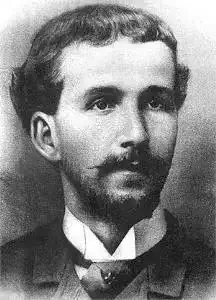
José Asunción Silva
1865–1896
· lived 30 years
 --
--
--
José Asunción Silva was a Colombian poet, a central figure of literary modernism in Hispanic America. His work, although scarce in volume, is of exceptional quality, marked by melancholy, musicality, and profound introspection. Silva explored themes such as death, unrequited love, the fleetingness of time, and the pursuit of ideal beauty, using innovative and rhythmically sophisticated language. He is considered one of the precursors of contemporary poetry in the Spanish language.
n. 1865-11-27, Bogotá · m. 1896-05-24, Bogotá
77
Views
Bio
Identification and Basic Context
José Asunción Silva (full name: José Asunción Silva y Gómez) was a Colombian poet, born and died in Bogotá. He is one of the most important figures of Hispanic American literary Modernism and a pioneer of contemporary poetry in Spanish. His life and work unfolded in the second half of the 19th century and the early 20th century, a period of changes and consolidation of national identities in Latin America.Childhood and Education
Silva was born into a well-to-do family in Bogotá. His childhood was marked by delicate health and an early inclination for reading. He received limited formal education but was a voracious autodidact, devouring works of universal literature. Readings of French Romantic and Symbolist poets, as well as Spanish authors, shaped his aesthetic sensibility and worldview.Literary Career
Silva's literary career began early, showing great originality and mastery of language from the outset. Despite his short life, he left a poetic legacy of great quality and influence. His poetic work is characterized by the exploration of stages marked by melancholy, the search for ideal beauty, and profound introspection. His contributions to magazines and newspapers of the time were fundamental to the dissemination of his work and his influence on other writers.Work, Style, and Literary Characteristics
Silva's poetic work is renowned for its musicality, elegiac tone, and depth of themes. "Nocturno III" is perhaps his most emblematic poem, a masterpiece of melancholy and the expression of pain over loss. Other recurring themes include unrequited love, the fleetingness of time, death, and the pursuit of beauty and perfection. His style is distinguished by the use of free verse, metrical experimentation, richness of imagery, and careful lexical selection, often tinged with exotic vocabulary and great sensory plasticity. He is associated with Symbolism and Parnassianism, but transcends these labels due to his originality and profound subjectivity. He introduced a formal and thematic renewal that significantly influenced later poetry.Cultural and Historical Context
Silva lived in a time of cultural and political effervescence in Colombia and Latin America. He was a contemporary of important literary movements and engaged with the aesthetic currents of his time, especially Modernism. His work reflects the tensions and aspirations of a society in transition, as well as his own critical stance towards social conventions.Personal Life
Silva's personal life was marked by illness, financial difficulties, and profound sadness, elements that are reflected in his work. His emotional relationships, often marked by idealization and loss, were a source of inspiration. He had significant literary friendships and rivalries that, while not eclipsing his genius, were part of his complex personality.Recognition and Reception
Although during his lifetime he did not enjoy massive and constant recognition, Silva's work was valued by a circle of connoisseurs and critics who sensed his genius and importance. It was after his death that his stature grew, being posthumously recognized as one of the great poets of Modernism and a capital influence on Latin American poetry.Influences and Legacy
Silva was deeply influenced by poets such as Edgar Allan Poe, Charles Baudelaire, and the French Parnassians. In turn, his work exerted a decisive influence on subsequent generations of Hispanic American poets, who admired his formal mastery, thematic originality, and profound sensibility. His entry into the literary canon is indisputable, and his legacy endures in the way poetry in Spanish approached subjectivity and experimentation.Interpretation and Critical Analysis
Silva's work has been the subject of multiple interpretations, focused on his existential melancholy, his search for the transcendent, and his ability to capture the complexity of the human soul. The relationship between his life and his work is a recurring theme of critical analysis.Childhood and Education
Among the curiosities of his life, his facet as a merchant stands out, which forced him to travel and deal with worldly matters that contrasted with his poetic sensibility. His manuscripts and correspondence reveal a tormented soul and a singular genius.Death and Memory
José Asunción Silva died by suicide in 1896, at the age of 29, in a context of profound personal and economic crises. His premature death shocked the literary world and, paradoxically, helped to cement his legend and memory as one of the most talented and tragic poets of Hispanic America.Poems
0No poems found
Comments (0)
Log in
to post a comment.
No comments yet. Be the first to comment.