
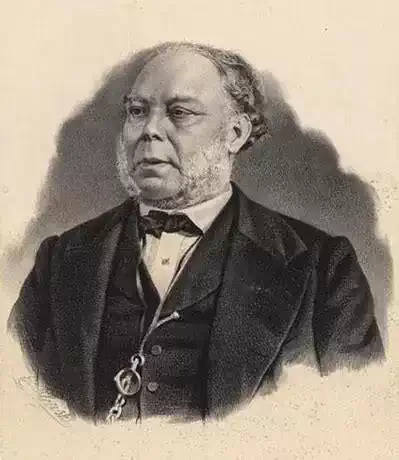
José Maria da Costa e Silva
1788–1854
· lived 65 years
 PT
PT
PT
José Maria da Costa e Silva was a multifaceted figure, with a body of work that encompassed poetry, literary criticism, and essayism. His poetry is often associated with deep lyricism and a reflection on identity, memory, and the individual's relationship with time. His intellectual journey was marked by a sharp critical sense and a constant search for the expression of the human soul in its most diverse facets.
n. 1788-08-15, Lisboa · m. 1854-04-25, Lisboa
31
Views
Bio
Identification and basic context
José Maria da Costa e Silva was a Portuguese poet, literary critic, and essayist. He was born in Coimbra in 1809 and died in the same city in 1864. He came from a wealthy family, which allowed him access to a privileged education and to dedicate himself to literature. His nationality was Portuguese, and his writing language was Portuguese. He lived during a period of great transformations in Portugal, marked by the Liberal Wars and a context of national affirmation.Childhood and education
He studied in Coimbra, where he graduated in Law. From an early age, he showed a great interest in arts and letters, frequenting the city's literary and cultural circles. He was influenced by classical and romantic literature, absorbing the aesthetic and philosophical ideals of the era.Literary career
His literary career began with the publication of poetry, but he quickly stood out as one of the most important literary critics of his generation. He was the founder and director of important publications, such as "Revista Universal" and "Revista Contemporânea". Through these publications, he disseminated and analyzed the work of many writers, both Portuguese and foreign, playing a crucial role in shaping the literary taste of the time.Work, style, and literary characteristics
Costa e Silva's poetic work is marked by tender and melancholic lyricism, exploring themes such as love, longing, nature, and the ephemerality of life. His style is elegant and refined, with a notable musicality in his verses. As a critic, he demonstrated a profound knowledge of literature, combining erudition with a keen sensibility for analyzing works. He advocated for a certain aesthetic conservatism, valuing form and expressive clarity.Cultural and historical context
José Maria da Costa e Silva lived during Romanticism in Portugal, a period of cultural and political effervescence. He was one of the protagonists of the literary debate of the time, actively intervening in the country's cultural life. His critical position, often conservative in aesthetic terms, placed him in dialogue and, at times, in tension with the more innovative currents of Romanticism.Personal life
He married D. Maria Benedita de Mendonça e Faro, with whom he had children. His life was dedicated to literature, although he also held public office. He maintained friendships with many of the great figures of Portuguese literature of his time.Recognition and reception
During his lifetime, José Maria da Costa e Silva enjoyed great prestige in literary and academic circles. He was recognized for his intelligence, his erudition, and the quality of his writing. After his death, his figure was gradually forgotten in favor of authors with more radical aesthetic proposals, although his importance as a critic and lyric poet has always been recognized by specialists.Influences and legacy
He was influenced by classical poetry and French Romantics. His legacy lies, above all, in his critical work, which contributed significantly to the understanding and dissemination of Portuguese literature. His poetry, although less celebrated than that of other Romantics, retains value for its expressiveness and delicacy.Interpretation and critical analysis
Costa e Silva's work has been studied by literary critics, who analyze his poetry through the lens of Romanticism and his criticism as a reflection of 19th-century aesthetic trends. His critical positions, sometimes seen as conservative, are also a point of debate about the evolution of literary taste.Curiosities and lesser-known aspects
He was known for his elegance and good taste, characteristics that were reflected in his writing and way of life. His house in Coimbra was a center for literary gatherings.Death and memory
He died in 1864, victim of an illness. His works continued to circulate, but his memory was gradually eclipsed by other literary figures. More recent studies have been rescuing his figure and his importance to the history of Portuguese literature.Poems
0No poems found
Comments (0)
Log in
to post a comment.
No comments yet. Be the first to comment.