
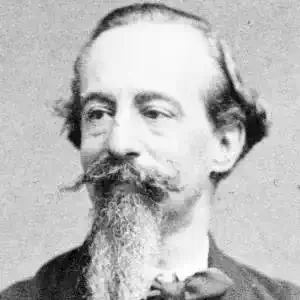
José Zorrilla
1953–2001
· lived 48 years
 --
--
--
José Zorrilla was a Spanish poet and playwright, a towering figure of Romanticism in his country. His most famous work, "Don Juan Tenorio", became a classic of Spanish theater and a popular tradition performed every year. He was characterized by his vigorous style, his overflowing imagination, and his ability to evoke the legendary past and human passions. Despite his personal and financial ups and downs, he left an indelible legacy in Spanish literature.
n. 1953-01-01, Valladolid · m. 2001-07-15, Madrid
44
Views
Bio
Identification and basic context
**Full name:** José Zorrilla y Moral **Date and place of birth:** February 21, 1817, Valladolid, Spain **Date and place of death:** January 23, 1893, Madrid, Spain **Family background, social class, and original cultural context:** Born into an upper-middle-class family, his father was a civil servant loyal to Fernandine absolutism. He grew up in a conservative and traditionalist environment. **Nationality and writing language(s):** Spanish. He wrote exclusively in Spanish. **Historical context in which he lived:** The tumultuous 19th century in Spain, marked by the War of Independence, the absolutism of Ferdinand VII, the Carlist Wars, political instability, the Restoration, and the beginnings of industrialization.Childhood and education
Zorrilla received a meticulous education, studying at the seminary of Toledo and later at the University of Valladolid. However, his literary vocation soon clashed with his father's wishes for him to pursue a legal career. His early fascination with literature and theater, especially with the works of Calderón de la Barca and Lope de Vega, marked his destiny.Literary career
His literary debut took place in 1837 with the reading of a funeral composition in honor of the poet Mariano José de Larra. Shortly after, he premiered his first theatrical work, "El zapatero y el rey". Great success came with "Don Juan Tenorio" in 1844, a work that catapulted him to fame. He spent long periods in France and Mexico, seeking fortune and recognition, but was often mired in financial difficulties.Work, style, and literary characteristics
**Main works:** "Don Juan Tenorio" (1844), "El zapatero y el rey" (1840-1841), "El puñal del godo" (1843), "Traidor, inconfeso y mártir" (1849), "La leyenda del Cid" (1882). **Dominant themes:** Passionate love, honor, virtue, religiosity, heroism, legend, Spain's historical and legendary past, rebellion, and redemption. **Form and structure:** He mastered both verse and theatrical prose. In his poetry, he employed varied metrical forms, but his style is characterized by spontaneity and expressive force. **Poetic devices:** Abundant use of metaphors, vivid imagery, sonorous and musical language, and a vibrant rhythm that captures the reader's or spectator's attention. **Tone and poetic voice:** It is usually grandiloquent, passionate, epic, and sometimes melancholic. His poetic voice is that of the romantic par excellence, exalting feelings and passions. **Language and style:** His language is rich, florid, and often grandiloquent, with a select vocabulary and an elaborate syntax that seeks grandeur. He is a master in creating atmospheres and in describing characters and scenes. **Formal or thematic innovations:** Although he adhered to Romanticism, Zorrilla revitalized Spanish historical and legendary drama, giving it new strength and popularity. **Associated literary movements:** Spanish Romanticism.Cultural and historical context
Zorrilla lived in a time of profound transformations in Spain. His work draws on the romantic spirit, which sought inspiration and a mirror of Spanish identity in the national past, especially in the Middle Ages and the Golden Age. He was a contemporary of other great romantic authors such as Espronceda and Larra.Personal life
Zorrilla's life was marked by bohemianism, debts, and an intermittent relationship with success. Despite his talent, his excesses and lack of discipline often led him to poverty. He had several romantic relationships and a family, but his personal life was often turbulent.Recognition and reception
"Don Juan Tenorio" became a cultural phenomenon, so much so that its annual performance became a tradition. He was acclaimed in his lifetime, although he also faced criticism for his style and his ups and downs. His work is a pillar of 19th-century Spanish theater and poetry.Influences and legacy
He was influenced by the great authors of the Spanish Golden Age, such as Calderón and Lope de Vega, as well as by European romantic literature. His influence is notable in later Spanish theater and in the perpetuation of the figure of the Don Juan myth. He is considered one of the most representative poets of Spanish Romanticism.Interpretation and critical analysis
Zorrilla's work, especially "Don Juan Tenorio", has been analyzed from various perspectives: as a drama of redemption, as a reflection of the tensions between good and evil, or as an expression of the Spanish romantic spirit. Its success lies in the mixture of dramatic, lyrical, and legendary elements.Childhood and education
Zorrilla was a great improviser and a charismatic speaker. It is said that in his moments of greatest financial distress, he repeatedly sold the rights to his works. His fame reached such a point that in Mexico he was considered an almost divine poet.Death and memory
He died in Madrid in poverty, but his funeral was a grand public event. He was buried in the Pantheon of Illustrious Men, and his remains were later transferred to Valladolid. His memory endures mainly through the annual performance of "Don Juan Tenorio".Poems
0No poems found
Comments (0)
Log in
to post a comment.
No comments yet. Be the first to comment.