
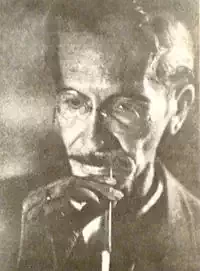
Juan L. Ortiz
1896–1978
· lived 82 years
 AR
AR
AR
Juan L. Ortiz was a prominent Argentine poet, known for his deep connection with the landscape and culture of the Argentine littoral. His work is an invitation to contemplate nature and explore Argentine identity, marked by a unique lyricism and an evocative language that distinguishes him in Spanish-language literature. He is considered one of the great innovators of 20th-century Argentine poetry.
n. 1896-06-11, Puerto Ruiz · m. 1978-09-02, Paraná
21
Views
Bio
Identification and basic context
Juan L. Ortiz, whose full name was Juan Laurentino Ortiz, was born on June 15, 1896, at **Estancia "La Verde"**, Gualeguaychú Department, Entre Ríos Province, Argentina, and passed away on July 22, 1978, in Buenos Aires. He frequently used his full name or just Juan L. Ortiz. He was of Argentine nationality and wrote in Spanish. His life and work are intrinsically linked to the landscape and culture of the Argentine littoral, during a historical period marked by intense social and cultural transformations in Argentina and Latin America.Childhood and education
Juan L. Ortiz spent his childhood and youth in the province of Entre Ríos, on a rural estate, which profoundly shaped his sensitivity and his future poetic work. The exuberant nature of the Argentine littoral, the rivers, the trees, and the simple country life were his earliest influences. He received a basic school education, but was largely self-taught in his literary and cultural education. His early readings included authors from classical and modern literature, both from Europe and Latin America, which he absorbed with great interest.Literary career
The beginning of his poetic activity dates back to his youth. His work evolved over time, going through different phases of aesthetic and thematic exploration. Ortiz published in various literary magazines and anthologies, contributing to the renewal of Argentine poetry. Although he did not professionally engage in criticism or translation, his influence as a poet was significant. His work, although often published independently or in modest editions, gradually gained recognition.Work, style, and literary characteristics
Among his major works are "El agua y la piedra" (1917), "Gualeguaychú" (1921), "La hora de las espadas" (1921), "Lienzos" (1930), "El ángel de la bicicleta" (1942), "El aire y lawitness" (1948), "El pongamala" (1952), "La entrada del tiempo" (1958), and "El junco y la brisa" (1967). The dominant themes in his poetry are nature, Argentine identity, time, memory, love, and spirituality, always with a strong connection to the littoral landscape. Ortiz experimented with poetic form, using free verse and exploring musicality and rhythm innovatively. His poetic tone is often lyrical, contemplative, and meditative, with a personal and profound voice. His language is rich in sensory images and evocations of nature, characterized by an apparent simplicity that hides great complexity. He introduced thematic and formal innovations, especially in how he portrayed the Argentine landscape and its relationship with the human being. His work engages with literary tradition, but also with the avant-garde, integrating into what has conventionally been called the "generation of 1920" or "literary nationalism," albeit with a very personal and unique style.Work, style, and literary characteristics
Cultural and historical context Juan L. Ortiz lived and wrote during a period of significant historical events in Argentina, including political and social changes. His work reflects a deep connection with the land and Argentine culture, distancing himself, to some extent, from the excessive European influences that marked other literary movements. He is often associated with the group of writers who sought a more authentic expression of Latin American identity. His work, although sometimes marginalized by official criticism, found resonance in literary circles that valued poetry rooted in local reality and culture.Work, style, and literary characteristics
Personal life Juan L. Ortiz's life was marked by his intimate relationship with nature and his dedication to poetry. His personal experiences, his connection to his homeland, and his introspection shaped his worldview and his poetic expression. His professional life was linked to education and public administration, but poetry was always the center of his existence. His spiritual beliefs, often expressed in a pantheistic way or connected to nature, are a central element of his work.Work, style, and literary characteristics
Recognition and reception Although he did not always receive immediate recognition from major cultural centers, Juan L. Ortiz is today considered one of the most important poets in Argentina and in Spanish-language literature. His work has been the subject of increasing study and admiration, both in academic circles and among readers who value his deep lyrical sensitivity and his connection to the land. He won some awards and distinctions during his lifetime, but his greatest recognition came posthumously.Work, style, and literary characteristics
Influences and legacy Ortiz was influenced by poets such as Leopoldo Lugones and other writers who explored Argentine identity. In turn, he influenced later generations of Argentine and Latin American poets, who found in his work a model of authentic lyricism and deep connection with local reality. His legacy lies in how he captured the essence of the Argentine littoral landscape and culture, elevating them to a universal plane. His work continues to be studied and admired, forming an integral part of the Argentine literary canon.Work, style, and literary characteristics
Interpretation and critical analysis Juan L. Ortiz's work has been the subject of various critical interpretations, highlighting his deep connection with nature, his exploration of Argentine identity, and his quest for a poetic language that transcends mere descriptiveness. His reflections on time, memory, and spirituality offer a rich field for philosophical and existential analysis.Work, style, and literary characteristics
Curiosities and lesser-known aspects A curious aspect of his life is his strong connection with nature, which was not just a poetic theme but a profound experience. The simplicity of his lifestyle and his almost monastic dedication to poetry are aspects that distinguish him. His manuscripts, diaries, and correspondence are valuable sources for a deeper study of his life and work.Work, style, and literary characteristics
Death and memory Juan L. Ortiz passed away on July 22, 1978, in Buenos Aires. His death marked the end of one of the most important poetic voices in Argentina. Posthumous publications and reissues of his works have kept his memory and literary relevance alive, solidifying his place in the history of Spanish-language poetry.Poems
0No poems found
Comments (0)
Log in
to post a comment.
No comments yet. Be the first to comment.