
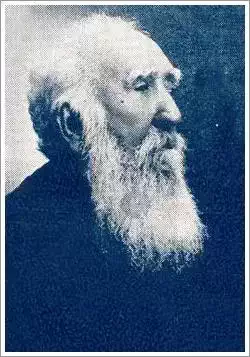
Juvenal Galeno
 BR
BR
Juvenal Galeno was a Brazilian poet, journalist, and teacher, an important figure in Ceará's and national literature at the end of the 19th and beginning of the 20th centuries. His poetic work, often linked to regionalism, portrays the life and customs of the Northeast, with a lyricism marked by simplicity and emotion. In addition to his literary production, Galeno dedicated himself to journalism and teaching, contributing to the cultural and educational life of Ceará. He is remembered as a popular and sensitive poet, whose verses capture the soul of the sertão and its people.
n. 1838-09-27, Fortaleza · m. 1931-03-07, Fortaleza
Bio
Identification and Basic Context
Juvenal Galeno, whose full name was Juvenal de Almeida Galeno, was a Brazilian poet, journalist, and teacher. He was born in Sobral, Ceará, in 1854, and passed away in Fortaleza, Ceará, in 1932. He is considered one of the representatives of Ceará's and Brazilian poetry from the post-Romantic period, with a strong inclination towards regionalism.Childhood and Education
Galeno had a modest childhood in the interior of Ceará. His intellectual formation was largely self-taught, complemented by studies that led him to become a primary school teacher. His experiences in the rural environment and his observation of sertanejo life were fundamental in shaping his poetic sensibility and themes.Literary Career
He began his literary career by publishing poems in newspapers in Sobral and Fortaleza. His poetic production gained prominence by portraying the daily life, landscapes, and human types of the Ceará sertão. Besides poetry, he worked as a journalist, writing for various periodicals, and as a teacher, dedicating himself to education in his region. His work evolved from a more generic lyricism to a more pronounced expression of Ceará's regionalism.Work, Style, and Literary Characteristics
His best-known works include "O Sertanejo" (1887), "Cantos do Sertão" (1890), and "O Engeitado" (1928). The theme of his poetry is predominantly the northeastern sertão, exploring the figure of the vaqueiro (cowboy), drought, longing, love, and local customs. His style is characterized by simple, accessible, and emotional language, with a lyricism that seeks to capture the essence of the northeastern people and land. He frequently used decasyllabic verse and rhyme, in a more traditional poetic form, in tune with the popular taste of the time. His poetic voice is that of the sertanejo man, expressing his pains, joys, and his deep connection with nature.Cultural and Historical Context
Juvenal Galeno lived in a period of great transformations in Brazil, including the end of the Empire and the beginning of the Republic, as well as social and economic events that affected the Northeast, such as cyclical droughts and the abolition of slavery. His work is a portrait of this context, documenting the social and cultural life of Ceará at a crucial moment in its history. He is part of a movement to value regionalism in Brazilian literature.Personal Life
In addition to being a poet and journalist, Juvenal Galeno dedicated himself to education, being a respected educator in his community. His life was marked by simplicity and dedication to the arts and teaching. He maintained a strong connection with his homeland, Ceará, being a defender of its culture and people.Recognition and Reception
Juvenal Galeno gained recognition in his time, especially in Ceará, where he is considered a people's poet. His work was published in newspapers and anthologies, and his poetry, for its simplicity and emotionality, won a loyal readership. Although he did not achieve the same national prominence as other poets of his time, his legacy is important for regional literature.Influences and Legacy
His poetry was influenced by late Romanticism and the valorization of regionalism that was consolidating in Brazilian literature. Juvenal Galeno's legacy lies in his ability to give voice to the sertão and its people, recording customs, landscapes, and feelings that marked the northeastern identity. He is one of the pioneers in the literary representation of the sertanejo universe in Ceará.Interpretation and Critical Analysis
Juvenal Galeno's poetry is seen as an important document of Ceará's life and culture at the end of the 19th and beginning of the 20th centuries. His work is analyzed for its representation of regionalism, its popular lyricism, and its ability to move the reader through the description of sertanejo daily life.Curiosities and Lesser-Known Aspects
Galeno also stood out as a defender of popular culture and Ceará traditions. His work as a journalist brought him closer to the social and political debates of his time, influencing his worldview.Death and Memory
Juvenal Galeno passed away in Fortaleza in 1932, leaving an important legacy for Ceará's literature. His work continues to be studied and valued, especially in the context of Brazilian regionalism, keeping alive the memory of a poet who knew how to sing the beauties and hardships of the sertão.Poems
0No poems found
Comments (0)
No comments yet. Be the first to comment.