
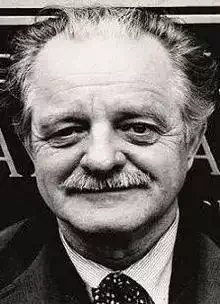
Kenneth Rexroth
 US
US
Kenneth Rexroth was an influential American poet, essayist, and critic, a prominent figure in 20th-century American poetry, associated with movements such as Modernism and the Beat Generation. His work is characterized by a wide range of interests, from Eastern poetry and philosophy to radical politics and ecology. Rexroth was known for his scholarship, his accessible yet profound language, and his advocacy for poetry that was simultaneously beautiful and socially relevant, exploring themes such as nature, love, spirituality, and social criticism.
n. 1905-12-22, South Bend · m. 1982-06-06, Santa Bárbara
Bio
Identification and basic context
Kenneth Rexroth was an American poet, translator, critic, and essayist, a central figure in 20th-century literature. Born in Blue Earth, Minnesota, he was a multifaceted voice that spanned various literary and philosophical movements. He was known for his vast culture and his ability to engage with poetic traditions from different cultures and eras. He wrote primarily in English.Childhood and education
Rexroth had a childhood marked by travel and the influence of a writer mother and a father exposed to radical social ideas. He was largely self-taught, immersing himself in a wide range of readings that included philosophy, Eastern poetry, history, and politics. This eclectic and unconventional education was fundamental in shaping his thought and literary work.Literary career
Rexroth's literary career began in the 1920s with the publication of his first poems. Over the decades, he developed a career marked by formal and thematic experimentation, exploring diverse poetic languages, from more traditional forms to free verse experiments. He was a regular contributor to various literary publications, where he also worked as a critic and translator, promoting the dissemination of foreign poets in the United States.Work, style, and literary characteristics
Among Kenneth Rexroth's best-known works are "The Dragon and the Unicorn" (1975), "Collected Poems" (1964), and "The New British Poetry" (1949). The central themes of his poetry include nature, love, spirituality (with strong influences from Buddhism and Taoism), social and political criticism, and reflection on the human condition. His style is characterized by clarity, musicality, imagistic density, and scholarship, combined with accessible language. He frequently used free verse, but with a well-defined sense of rhythm and structure. Rexroth's poetic voice is multifaceted, capable of being lyrical, philosophical, political, or contemplative. His language is rich in cultural and philosophical references, yet manages to maintain direct communication with the reader. He was an innovator in incorporating elements of Eastern poetry, such as contemplation of nature and formal simplicity, into American poetry. Associated with modernism, his work also engaged with the Beat Generation, serving as a reference figure for many poets of that generation, albeit with a more scholarly and comprehensive perspective.Cultural and historical context
Rexroth lived in a period of intense transformations in the United States, including the Great Depression, World War II, and the Cold War. He was a vocal critic of social and political injustices, and his radical and pacifist positions marked his life and work. He maintained relationships with various literary and artistic circles, being a respected and sometimes controversial figure. His poetry reflects the tensions and debates of his time.Personal life
Rexroth's personal life was marked by marriages, crises, and intense intellectual activity. He was a fervent defender of social and environmental causes, which sometimes put him in conflict with authorities. His philosophy of life, influenced by Eastern traditions, valued simplicity, contemplation, and connection with nature. He pursued various professions throughout his life, but poetry and writing were always central.Recognition and reception
Although he did not achieve the massive fame of some of his contemporaries, Kenneth Rexroth was widely respected in literary circles. He received several awards and distinctions, and his work was the subject of academic study. His popularity among certain groups, particularly those linked to the counterculture and alternative poetry, was considerable. He is recognized as one of the great American poets of the 20th century.Influences and legacy
Rexroth was influenced by a wide range of authors and traditions, including Walt Whitman, Ezra Pound, Eastern philosophies (Buddhism, Taoism), and classical Western poetry. His legacy is that of a scholarly and humanist poet who managed to blend diverse traditions to create a unique body of work. He influenced generations of poets with his approach to nature, spirituality, and social criticism, and his advocacy for poetry that was both engaged and aesthetically relevant.Interpretation and critical analysis
Rexroth's work has been interpreted as a call to rediscover natural beauty, reflect on the human condition, and critique power structures. Critical analyses highlight his ability to balance scholarship with emotion, and his holistic worldview, which integrates ecology, spirituality, and politics. Debates surrounding his work sometimes focus on his political radicalism and his vision of a more just and harmonious society.Curiosities and lesser-known aspects
A curiosity about Rexroth is his skill as a visual artist and his deep connection with the visual arts. He was also a talented cook and a lover of nature, passions that were reflected in his writing. His home in Santa Barbara was a meeting point for artists and intellectuals, where ideas were debated and culture was shared.Death and memory
Kenneth Rexroth died in 1990 in Santa Barbara, California. His death marked the end of an era for many who admired him. His work continues to be published and studied, ensuring his memory and legacy as one of the most important and multifaceted poets in American literature.Poems
0No poems found
Comments (0)
No comments yet. Be the first to comment.