
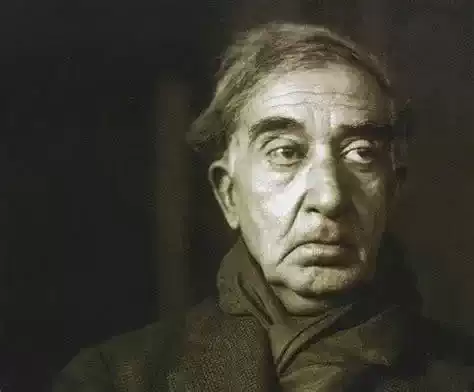
Konstantínos Kaváfis
 EG
EG
Konstantinos Kavafis was a Greek poet, widely considered one of the most important figures in modern Greek literature. His work is known for its historical and philosophical depth, exploring themes such as memory, time, identity, and desire, often with a melancholic and ironic perspective. Known for his unique approach to poetry, Kavafis combined classical style with innovative language, reflecting the complexity of the human experience and the richness of Hellenic heritage. His influence extends beyond Greece, being internationally recognized as a poet of profound universal resonance.
n. 1863-04-29, Alexandria · m. 1933-04-29, Alexandria
Bio
Identification and basic context
Konstantinos Kavafis (in Greek: Κωνσταντίνος Καβάφης) was a Greek poet. He was born in Alexandria, Egypt, in 1863, and died in the same city in 1933. He was of Greek nationality and wrote in Modern Greek. He lived in a period of great political and social transformations in Egypt and the Eastern Mediterranean, marked by the presence of diverse cultures and the influence of the British Empire.Childhood and education
Kavafis was born into a wealthy Greek family from Constantinople (now Istanbul) that moved to Alexandria when he was a child. He received an excellent education, including a period in England, which allowed him contact with the English language and culture. His youth was marked by the family's financial instability and a deep connection to the city of Alexandria, which would become the central setting for his poetry.Literary career
His literary activity began in his youth, with poems published in Greek newspapers in Egypt. However, his most significant and personal work began to take shape later. Kavafis had a slow and deliberate career, revising and rewriting his poems over decades. He published only a few collections during his lifetime, often preferring to distribute poems individually. He did not actively collaborate with literary magazines in the conventional sense, but his work circulated and was gradually recognized.Work, style, and literary characteristics
Kavafis's most significant works include "Ithaca," "Waiting for the Barbarians," "The City," "The Birthday," "Alexandria, 31 BC," "Ten Days," "Return from Greece," "The King of Daphnis," "Meros," "The Knights (of Sidon)," "The First": "To a God," "A Young Poet from the Island of Tenedos," "The Poet," "A Citizen of the Upper Class, Founder of a Society for the Aid of Young Post-Graduates," "History." Dominant themes in his work are historical and personal memory, time, desire, identity, homosexuality, decay, disappointment, the search for meaning, and reflection on the human condition and empire. His style is marked by a conversational tone, sometimes ironic or melancholic, and by a language that blends modern Greek with archaisms and technical terms, creating a unique sound. He often uses free verse, but with a very careful internal rhythm. His poetry is dense with historical and literary allusions, requiring the reader to have prior knowledge or careful consultation. Kavafis innovated by bringing less explored historical themes and perspectives into poetry, focusing on the human dimension of historical events and characters, and the complexity of daily life in contexts of imperial decline. His work dialogues with the classical Greek tradition, but with a markedly modern and Egyptian sensibility.Work, style, and literary characteristics
Cultural and historical context Kavafis lived in a cosmopolitan Alexandria, a cultural and commercial center of the Mediterranean. His historical context included the decline of the Ottoman Empire and the rise of British power in Egypt, as well as political upheavals in Greece. He was a contemporary of important literary movements in Europe but maintained a relatively isolated position, developing a very personal style. His poetry reflects the tension between the glorious past and the melancholic present, the cultural diversity of his city, and the experience of being Greek in a foreign land.Work, style, and literary characteristics
Personal life Kavafis led a discreet and largely solitary life. He worked as a civil servant and manager of an irrigation company, which provided him with financial stability to dedicate himself to poetry. His personal relationships, including his homosexuality, are often interpreted as underlying influences in his work, particularly in the exploration of desire and intimacy.Work, style, and literary characteristics
Recognition and reception During his lifetime, Kavafis had limited recognition, primarily in Greek literary circles. His international fame grew significantly after his death, especially through translations into English and other languages. Today, he is universally recognized as one of the greatest poets of the 20th century.Work, style, and literary characteristics
Influences and legacy Kavafis was influenced by Hellenistic poetry, Byzantine history, and the Greek literary tradition. His work, in turn, profoundly influenced modern Greek poetry and many international poets, such as T.S. Eliot and W. H. Auden. His legacy lies in his thematic and stylistic originality, and his ability to give voice to collective memory and individual experiences in a universal way.Work, style, and literary characteristics
Interpretation and critical analysis Kavafis's work has been the subject of extensive critical studies, which explore its multiple layers of meaning, its relationship with history, its exploration of Greek identity, and its perspective on time and mortality. Interpretations of his homosexuality and its representation in poetry are a constant field of analysis.Work, style, and literary characteristics
Curiosities and lesser-known aspects Kavafis was known for being a collector of historical information and for frequently walking through the streets of Alexandria, absorbing the atmosphere and details that he later incorporated into his poems. He had a habit of typing his poems and distributing them to his friends and acquaintances, often without formally publishing them.Work, style, and literary characteristics
Death and memory He died of throat cancer in 1933. His work continued to be published and disseminated, consolidating his place in the world literary canon.Poems
0No poems found
Comments (0)
No comments yet. Be the first to comment.