
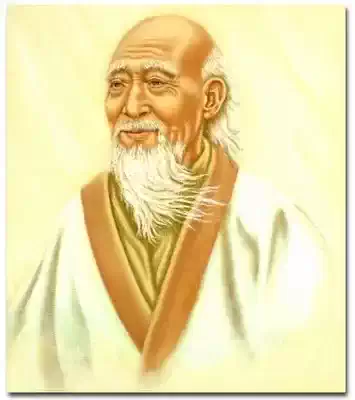
Lao Zi
b. 604
 CN
CN
CN
Lao Zi (or Lao Tzu) is traditionally credited as the author of the "Tao Te Ching" and a central figure in Taoist philosophy. His historical existence is debated, but his influence through the teachings on the Tao – the Way – is immeasurable. His philosophy emphasizes harmony with nature, simplicity, non-action (wu wei), and wisdom through introspection and observation of the universe.
n. 0604-01-01, Império Chu · m. -600ac, China
21,423
Views
Bio
Identification and basic context
Lao Zi (or Lao Tzu) is a semi-legendary figure, traditionally considered the founder of Taoism and author of the "Tao Te Ching." His historical existence is the subject of academic debate, with some considering him a real figure from the 6th century BC, while others see him as a compilation of wisdom from various sources over time. His name means "Old Master" or "Old Sage." His nationality is Chinese, and the language of the "Tao Te Ching" is ancient Chinese.Childhood and education
Little is known about Lao Zi's childhood or education, due to the legendary nature of his figure. If real, he would have received an education typical of a scholar of the time, with access to classical texts and Chinese philosophical traditions. The primary influences would be the observation of nature, ancestral wisdom, and the pursuit of a way of life in harmony with the universe.Literary career
Lao Zi's "literary career" is intrinsically linked to the authorship of the "Tao Te Ching" (or "Dao De Jing"), the foundational text of Taoism. This text, traditionally attributed to him, is a concise and enigmatic work that expounds the principles of the Tao. There are no records of other works or an extensive literary activity beyond this seminal text.Work, style, and literary characteristics
Work, style, and literary characteristics The main work is the "Tao Te Ching," a text composed of 81 short chapters. Central themes include the Tao (the Way, the ultimate and nameless principle of the universe), Wu Wei (non-action or effortless action), simplicity, humility, spontaneity, and harmony with nature. The style is paradoxical, poetic, aphoristic, and enigmatic, using metaphors and images from nature to illustrate abstract philosophical concepts. The tone is contemplative and, at times, challenging to social conventions. The language is deliberately simple and direct, yet loaded with deep meaning. Lao Zi is associated with Taoism, and his work innovated by proposing a philosophy that contrasts with Confucianism, which was more focused on social order and ethics.Work, style, and literary characteristics
Cultural and historical context Lao Zi is often associated with the period of the "Hundred Schools of Thought" in ancient China (approximately 771-256 BC), a time of great philosophical and intellectual ferment. The "Tao Te Ching" emerged as a response to the wars and social chaos of the time, proposing a path of wisdom and inner peace. His philosophy dialogues with and contrasts with Confucianism, which emphasized social order, morality, and rituals.Work, style, and literary characteristics
Personal life If Lao Zi was a real historical figure, his personal life is largely unknown. Traditions suggest that he may have been an archivist in the imperial court, which would have given him access to vast knowledge. His philosophy suggests a life of introspection, simplicity, and renunciation of power and fame, living in harmony with the principles of the Tao.Work, style, and literary characteristics
Recognition and reception Although his historical figure is uncertain, the "Tao Te Ching" and Lao Zi's teachings are universally recognized as pillars of Eastern philosophy. Taoism is one of the three major religions and philosophies of China, and its influence extends globally, being a text studied by philosophers, mystics, and spiritual seekers from diverse cultures.Work, style, and literary characteristics
Influences and legacy Lao Zi, through the "Tao Te Ching," has profoundly influenced Chinese philosophy, religion, art, and culture, as well as thought throughout the East and, more recently, the West. Taoism continues to be a significant spiritual and philosophical force. His legacy lies in promoting a worldview centered on nature, simplicity, and inner peace.Work, style, and literary characteristics
Interpretation and critical analysis The interpretation of the "Tao Te Ching" is multifaceted, addressing metaphysical, ethical, political, and spiritual aspects. The concept of the Tao, being nameless, is a central point of philosophical reflection. The practice of Wu Wei has been interpreted in various ways, from passivity to effective and subtle action. Controversies regarding his historicity and the exegesis of his teachings are recurrent.Work, style, and literary characteristics
Curiosities and lesser-known aspects Legend has it that, disillusioned with the decadence of society, Lao Zi rode a blue buffalo and headed west, disappearing into the mists of time. A border guard recognized his wisdom and asked him to record his teachings, resulting in the "Tao Te Ching." His figure is often associated with a hermit sage.Work, style, and literary characteristics
Death and memory If Lao Zi was a historical figure, the details of his death are unknown. His memory resides in the perpetuity of the "Tao Te Ching" and in the continuous practice and study of Taoism, which venerates him as the "Great Sage" and "Father of Taoism."Poems
0No poems found
Quotes
6Comments (0)
Log in
to post a comment.
No comments yet. Be the first to comment.