
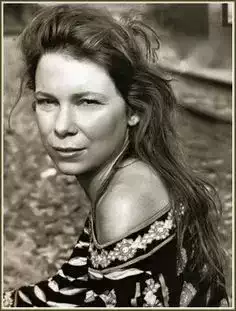
Lhasa de Sela
 US
US
Lhasa de Sela was a Mexican singer-songwriter, known for her unique and emotive voice and for the fusion of musical styles that included influences from folk, blues, rock, and traditional Latin American music. Her music, often sung in different languages, addressed themes such as love, loss, spirituality, and the inner journey, with a depth and authenticity that captivated a loyal audience worldwide. With a mesmerizing stage presence and a discography that reflects a constant pursuit of artistic expression, Lhasa left a musical legacy that celebrates cultural diversity and the intensity of the human experience.
n. 1972-09-27, Big Indian · m. 2010-01-01, Montreal
Bio
Identification and basic context
Lhasa de Sela, known artistically as Lhasa, was a singer-songwriter born in Mexico, but who lived much of her life in exile, between the United States and Canada. Her music is a unique fusion of folk, blues, rock, and influences from traditional Latin American music, sung in Spanish, English, and French.Childhood and education
Born in 1972, the daughter of a Mexican father and an American mother, Lhasa grew up in an artistic and multicultural environment. She spent her childhood between Mexico and the United States. Later, she moved to Montreal, Canada, where she began her musical career.Literary career
Lhasa's career was primarily musical, but the lyrical and poetic quality of her song lyrics gives her a status close to that of a poet. Her lyrics explored deep themes with a unique sensitivity.Work, style, and literary characteristics
Lhasa's work is marked by her hypnotic voice and the emotional rawness of her songs. Central themes include love, loss, longing, spirituality, sexuality, and the search for identity. Her musical style is an eclectic mix of genres, creating a distinctive and timeless sound. Her most notable albums include 'La Llorona' (1997), 'The Living Road' (2003), and 'Lhasa' (2009). Her ability to move between languages and cultures in her compositions demonstrates the universality of her art.Work, style, and literary characteristics
Cultural and historical context Lhasa emerged on the independent music scene in the 1990s and 2000s, a period when folk and alternative music were gaining increasing prominence. Her authenticity and unpretentious approach to fame allowed her to create a genuine connection with her audience.Work, style, and literary characteristics
Personal life Lhasa was known for her reserved personality and her deep connection with art as a form of personal expression. Her life was marked by travel and the constant search for authenticity, both in her music and in her existence.Work, style, and literary characteristics
Recognition and reception Lhasa's music was critically acclaimed and gained a devoted fan base worldwide. Her originality and her ability to touch listeners' souls earned her a prominent place in the international music scene.Work, style, and literary characteristics
Influences and legacy Lhasa cited diverse influences, from traditional Mexican music to artists like Leonard Cohen and Nina Simone. Her legacy lies in her ability to create a bridge between cultures and to express human emotions in a raw and beautiful way, inspiring many artists.Work, style, and literary characteristics
Interpretation and critical analysis Lhasa's work is often interpreted as an exploration of the human condition, with an emphasis on vulnerability, inner strength, and the beauty found in imperfection. Her music invites reflection on universal themes of love and loss.Work, style, and literary characteristics
Curiosities and lesser-known aspects Lhasa spoke fluent Spanish, English, and French, languages she used in her songs. Her stage presence was characterized by a calm intensity and a direct connection with the audience.Work, style, and literary characteristics
Death and memory Lhasa de Sela passed away in 2010, from cancer. Her premature death left a void in music, but her artistic legacy continues to inspire and move listeners worldwide, remembered for her unique voice and her profound artistic soul.Poems
0No poems found
Comments (0)
No comments yet. Be the first to comment.