
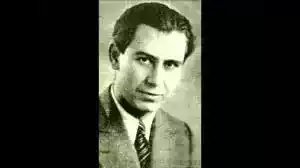
Manuel Altolaguirre
1905–1959
· lived 54 years
 --
--
--
Manuel Altolaguirre was a Spanish poet, linked to the Generation of '27 movement. His work is characterized by an intimate and reflective lyricism, often tinged with melancholy and a deep connection to the Andalusian landscape. He explored themes such as love, the passage of time, and the transience of existence, employing a refined and musical language. His work as a publisher and cultural manager was also significant, contributing to the dissemination of the poetry of his time.
n. 1905-06-29, Málaga · m. 1959-07-26, Burgos
27
Views
Bio
Identification and basic context
Manuel Altolaguirre y Carpintero was a prominent Spanish poet, a central figure of the Generation of '27. Born in Malaga, Spain, he developed a prolific literary career marked by introspection and musicality. His work is situated in the context of avant-garde poetry and the renovation of poetic language in the first half of the 20th century.Childhood and education
Born into a modest family in Malaga, Altolaguirre received a basic education but showed a strong inclination for reading and writing from a young age. His encounter with other poets and artists in the literary circles of Malaga and, later, Madrid, was fundamental to his intellectual and artistic development. Readings of classical and contemporary authors, as well as the cultural effervescence of the time, shaped his sensibility.Literary career
His literary career began to take off in the 1920s, publishing his first poetry collections and actively participating in the literary discussions and journals of the time. Together with Emilio Prados, he founded the magazine Litoral, a milestone in the dissemination of the Generation of '27. Throughout his career, he explored various facets of poetic creation, always maintaining a line of intimacy and reflection.Work, style, and literary characteristics
Among his most important works are "Las islas invitadas" (1926), "Poemas escogidos" (1934), and "Nuevos poemas" (1938). His poetry is characterized by a lyrical and elegiac tone, focusing on themes such as love, death, time, and memory. He employs careful language, of great musicality and formal refinement, often with influences from surrealism and neopopularism. His style is intimate and melancholic, with a deep connection to the Andalusian landscape.Cultural and historical context
Altolaguirre intensely experienced the cultural environment of the Residencia de Estudiantes in Madrid, a melting pot of Spanish artistic and scientific avant-garde. He witnessed and participated in the aesthetic and political debates of his time, and his work was marked by historical events, especially the Spanish Civil War, which led him to exile.Personal life
His life was marked by friendship and collaboration with other poets of the Generation of '27, such as Federico García Lorca and Rafael Alberti. He was married to the also writer Concha Méndez, with whom he shared literary and life interests. Exile after the Spanish Civil War was a severe blow to his life and work.Recognition and reception
Although recognized during his lifetime by his contemporaries and some critics, his work has been the subject of more profound and systematic study in recent decades, consolidating his place as an important poet of the Generation of '27. His editorial work, especially through the magazine Litoral, has also been fundamental to understanding the production of his generation.Influences and legacy
Altolaguirre was influenced by traditional Spanish poetry, as well as by European avant-garde currents. His work, in turn, has influenced later poets through its intimate treatment of existence and its formal mastery. His legacy lies both in his poetic output and in his role as a promoter of culture.Interpretation and critical analysis
Critics have highlighted in his work the tension between the lyrical and the existential, the search for beauty in transience, and the depth of his introspection. His poems invite reflection on the human condition and the permanence of art in the face of time.Childhood and education
In addition to his poetic facet, Altolaguirre was a skilled typographer and designer, which was reflected in the careful editing of "Litoral". His exile in Mexico was an important stage of his life, where he continued his literary and cultural work.Death and memory
Manuel Altolaguirre died in Mexico City, far from his homeland. His memory endures through his poetic work and his contribution to the legacy of the Generation of '27.Poems
0No poems found
Comments (0)
Log in
to post a comment.
No comments yet. Be the first to comment.