
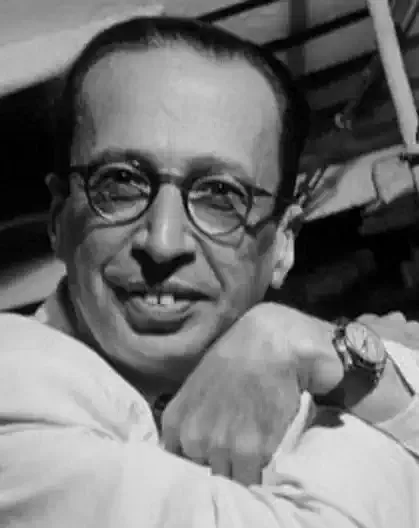
Manuel Bandeira
1886–1968
· lived 82 years
 BR
BR
BR
Manuel Bandeira was a Brazilian poet, literary critic, and professor, considered one of the greatest names in 20th-century Brazilian poetry and one of the pioneers of Modernism. His work, marked by simplicity, musicality, and profound melancholy, addressed themes such as childhood, death, illness, saudade, daily life, and the human condition. Bandeira left a unique poetic legacy, characterized by his intimate lyricism and his ability to find beauty in the simplicity and ephemerality of life.
n. 1886-04-19, Recife · m. 1968-10-13, Rio de Janeiro
118
Views
Bio
Identification and basic context
Manuel Carneiro Bandeira was born in Recife, Pernambuco, on April 19, 1886, and passed away in Rio de Janeiro on October 13, 1968. He is one of the most important and beloved poets in Brazilian literature. He came from a middle-class family. His father was an engineer, and his mother was the daughter of a Protestant pastor. His childhood and adolescence in Recife, marked by the beauty of the tropical climate and family memories, were crucial to his poetic formation. He moved to Rio de Janeiro in his youth to pursue his studies.Childhood and formation
Bandeira's childhood was marked by a serious illness: tuberculosis, which accompanied him throughout his life and forced him into long periods of rest and treatment. This experience with the fragility of life and the proximity of death profoundly influenced his work. He was educated in boarding schools and showed a great interest in reading and writing from an early age. His education was largely self-taught, complemented by his passion for books and literature.Literary career
Bandeira began his literary career with the publication of 'Cinzas das Horas' in 1907, but it was with 'A Seca' (1909) and 'O Ritmo Discreto da Poesia' (1911) that he began to outline his style. His participation in the Week of Modern Art of 1922, with the reading of the poem "Os Sapos" (The Toads), was a landmark in his career and in the history of Brazilian Modernism, although he himself felt somewhat detached from the avant-garde excesses. He published numerous poetry books, as well as chronicles, short stories, and essays.Work, style, and literary characteristics
Bandeira's work is characterized by a deep lyricism, marked by melancholy, saudade, and reflection on life and death. Themes such as lost childhood, illness, the fugacity of time, the beauty of simple things, and the human condition are central. His language is of apparent simplicity, but charged with emotion and musicality, using free verse in an innovative way. Poems such as "Vou-me embora pra Pasárgada" (I'm leaving for Pasargada), "A Morte de um Moleque" (The Death of a Boy), "O Último Poema" (The Last Poem), "Andorinha" (Swallow), and "Os Sapos" (The Toads) are representative of his style. His poetic voice is intimate, confessional, and sometimes ironic, capable of transfiguring the everyday into art. His poetry is marked by a unique delicacy and a sensitivity in capturing the fleeting moments of existence.Work, style, and literary characteristics
Cultural and historical context Bandeira lived during a period of intense cultural effervescence in Brazil, being one of the key figures of Modernism. His work dialogues with the aesthetic and social concerns of the time, but always maintaining his individuality. He maintained friendships and collaborations with other important modernist writers, such as Oswald de Andrade and Mário de Andrade.Work, style, and literary characteristics
Personal life Bandeira's life was marked by his fragile health, due to tuberculosis, which forced him to undergo various treatments and live in constant concern about the disease. He was a literature professor in high schools and at the National Faculty of Philosophy in Rio de Janeiro, a profession he carried out with dedication. His personal life was relatively discreet, but his poetry is a mirror of his sensitivity and profound humanity.Work, style, and literary characteristics
Recognition and reception Although he was one of the central figures of Modernism, the full recognition of his work came gradually. Today, Manuel Bandeira is considered one of the pillars of Brazilian poetry, and his work is widely studied and admired. His ability to touch the reader with his sincerity and lyricism has won him a special place in the hearts of Brazilians.Work, style, and literary characteristics
Influences and legacy Bandeira was influenced by poets such as Cruz e Sousa, Verlaine, and Walt Whitman. His legacy is immense, having opened paths for more lyrical and intimate poetry within Modernism and influenced countless later poets with his authenticity and his unique way of treating universal themes. His poetry continues to be a source of inspiration for its beauty and humanity.Work, style, and literary characteristics
Interpretation and critical analysis Bandeira's work has been analyzed from various perspectives, highlighting his ability to express melancholy and the ephemerality of life, his relationship with illness and death, and his skill in finding poetry in the mundane. His intimate lyricism and his accessible yet profoundly expressive language are central points in criticism.Work, style, and literary characteristics
Curiosities and lesser-known aspects Bandeira was known for his shyness and his dedication to writing. A curiosity is his fondness for animals, especially dogs, which sometimes appear in his poetry. His writing habits were methodical, despite interruptions caused by his health.Work, style, and literary characteristics
Death and memory Manuel Bandeira passed away in Rio de Janeiro, leaving a vast poetic collection that has become a treasure of Brazilian literature. His memory is honored by the continuous reading and study of his work, which remains alive and moving for new generations.Poems
0No poems found
Comments (0)
Log in
to post a comment.
No comments yet. Be the first to comment.