
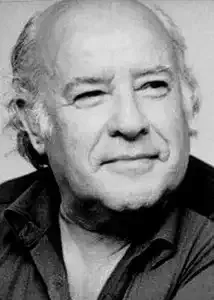
Manuel da Fonseca
 PT
PT
Manuel da Fonseca was a Portuguese writer whose work was distinguished by its raw realism and profound attention to the living conditions of the rural populations of Alentejo, especially the working class and peasants. His writing, marked by a language steeped in the land and social denunciation, portrays the struggle for survival, exploitation, and human dignity amidst adversity. He was also a poet, with a lyrical work that complements his prose, exploring existential themes and the relationship between man and nature and the land.
n. 1911-10-15, Santiago do Cacém · m. 1993-03-11, Lisboa
Bio
Identification and Basic Context
Full name: Manuel Ribeiro da Fonseca Date and place of birth: November 15, 1921, Santiago do Cacém Date and place of death: September 23, 1993, Lisbon Nationality: Portuguese Language of writing: Portuguese Historical context in which he lived: He lived most of his life under the Estado Novo regime in Portugal, a period of censorship and repression, but also of great social and economic transformations, including emigration and social struggles in the countryside. His work reflects the raw realities of that period, especially in the rural context.Childhood and Education
Born and raised in Alentejo, a region that profoundly marked his work. His childhood and youth were spent in direct contact with the rural world, its traditions, and the difficulties of the lives of farm workers. His education, although not specifically literary at first, was shaped by careful observation of reality and by reading authors who inspired him to write.Literary Career
Manuel da Fonseca's literary career began with poetry, but it was in prose that he achieved greater recognition. He began publishing poems in magazines and anthologies. His transition to writing prose was motivated by the need to portray the social realities that surrounded him with greater depth and realism. His work evolved into a poignant social realism, denouncing injustices and precarious living conditions, especially in the rural Alentejo.Work, Style, and Literary Characteristics
His best-known works include the novel "Cerro Negro" (1944) and the short story collections "O Fogo e a Cinza" (1953) and "Vento do Norte" (1957), in addition to the poetry "Mar Português" (1945). The dominant themes in his work are life in Alentejo, the exploitation of rural workers, human dignity, the struggle for land, and man's relationship with nature. His style is markedly realistic, with a raw, direct language imbued with Alentejo's oral tradition. He uses a vocabulary rich in regional terms and describes the landscapes and customs of Alentejo in detail. His poetic voice is often that of the people, the oppressed, and the forgotten, with a tone of denunciation, but also of hope and resilience.Work, Style, and Literary Characteristics
Cultural and Historical Context Manuel da Fonseca is one of the exponents of the so-called Portuguese Neorealism, although his work transcends the strict boundaries of the movement. He lived in a period of strong political and social intervention by many intellectuals, and his writing is part of this desire to give voice to the marginalized and denounce social ills. He was a contemporary of other writers who addressed similar themes, dialoguing and sometimes diverging on forms of representation.Work, Style, and Literary Characteristics
Personal Life His connection to Alentejo was fundamental throughout his life and work. His personal experiences and his direct observation of rural life shaped his writing. His social and political convictions were reflected in his work, which became a vehicle for denouncing social injustices. Professionally, he dedicated himself to various activities, but always with a strong inclination for writing and social engagement.Work, Style, and Literary Characteristics
Recognition and Reception Manuel da Fonseca is widely recognized as one of the great prose writers of the 20th century in Portugal. His work has been praised for its authenticity, expressive power, and importance as a testimony to Portuguese social realities. His name is firmly established in the canon of Portuguese literature, being the subject of study and admiration.Work, Style, and Literary Characteristics
Influences and Legacy He was influenced by authors who portrayed rural life and the human condition in contexts of hardship. His legacy lies in his ability to give voice to Alentejo and its workers, in his realistic writing, and in his profound humanity. He influenced generations of writers who saw in him a model of literary and social commitment.Work, Style, and Literary Characteristics
Interpretation and Critical Analysis Manuel da Fonseca's work is often analyzed from the perspective of social realism, the denunciation of exploitation, and the valorization of resistance and human dignity. His writing invites reflection on social structures, man's relationship with the land, and the pursuit of justice.Work, Style, and Literary Characteristics
Curiosities and Lesser-Known Aspects Manuel da Fonseca had a strong connection to the Alentejo land, which was not just a setting, but a living entity in his work. He was known for his modesty and his deep respect for the rural people. His writing habits were marked by immersion in the environment he portrayed.Work, Style, and Literary Characteristics
Death and Memory He passed away in Lisbon, but his spirit and his work remain intrinsically linked to Alentejo. His works continue to be read and studied, keeping alive the memory of one of the most important chroniclers of Portuguese social reality.Poems
0No poems found
Comments (0)
No comments yet. Be the first to comment.