
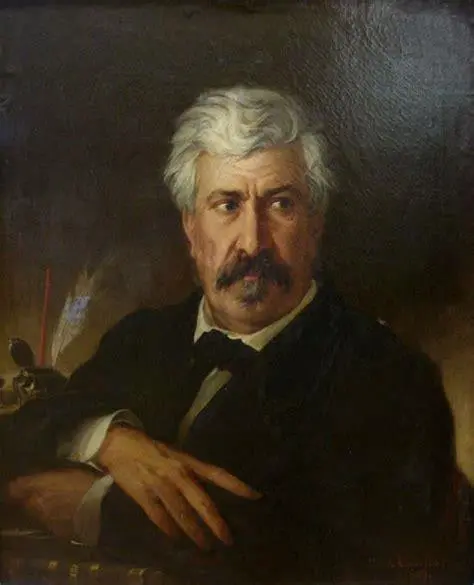
Manuel de Araújo Porto Alegre
1806–1879
· lived 73 years
 BR
BR
BR
Manuel de Araújo Porto Alegre was a Brazilian military man, politician, and poet, a multifaceted figure on the 19th-century scene. He stood out in the Farroupilha Revolution but also left a mark on literature as one of the precursors of Indianism in Brazil. His poetic work, though not extensive, is significant for its thematic treatment and language, anticipating elements that would flourish in Brazilian Romanticism.
n. 1806-11-29, Rio Pardo · m. 1879-12-30, Lisboa
18
Views
Bio
Identification and basic context
Manuel de Araújo Porto Alegre was a prominent figure of the 19th century in Brazil, known for his role as a military man, politician, and poet. Pseudonym: Baron of Porto Alegre. He was one of the precursors of Indianism in Brazilian literature.Childhood and education
Born in Rio Grande do Sul, he received military training that led him to actively participate in important historical events of Imperial Brazil, notably the Farroupilha Revolution. This military experience and the context of conflict shaped his vision and, consequently, his work.Literary career
Manuel de Araújo Porto Alegre's literary career is marked by his foray into the world of Indianism. His most famous work, "Brasilianas," although not fully published in his lifetime, is considered a landmark in anticipating themes and approaches that would characterize Brazilian Romanticism, especially regarding the valorization of indigenous people.Work, style, and literary characteristics
The main work attributed to Manuel de Araújo Porto Alegre is "Brasilianas," an epic poem that celebrated the figure of the indigenous person as a national hero. His style, though sometimes considered rustic or in a transitional phase, already showed a desire for genuinely Brazilian themes, moving away from European models and approaching a national literary identity. The dominant themes in his work are the valorization of the indigenous, the exaltation of Brazilian nature, and patriotism. The form used was predominantly epic, aiming to narrate heroic deeds.Cultural and historical context
Manuel de Araújo Porto Alegre lived during a period of intense transformations in Brazil, including the Farroupilha Revolution, in which he actively participated. This historical context of revolts and the search for a national identity profoundly influenced his literary work, fostering an interest in the indigenous figure as a symbol of Brazilian identity.Personal life
As a military man and politician, Porto Alegre's life was marked by action and involvement in civic and military matters. His participation in the Farroupilha Revolution is one of the most relevant aspects of his personal biography and undoubtedly resonated in his literary production.Recognition and reception
Manuel de Araújo Porto Alegre's recognition as a poet, especially as a precursor of Indianism, was consolidated posthumously. Although his work did not achieve the same prominence as other Romantic authors, his historical importance for the development of a national literature is widely recognized by scholars.Influences and legacy
Manuel de Araújo Porto Alegre was influenced by European Romantic idealism but sought to adapt it to the Brazilian reality. His legacy lies in his boldness in addressing national themes and his contribution to the foundation of literary Indianism in Brazil, paving the way for authors like Gonçalves Dias.Interpretation and critical analysis
Porto Alegre's work is seen as a testimony to the emergence of a national consciousness in 19th-century Brazil. His attempt to create a national hero from the indigenous figure is a central point of critical analysis, reflecting the tensions and aspirations of the time.Curiosities and lesser-known aspects
An interesting aspect is his involvement in the Farroupilha Revolution, one of the longest civil conflicts in Brazil's history. His literary production, contrasting with his military and political life, reveals a more reflective and visionary side.Death and memory
Manuel de Araújo Porto Alegre died in Rio de Janeiro. His literary memory is preserved by his contribution to Indianism and his vision of an authentically Brazilian literature.Poems
0No poems found
Comments (0)
Log in
to post a comment.
No comments yet. Be the first to comment.