
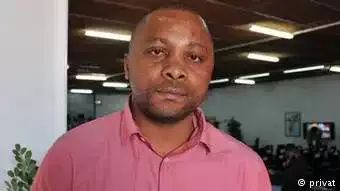
Marcelo Mosse

Marcelo Mosse is a Brazilian poet and professor, known for his poetry that oscillates between lyricism and existential reflection. With an accessible yet profound language, he explores the nuances of everyday life, human relationships, and the search for meaning in a constantly changing world. His work is marked by acute sensitivity and an unparalleled ability to capture the essence of feelings and experiences. His academic trajectory and his work in education frequently dialogue with his poetic production, affording him a unique perspective on language and artistic expression.
13
Views
Bio
Identification and basic context
Marcelo Mosse is a Brazilian poet, professor, and essayist. There is no public information about pseudonyms or heteronyms used. The date and place of birth, as well as details about his family background, social class, and origin cultural context, are not widely disclosed. His nationality is Brazilian and his written language is Portuguese. The historical context in which he lived and works is contemporary Brazil, marked by intense social, political, and cultural changes.Childhood and education
Detailed information about Marcelo Mosse's childhood and education is not publicly accessible. There are no records about his family background, social environment, formal education, or self-taught learning, nor about initial influences, literary, philosophical, or artistic movements that marked him, or relevant events in his youth.Literary career
The beginning of Marcelo Mosse's writing and his literary evolution are not widely documented. There is no information about specific collaborations in magazines, newspapers, and anthologies, nor about activities as a critic, translator, or editor.Work, style, and literary characteristics
Marcelo Mosse's work is characterized by lyricism intertwined with existential reflection. The themes often addressed include everyday life, human relationships, the search for meaning, the passage of time, and the ephemerality of things. His language is generally described as accessible, yet profound and sensitive. Mosse demonstrates an ability to capture the essence of human feelings and experiences, evoking an intimate connection with the reader. The use of metaphors and poetic imagery that resonate with everyday reality is a hallmark of his style. His poetic voice tends to be confessional and reflective, inviting introspection. His work is part of contemporary Brazilian poetry, dialoguing with tradition while simultaneously seeking new forms of expression.Cultural and historical context
As a contemporary poet, Marcelo Mosse is immersed in the current cultural and historical context of Brazil. Although details about his direct involvement with historical events or specific literary circles are not disclosed, his work implicitly reflects the concerns and dynamics of the society in which he is inserted. His position as an educator and professor may influence his worldview and how he approaches themes related to language, communication, and individual formation.Personal life
Information about Marcelo Mosse's personal life, including affective relationships, family, friendships, personal experiences, parallel professions (besides writing and teaching), religious, spiritual, or philosophical beliefs, and political positions or civic engagement, is not publicly known.Recognition and reception
The recognition and reception of Marcelo Mosse's work, both in academia and among readers, are not widely disclosed. Details about awards, distinctions, or his position in the contemporary literary canon are not easily accessible.Influences and legacy
The specific influences that shaped Marcelo Mosse's poetry and the poets or movements he himself influenced are not publicly documented. His legacy presumably lies in his contribution to contemporary Brazilian poetry through his lyrical and reflective approach.Interpretation and critical analysis
In-depth critical analyses of Marcelo Mosse's work, including specific interpretations, central philosophical themes, or critical debates, are not widely available. However, his poetry invites reflection on the human condition, the beauty found in the everyday, and the search for deeper meaning in existence.Curiosities and lesser-known aspects
Lesser-known aspects of Marcelo Mosse's personality, or specific details about his writing habits, manuscripts, diaries, or correspondence, are not in the public domain.Death and memory
There is no information available about Marcelo Mosse's death, indicating that he is an active contemporary literary figure.Poems
0No poems found
Comments (0)
Log in
to post a comment.
No comments yet. Be the first to comment.