
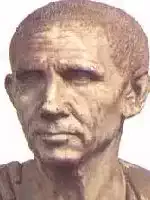
Marco Pórcio Catão

Marcus Porcius Cato, known as Cato the Younger or Cato of Utica, was a Roman statesman and an influential Stoic philosopher. He was renowned for his unshakeable integrity, his opposition to Julius Caesar, and his uncompromising defense of traditional republican values. Cato was an example of virtue and moral rigor in an era of growing corruption and political instability in Rome. His resistance to Caesar and his subsequent suicide made him a symbol of freedom and resistance.
n. 234ac, Tusculum · m. 0149-01-01, Roma
6
Views
Bio
Marcus Porcius Cato was born in Rome in 234 BC. A member of the Porcia gens, he distinguished himself by his austere character and his commitment to republican ideals. He served as a soldier in various campaigns, including the Punic Wars. Later, he entered political life, holding the office of consul in 195 BC and censor in 184 BC, where he applied rigorous moral standards. Cato was known for his conservatism and his criticism of Greek customs, which he saw as corrupting Roman morals. His figure became even more prominent during the period of civil wars, when he became one of Julius Caesar's fiercest opponents. He defended the Republic with great fervor, but after Pompey's defeat and Caesar's rise, Cato retreated to Utica in North Africa. Faced with Caesar's imminent arrival, Cato committed suicide in 46 BC rather than submit to the tyrant, becoming a martyr for the republican cause.
Poems
0No poems found
Comments (0)
Log in
to post a comment.
No comments yet. Be the first to comment.