
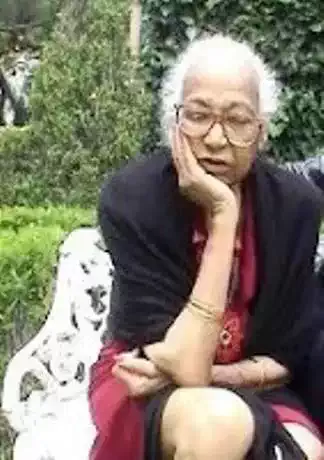
Maria Manuela Margarido

Maria Manuela Margarido was a Portuguese poet, teacher, and essayist, a prominent figure in Portuguese-language literature. Her poetic work, often associated with Neorealism, addresses social, political, and existential themes with direct language and a strong sense of intervention. A high school teacher, she also dedicated herself to the study of literature and cultural dissemination, leaving an important legacy as an intellectual and artist.
n. 1925-09-00, Ilha do Príncipe · m. 2007-03-10, Lisboa
53
Views
Bio
Identification and basic context
Maria Manuela de Portugal Margarido, known as Maria Manuela Margarido, was a Portuguese poet, teacher, and essayist. She was born in Lisbon and lived most of her life in the capital. She was a prominent figure in 20th-century Portuguese literature, associated with movements such as Neorealism. She was Portuguese by nationality and wrote in Portuguese.Childhood and education
As the daughter of a middle-class family, Maria Manuela Margarido received a solid academic education. She attended the University of Lisbon, where she graduated in Germanic Philology. Her university education, combined with a critical spirit and profound social sensitivity, shaped her worldview and her writing. Her readings of neorealist authors and her experiences in a changing Portugal marked her formative years.Literary career
Maria Manuela Margarido's literary career began with the publication of poetry, but it quickly expanded to prose and essays. Her poetic work, which began to be published in the mid-20th century, reveals an evolution marked by the consolidation of her social and political commitment. She actively collaborated in various literary and cultural publications of the time, contributing to intellectual and artistic debate. In addition to her creative activity, she distinguished herself as a high school teacher, where she shared her love for literature with several generations of students. Her work as an essayist allowed her to deepen her analysis of literary and social themes.Work, style, and literary characteristics
Work, style, and literary characteristics Maria Manuela Margarido's works, such as "Poemas" (1950), "A Alma e a Sombra" (1956), and "A Corrente" (1960), reflect a strong commitment to the ideals of Neorealism. Dominant themes in her poetry include the struggle for freedom, social justice, the human condition, the dignity of work, and criticism of the dictatorial regime in place in Portugal. Her poetic form is often direct and incisive, using free verse to express her ideas with clarity and force. Her style is characterized by accessible language, yet loaded with meaning and emotion. The poetic voice is engaged, interventionist, and profoundly humanist, seeking to give voice to the oppressed and marginalized. Her work establishes a critical dialogue with the social and political reality of her time, rejecting escapism and embracing the artist's responsibility to society.Work, style, and literary characteristics
Cultural and historical context Maria Manuela Margarido lived and wrote during the dictatorship of the Estado Novo in Portugal, a period of censorship and repression. This historical reality profoundly marked her work, giving it a tone of resistance and denunciation. Her connection to Neorealism places her in the context of writers who sought to portray the country's social reality and fight for a more just future. She maintained relationships with other intellectuals and artists who shared her convictions, although her individual path was marked by a strong autonomy of thought.Work, style, and literary characteristics
Personal life In addition to her literary activity, Maria Manuela Margarido worked as a Portuguese teacher in high schools, dedicating herself with passion to teaching. This dual aspect—literary creation and pedagogical practice—demonstrated her deep love for language and literature, as well as her desire to educate conscious citizens. Her political and social convictions were strong, reflecting an idealism and a desire for intervention that translated into her work and her civic stance.Work, style, and literary characteristics
Recognition and reception Maria Manuela Margarido's work was recognized by critics for its authenticity and its aesthetic and social value. Her poetry is studied as an important testimony of the neorealist period in Portugal and of the critical thought of the time. Although she may not have achieved the same fame as other more media-friendly poets, her place in Portuguese literature is secured by the quality and relevance of her production.Work, style, and literary characteristics
Influences and legacy Maria Manuela Margarido's influences include neorealist authors and the tradition of social intervention poetry. Her legacy lies in her contribution to Portuguese poetry with a body of work that managed to combine artistic quality with ethical and political commitment. She inspired generations of readers and writers to value poetry as a form of reflection and action on reality.Work, style, and literary characteristics
Interpretation and critical analysis Maria Manuela Margarido's work is often interpreted as a mirror of Portuguese society of her time, marked by social and political tensions. Critical analysis focuses on how the author managed to articulate her personal experience with the great collective issues, using poetry as a tool for intervention and emancipation.Work, style, and literary characteristics
Curiosities and lesser-known aspects An interesting aspect of her trajectory is how she reconciled the demanding profession of a teacher with a consistent and interventionist literary output. Her commitment to democratic values and her persistence in expressing her ideas in an adverse context are distinguishing marks of her profile.Work, style, and literary characteristics
Death and memory Maria Manuela Margarido passed away, leaving behind a body of work that continues to be valued and studied. Her publications and her memory endure as a testament to the power of engaged poetry and the importance of intellectualism in building a more just society.Poems
0No poems found
Comments (0)
Log in
to post a comment.
No comments yet. Be the first to comment.