
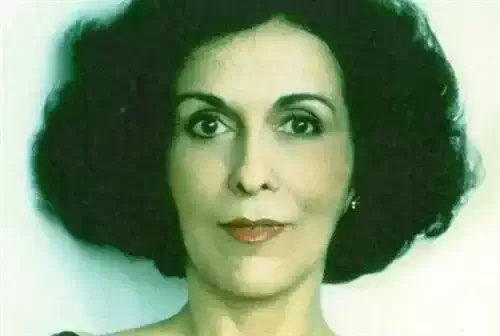
Marly de Oliveira
1935–2007
· lived 71 years
 BR
BR
BR
Marly de Oliveira was a Brazilian writer, known for her poetry that moves between the lyrical and the existential, exploring themes such as memory, time, the body, and the female condition. Her work stands out for its careful language, musicality, and ability to evoke deep sensations and reflections on life and its fragilities. With an introspective and sensitive writing style, Marly de Oliveira established herself as an important voice in contemporary Brazilian literature.
n. 1935-06-11, Cachoeiro de Itapemirim · m. 2007-06-01, Rio de Janeiro
30
Views
Bio
Identification and Basic Context
Marly de Oliveira was a Brazilian writer and poet. She was born in Cataguases, Minas Gerais, and lived most of her life in Rio de Janeiro, where she passed away. She wrote in Portuguese.Childhood and Education
She spent her childhood and youth in Minas Gerais, in an inland city that marked her sensibility. Her literary education was largely self-taught, nurtured by extensive readings of poetry and prose, which gave her a vast literary culture. She absorbed influences from various authors and literary currents, which she knew how to re-elaborate in a very personal way.Literary Career
Her literary career began with the publication of poems in newspapers and literary magazines. Her poetic work evolved over time, demonstrating growing maturity in the exploration of themes and the refinement of her style. Marly de Oliveira actively participated in literary and cultural circles, contributing to the renewal of Brazilian poetry. She also worked as a literary critic and translator.Work, Style, and Literary Characteristics
Her poetic works include "O Nome das Coisas" (1967), "O Livro do Tempo" (1973), "A Dança das Sombras" (1977), "O Caçador de Melodias" (1981), and "Os Olhos de Verão" (1984). The central themes of her work are memory, time, the body (especially the female body), sensuality, the ephemerality of life, solitude, and the search for meaning. Her style is marked by lyrical and precise language, the musicality of verse, expressive restraint, and a deep capacity for introspection. She frequently uses free verse, but with remarkable formal rigor, exploring the sonority of words and the power of images. The poetic voice is, most of the time, personal and confessional, but with universal resonance. Her work dialogues with tradition, but is clearly inserted within the context of contemporary Brazilian poetry, with echoes of modernism and other currents.Cultural and Historical Context
Marly de Oliveira produced her work during a period of intense social and political transformations in Brazil, including the military dictatorship and the period of redemocratization. She was a contemporary of many of the great names in Brazilian literature, with whom she shared debates and influences. Her poetry subtly and personally reflects the anxieties and reflections of her time.Personal Life
Marly de Oliveira's personal life, although discreet, was marked by her intense dedication to writing and art. Her experiences and life events, especially her sensitivity to feminine and existential issues, shaped her work, giving it remarkable depth and authenticity.Recognition and Reception
Marly de Oliveira is widely recognized as one of the most important voices in contemporary Brazilian poetry. Her work has received critical acclaim and won a growing number of readers who appreciate her lyrical sensibility, her poetic intelligence, and her ability to address universal themes with a personal and captivating language.Influences and Legacy
Influenced by poets such as Cecília Meireles and Carlos Drummond de Andrade, Marly de Oliveira left a legacy of great originality and sensitivity to Brazilian literature. Her poetry continues to inspire new generations of writers, who find in it a model of aesthetic rigor and existential depth. Her legacy lies in her ability to translate the complexity of human experience into verses of great beauty and rigor.Interpretation and Critical Analysis
Marly de Oliveira's work is often analyzed from the perspective of the exploration of memory, time, and corporeality. Critics highlight her mastery in constructing poetic images, in exploring human fragility, and in the search for meaning in existence, all expressed in a refined and musical language.Curiosities and Lesser-Known Aspects
She was known for her discretion and her intense dedication to the craft of writing. Her relationship with nature and everyday objects was a source of inspiration for her poetry, which knew how to extract beauty and meaning from the seemingly banal.Death and Memory
Marly de Oliveira passed away in 2010. Her work remains alive, being the subject of study and reading, and her memory is honored as that of one of the great Brazilian poets of the 20th and 21st centuries.Poems
0No poems found
Comments (0)
Log in
to post a comment.
No comments yet. Be the first to comment.