
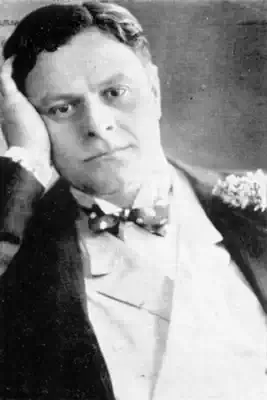
Martins Fontes
 BR
BR
Martins Fontes was a Brazilian poet, translator, and editor, whose work stands out for its lyrical delicacy and exploration of universal themes such as love, longing, and the ephemerality of life. His poetry, though at times melancholic, reveals a deep sensitivity and a search for beauty in simple things. In addition to his poetic production, Fontes played a relevant role in the literary landscape as a translator of important works and as an editor, contributing to the dissemination of authors and the enrichment of literary culture in Brazil. His dedication to letters marked his trajectory, leaving a legacy of sensitivity and rigor.
n. 1884-06-23, Santos · m. 1937-06-25, São Paulo, SP
Bio
Identification and Basic Context
Full Name: José Martins Fontes Date and Place of Birth: July 23, 1884, São Paulo, Brazil Date and Place of Death: February 23, 1911, São Paulo, Brazil Nationality: Brazilian Language(s) of Writing: Portuguese Historical Context in Which He Lived: Late 19th and early 20th centuries in Brazil, a period of cultural and social transition.Childhood and Education
Martins Fontes was born into a wealthy São Paulo family, which provided him with access to a good education. Although he had a relatively short life, his intellectual formation was shaped by reading and the influence of the cultural environment of the time.Literary Career
Martins Fontes began his literary career early, demonstrating an aptitude for poetry. His work, though not vast in volume, is marked by early maturity. He was also active as a translator and editor, areas that complemented his work as a poet.Work, Style, and Literary Characteristics
Main Works: "O Livro de Job" (translation, 1910), "O Sonho de um Velho" (poetry, posthumous, 1911). Dominant Themes: Love, longing, ephemerality of life, the search for beauty, melancholy. Form and Structure: His poetry shows a mastery of traditional forms, but also a sensitivity that foreshadowed modern trends. Poetic Devices: Use of delicate metaphors, rhythm and musicality that give his compositions a particular sonority. Tone and Poetic Voice: Lyrical, introspective, sometimes elegiac. Language and Style: Careful language, with a rich vocabulary and an expressiveness marked by subjectivity. Formal or Thematic Innovations: Although aligned with tradition, his sensitivity foreshadowed the aesthetic renewal that would come with Modernism. Associated Literary Movements: Pre-Modernism, with strong ties to Symbolism. Lesser-Known or Unpublished Works: "O Sonho de um Velho" was published posthumously.Work, Style, and Literary Characteristics
Cultural and Historical Context He lived in a period when Brazil was undergoing significant transformations. The São Paulo intellectual elite, to which he belonged, was influenced by European aesthetic currents. His work engages with Parnassian and Symbolist sensibilities, but points towards a more personal and introspective expression.Work, Style, and Literary Characteristics
Personal Life Martins Fontes's life was marked by illness, which led to his premature death. His dedication to letters was intense during his short life.Work, Style, and Literary Characteristics
Recognition and Reception The recognition of his work largely occurred posthumously, with the publication of "O Sonho de um Velho." His sensitivity and the quality of his poetry were gradually appreciated by critics.Work, Style, and Literary Characteristics
Influences and Legacy He influenced later poets with his lyrical delicacy and his exploration of existential themes with his own voice. His work is an example of Brazilian poetry from the early 20th century.Work, Style, and Literary Characteristics
Interpretation and Critical Analysis His poetry is often analyzed from the perspective of melancholy and the search for an unattainable ideal, reflecting the existential anxieties of his time.Work, Style, and Literary Characteristics
Curiosities and Lesser-Known Aspects Martins Fontes also dedicated himself to translation, with his version of "O Livro de Job" being notable.Work, Style, and Literary Characteristics
Death and Memory He died young, a victim of tuberculosis. His literary memory has been preserved through the posthumous publication of his work and the recognition of his contribution to Brazilian poetry.Poems
0No poems found
Comments (0)
No comments yet. Be the first to comment.