
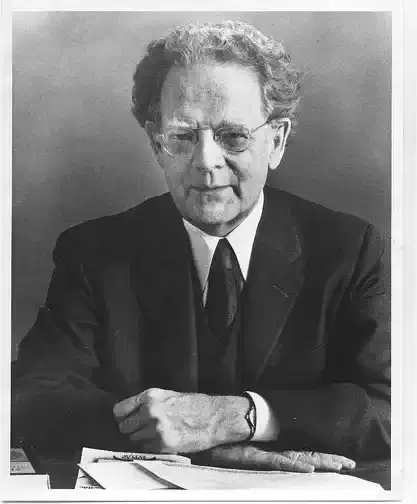
Herman Northrop Frye (July 14, 1912 – January 23, 1991) was an influential Canadian literary critic and theorist. Born in Sherbrooke, Quebec, Frye developed a system of literary criticism based on the idea that literature possesses an underlying mythical and archetypal structure. In his most famous work, "Anatomy of Criticism" (1957), he argued that literary criticism should be autonomous and based on the analysis of recurring patterns and symbols in literature, rather than relying on external sources such as history, biography, or philosophy. Frye introduced concepts like "Christ" and "Eve" myths to describe the central narrative structures of Western literature. He taught at the University of Toronto for most of his career and became one of the most important figures in the academic study of literature in the 20th century, influencing generations of critics and theorists.
Poems List
For the serious mediocre writer convention makes him sound like a lot of other people; for the popular writer it gives him a formula he can exploit; for the serious good writer it releases his experiences or emotions from himself and incorporates them into literature, where they belong.
4
A writer’s desire to write can only have come from previous experience of literature, and he'll start by imitating whatever he’s read, which usually means what the people around him are writing.
4
Horace, in a particularly boastful mood, once said his verse would last as long as the vestal virgins kept going up the Capitoline Hill to worship at the temple of Jupiter. But Horace’s poetry has lasted longer than Jupiter’s religion, and Jupiter himself has only survived because he disappeared into literature.
8
The tricky or boastful gods of ancient myths and primitive folk tales are characters of the same kind that turn up in Faulkner or Tennessee Williams.
5
The simple point is that literature belongs to the world man constructs, not to the world he sees; to his home, not his environment.
4
A person who knows nothing about literature may be an ignoramus, but many people don t mind being that.
4
Wherever illiteracy is a problem, it’s as fundamental a problem as getting enough to eat or a place to sleep.
4
In the world of the imagination, anything goes that’s imaginatively possible, but nothing really happens.
5
Comments (0)
Log in
to post a comment.
NoComments