
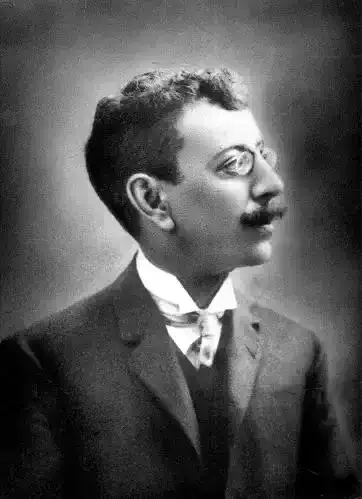
Olavo Bilac
1865–1918
· lived 53 years
 BR
BR
BR
Olavo Bilac was a Brazilian poet, journalist, and professor, widely considered one of the greatest names of Parnassianism in Brazil. His work is marked by formal perfection, metrical rigor, and themes focused on love, country, and classical ideals. Bilac is known for his exaggerated nationalism and his skill in versifying, having been one of the founders of the Brazilian Academy of Letters.
n. 1865-12-16, Rio de Janeiro · m. 1918-12-28, Rio de Janeiro
82
Views
Bio
Identification and Basic Context
Olavo Brás Martins dos Guimarães Bilac was a Brazilian poet, journalist, professor, and literary critic. He was born in Rio de Janeiro on December 16, 1865, and died in the same city on December 28, 1918. He is considered the "Prince of Brazilian Poets" and one of the greatest exponents of Parnassianism in Brazil. He was the son of Augusto Emílio Bilac and Dona Delfina Martins Guimarães.Childhood and Education
He spent his childhood and youth in Rio de Janeiro. He began his humanities studies at Colégio Abaeté and later at Colégio São Pedro de Alcântara. He enrolled in the Faculty of Medicine of Rio de Janeiro but abandoned his studies to dedicate himself to journalism and literature. His education was marked by a solid classical foundation and readings of authors such as Victor Hugo, Goethe, and French Parnassian poets.Literary Career
He began writing poetry in adolescence, influenced by late Romanticism and the emerging Parnassian aesthetic. His first book, "A Poeira," was published in 1888. From then on, he consolidated himself as one of the leaders of the Parnassian movement in Brazil, distinguishing himself by his technical skill and his pursuit of formal perfection. He was an active and prolific journalist, collaborating with various newspapers and magazines of the time, where he also published chronicles and poems. He actively participated in the cultural life of Rio de Janeiro.Work, Style, and Literary Characteristics
His major works include "A Poeira" (1888), "Via Láctea" (1888), "Profissão de Fé" (1888), "Riachão" (1891), "Poesias" (1895), "Tarde" (1914), and "D.N.A." (1915). Recurring themes in his work are love, country, classical beauty, the ephemerality of time, and the search for artistic perfection. His style is markedly Parnassian, characterized by formal rigor, the use of perfect meter and rhyme, descriptive objectivity, and a cultured and precise vocabulary. He mastered the sonnet and other traditional poetic forms. His poetry is often celebrated for its musicality and rich imagery, but criticized for a certain academicism and detachment from social reality. Bilac innovated by incorporating national themes and by advocating for poetry engaged with Brazil, moving away from the egocentrism of some Romantics and the cold objectivity of other Parnassians.Work, Style, and Literary Characteristics
Cultural and Historical Context He lived during a period of great transformations in Brazil, such as the Proclamation of the Republic and the beginning of the 20th century. It was a period of consolidation of the national state and the search for a Brazilian cultural identity. Bilac, with his strong nationalism, contributed to the construction of this identity, exalting the homeland and the Portuguese language. He was one of the founders of the Brazilian Academy of Letters in 1897, where he held a prominent role. He was an influential and respected intellectual in his time, engaging with other writers of his generation and actively participating in cultural debates.Work, Style, and Literary Characteristics
Personal Life He married Amália dos Prazeres de Oliveira, with whom he had two daughters. He dedicated himself intensely to literary life and journalism, having been a Portuguese teacher at Colégio Pedro II. His life was marked by dedication to art and country. He held republican convictions and fervently defended the teaching of the Portuguese language. Despite his prestige, he faced financial difficulties at times in his life.Work, Style, and Literary Characteristics
Recognition and Reception He was acclaimed during his lifetime as the "Prince of Brazilian Poets," a title that reflects the immense prestige he enjoyed. He received various honors and was one of the most celebrated names in Brazilian literature of his time. His work was widely disseminated in newspapers, magazines, and anthologies, and his name became synonymous with poetic excellence. Although Parnassianism fell into disuse with the advent of new literary schools, Bilac's name remained a milestone in the history of Brazilian poetry.Work, Style, and Literary Characteristics
Influences and Legacy He was influenced by French Parnassians, such as Théophile Gautier and Leconte de Lisle, and also by Portuguese-language poets like Camões. His legacy is that of a master of poetic form, a fervent nationalist, and one of the pillars of Brazilian Parnassianism. His influence can be seen in the generation of poets who succeeded him, who admired his technique and his patriotism. He helped shape the Brazilian literary canon and consolidate the Portuguese language as a vehicle for high-quality poetic expression.Work, Style, and Literary Characteristics
Interpretation and Critical Analysis Bilac's work has been the subject of analyses that highlight both his technical mastery and the content of his verses. While some critics point to the formal perfection and beauty of the images, others question the originality and depth of his reflections on the human condition. The debate about the relevance of Parnassianism and nationalism in his work continues to fuel literary criticism.Work, Style, and Literary Characteristics
Curiosities and Lesser-Known Aspects Bilac was known for his perfectionism in writing, spending long hours refining each verse. He was an ardent defender of the Portuguese language and a severe critic of grammatical deviations. It was said that he was capable of "straightening out" sentences and words. A curiosity is that he suffered from health problems, such as tuberculosis, which accompanied him for part of his life.Work, Style, and Literary Characteristics
Death and Memory Olavo Bilac died in 1918, from pneumonia, a few days after his 53rd birthday. His death caused great national commotion. He was buried in the São João Batista Cemetery in Rio de Janeiro. His memory is kept alive through his poems, which continue to be read and studied, and through streets, schools, and public places that bear his name throughout Brazil. He remains a symbol of national poetry and the Brazilian Academy of Letters.Poems
0No poems found
Comments (0)
Log in
to post a comment.
No comments yet. Be the first to comment.