
Pagu
1910–1962
· lived 52 years
 BR
BR
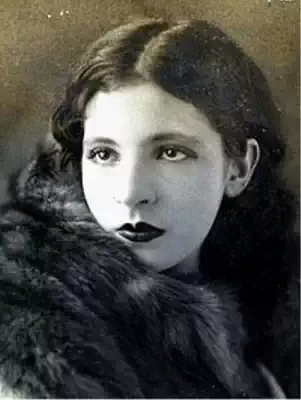
Patrícia Rehder Galvão, known as Pagu, was a Brazilian writer, poet, director, translator, illustrator, cartoonist, journalist, and communist political activist. She was a prominent figure in the modernist movement that began in 1922, although she did not participate in the Modern Art Week, being only twelve years old at the time. A communist militant, she was imprisoned for political reasons.
n. 1910-06-09, São João da Boa Vista · m. 1962-12-12, Santos
35
Views
Bio
Patrícia Galvão was born in São João da Boa Vista, in the state of São Paulo, in 1910. She joined the Anthropophagic Movement in 1928, and in 1931 she began editing the newspaper O Homem do Povo with Oswald de Andrade, to whom she was married at the time. That year she was arrested for the first time after participating in a Communist Party rally and organizing a dockworkers' strike in Santos. She would be the first woman in Brazil to be arrested for "political crimes." Upon leaving prison, she made her book debut in 1933 with the novel Parque Industrial, soon after embarking on a trip through the USA, Japan, Poland, Germany, the USSR, and France, where, in Paris, she was hosted by the poet (associated with the Surrealist Group) Benjamin Péret and his wife, the Brazilian soprano Elsie Houston. There she would study with the philosophers Georges Politzer and Paul Nizan, but she would end up detained in 1935 as a foreign communist and deported to Brazil, where she would then be imprisoned once again by Getúlio Vargas's regime, this time spending five years in prison.
Her second novel, A famosa revista, would only be published in 1945, with the end of the Estado Novo. In 1946, with her second husband, the critic and writer Geraldo Ferraz, she started the Sunday Suplemento Literário do Diário de São Paulo, which would last until 1948. In the post-war period, she began publishing poems in the press of Santos and dedicating herself to theater, being one of the discoverers and promoters of the playwright Plínio Marcos. The poet and novelist died in 1962 in the city of Santos as a result of cancer, after surviving torture in more than 20 incarcerations by Vargas's police and a suicide attempt.
We all know her as Pagu and know more about her personal life than about her work. This larger-than-life figure, as they say, was nonetheless a talented poet, and the few poems she left behind place her among the laconic yet striking authors of early modernism, such as Raul Bopp or Luís Aranha. A poem like "Natureza morta," which would excite Augusto de Campos in 1948 when he read it in the Suplemento Literário do Diário de São Paulo without knowing that the legendary Pagu was hidden beneath the pseudonym Solange Sohl, brings us a dark imagery reminiscent of the somewhat oneiric poetics of Pedro Kilkerry in "É o silêncio," for example.
The poem "Natureza morta" presents us with an oppressive environment and moves somewhat away from the poetics of the best-known female authors of Brazilian Modernism, such as Henriqueta Lisboa and Cecília Meireles, even though it is critically fruitful to read certain poetry by the São Paulo author in light of books like O Mar Absoluto e Outros Poemas (1945), by the female author from Rio de Janeiro, or Flor da Morte (1949), by the one from Minas Gerais. Patrícia Galvão, in several aspects, would actually anticipate the poetics of women like Ana Cristina Cesar, Elisabeth Veiga, Hilda Machado, and Lu Menezes. The "things" in her world are not generators of that almost psychotic dread so well illustrated by Fernando Pessoa in the poem where he speaks about the fear of turning around and discovering things taking off their mask, or as in Eugenio Montale's famous poem, "Forse un mattino." In Patrícia Galvão, the poet is among things, she is herself part of a haunted and haunting decoration. This is not about wanting to equate her with some of the greatest poets of the 20th century, but rather about seeking a kind of brotherhood of political and metaphysical concerns, as well as a distinct web of aesthetic connections among authors of the past century, in confluence, outside the already ossified linear narratives of influences.
The verses that open "Natureza morta," published in 1948: "Os livros são dorsos de estantes distantes quebradas. / Estou dependurada na parede feita um quadro. / Ninguém me segurou pelos cabelos" seem to unite in a synchronic arc with the "terror poem" that is "É o silêncio," by Kilkerry: "É o silêncio, é o cigarro e a vela acesa. / Olha-me a estante em cada livro que olha. / E a luz nalgum volume sobre a mesa..." even though Patrícia Galvão does not resort to animism like Pedro Kilkerry. As I said, both authors are more interested in a nightmare atmosphere, which seems to govern reality for them, than in an objectifying description of what surrounds them. She mimics the objectification of her subjectivity. Not thingism [coisismo], but thingification [coisificação]. Pedro Kilkerry and Patrícia Galvão, as well as Murilo Mendes for example, are poets who tend to blur the boundary that some want too clear between the external world and the internal world, and therefore between objectivity and subjectivity — they are authors of what I have already called a subobjectivity [umasobjetividade]. In this regard, it would be very interesting to discuss in the same context the poetics of 1930s North American authors such as the Objectivists (George Oppen, Louis Zukofsky, Lorine Niedecker, Charles Reznikoff, Carl Rakosi, etc.), exact contemporaries of Patrícia Galvão and Oswald de Andrade, who share with them the common interwar anti-capitalist political concern (one need only think also of the circle of poets around W.H. Auden in England): read even today as celebrators of a thingism, to what extent were they not, at the same time and by the same means, also the detractors of a thingification?
Her writing resorts to irony, and when we think she is about to tear up, we realize she is actually setting up the strike of aggression immediately afterwards. There is an inflation and deflation of rhythm, usually forming in anticlimax. "Estou espichada na tela como um monte de frutas apodrecendo" seems to me one of the most aggressive comparisons in modern Brazilian poetry, extremely critical of the very enthronization that she, Patrícia Galvão, had suffered as "the muse Pagu," not to mention the verse (one of my favorites): "Por que este mar idiota não cobre o telhado das casas?" and the excellent and synesthetic "Vertem os meus olhos uma fumaça salgada."
Written on her deathbed, it is also difficult to read a poem like "Nothing" and not think of the apocalyptic poetics of Álvaro de Campos, as in "Lisbon revisited," or, in a very different key, certain texts by the American Laura Riding and her distrust of the sign, distinct from the sign celebration we see in post-war Brazilian poetry.
For our contemporary sensibility, Patrícia Galvão's use of anaphora may be bothersome, but it is necessary to realize that her writing presupposes oralization. Such a tactic was common among the Beats, for example, who based their work so heavily on oral performance. One need only think of a poem like "Howl," heavily based on anaphora.
Patrícia Galvão deserves to be remembered primarily as an author in and of herself, allowing Brazilian literary historiography to record her personal contribution to the country's modern literature, and not merely through the filter of what the men of the movement wrote about her, for she was a talented poet, more than a mere supporting character in the biography of more illustrious artists. And it is through these poems and what is still alive in them that Patrícia Galvão enters the attunement of our synchrony.
--- Ricardo Domeneck
Poems
0No poems found
Comments (0)
No comments yet. Be the first to comment.