
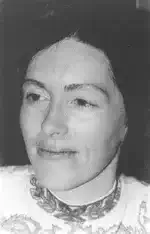
Pat Lowther
1935–1975
· lived 40 years
 CA
CA
CA
Pat Lowther was a Canadian poet known for exploring themes of feminism, motherhood, nature, and everyday life through direct and imagistic language. Her work is often marked by deep introspection and a particular sensitivity to human relationships and female experiences. Although her life was tragically cut short, Lowther's poetry continues to be celebrated for its emotional strength and its ability to capture the complexity of female existence in social and natural contexts.
n. 1935-07-29, Vancouver · m. 1975-09-01, Canadá
27
Views
Bio
Identification and basic context
Patricia Blondal Lowther was a Canadian poet. Her married name was Patricia Kathleen Lowther. She lived during a period when feminism was gaining momentum, and her work reflects many of these discussions, though in a personal rather than purely ideological way. She wrote in English.Childhood and education
Lowther was born and raised in Vancouver, British Columbia. Her childhood was marked by a complex relationship with her mother and an upbringing that, while not formally literary, exposed her to an environment rich in reading and the arts. The surrounding nature of British Columbia had a lasting impact on her sensibility.Literary career
Pat Lowther's literary career began in her youth, with initial writing focused on personal experiences and observations of the world around her. Her poetry evolved into a deeper exploration of social and existential themes. She published poems in various Canadian literary magazines, and her work gained greater visibility with the publication of books.Works, style, and literary characteristics
Pat Lowther's works include 'This Bride' (1970), 'The Earth is a Woman' (1974), and 'A Stone Diary' (1977). The dominant themes in her poetry are motherhood, the female body, the relationship with nature, identity, and family dynamics. Her style is characterized by clear language, vivid imagery, and strong emotional charge, often addressing the female experience with authenticity and directness. Her free verse allows for a fluid and natural expression of her thoughts and feelings. The poetic tone varies between lyrical, confessional, and sometimes elegiac.Cultural and historical context
Pat Lowther lived and wrote in Canada during the 1960s and 1970s, a period of great cultural and social effervescence, marked by the growth of the feminist movement and the affirmation of a Canadian cultural identity. Her work dialogues with the concerns of her generation, especially regarding women's roles in society and family.Personal life
Pat Lowther's personal life was marked by challenges, including a tumultuous relationship with her husband, Roy Lowther. These aspects of her life, particularly motherhood and romantic relationships, are often reflected in her poetry. Her premature and violent death became a tragic element that, in a way, intertwines with the perception of her work.Recognition and reception
Although she did not achieve widespread international fame during her lifetime, Pat Lowther's work was well-received by critics and the Canadian literary public. She was recognized for her contribution to Canadian poetry, especially in the context of female writing. Her poetry has been re-evaluated and gained greater appreciation over time.Influences and legacy
Pat Lowther was influenced by poets who explored inner life and everyday experiences. Her legacy lies in her honest and powerful representation of the female experience, paving the way for many other female poets who addressed similar themes. Her work is studied in Canadian literature courses and is valued for its authenticity and depth.Interpretation and critical analysis
Lowther's work is often interpreted through a feminist lens, analyzing her exploration of the body, motherhood, and power dynamics. Critics highlight her ability to make the personal universal, transforming intimate experiences into resonant poetry. Her poetry is also seen as a reflection of the British Columbia landscape.Curiosities and lesser-known aspects
A tragic and striking aspect of Pat Lowther's life was her death under violent circumstances, which led to intense public and media scrutiny, casting a shadow over her work. Her writing sometimes addressed domestic conflicts directly, reflecting her reality.Death and memory
Pat Lowther passed away in 1975, tragically and prematurely. Her death, which occurred under circumstances of domestic violence, shocked the literary community and the public. Posthumous publications and the continued re-editing and study of her work keep her memory and poetic legacy alive.Poems
0No poems found
Comments (0)
Log in
to post a comment.
No comments yet. Be the first to comment.