
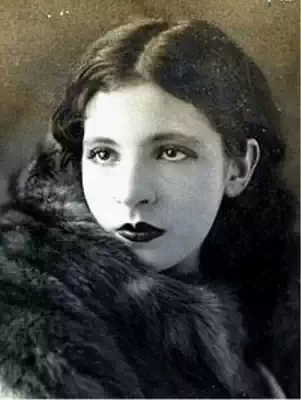
Patrícia Galvão
1910–1962
· lived 52 years
 BR
BR
BR
Patrícia Galvão, also known by the pseudonym "Pagu", was a multifaceted figure of Brazilian modernism, excelling as a writer, journalist, playwright, and political activist. Her literary work, marked by boldness and social criticism, reflects the cultural effervescence and transformations of her time. Pagu is remembered as a pioneering intellectual, whose life and artistic production challenged conventions and paved the way for new forms of expression and female action in the public sphere.
n. 1910-06-09, São João da Boa Vista · m. 1962-12-12, Santos
30
Views
Bio
Identification and basic context
Patrícia Galvão, born in 1905, is one of the most emblematic figures of Brazilian modernism. Known by her pseudonym "Pagu", she was a complete intellectual: writer, journalist, playwright, filmmaker, and political activist. Her work and life were intrinsically linked to the social, cultural, and political transformations of Brazil in the first decades of the 20th century.Childhood and education
Born into a wealthy São Paulo family, Patrícia Galvão had access to a privileged education for the time. From an early age, she showed a sharp intellect and a rebellious spirit, which led her to question the traditional roles of women in society. Her education included early exposure to art and literature, which shaped her worldview and her subsequent intellectual activity.Literary career
"Pagu's" literary career began with the publication of texts in newspapers and magazines, where she already demonstrated her talent and boldness. Her best-known work, the novel "Parque Industrial", published in 1945, is a landmark of modernism, addressing working-class life with raw and innovative language. She actively collaborated in important publications of the time, such as "Revista de Antropofagia" and "Diário de São Paulo", where she practiced critical and interventionist journalism.Work, style, and literary characteristics
Patrícia Galvão's work is characterized by formal experimentation, scathing social criticism, and profound freedom of expression. In "Parque Industrial", she introduces a fragmented narrative and a vocabulary that reflects the reality of the working class, breaking with prevailing literary conventions. Her central themes include social exploitation, the condition of women, modernity, and criticism of the capitalist system. Her style is direct, sometimes ironic, and always provocative.Work, style, and literary characteristics
Cultural and historical context "Pagu" was a central figure in the Brazilian modernist movement, actively participating in the artistic discussions and manifestations of the time. Her relationship with Oswald de Andrade, one of the movement's leaders, was fundamental to her insertion into intellectual circles. She lived and produced in a period of great transformations in Brazil, marked by industrialization, urbanization, and intense political and cultural debates. Her defiant stance and political activism, including in the Communist Party, made her a controversial figure, but admired for her courage.Work, style, and literary characteristics
Personal life Patrícia Galvão's personal life was as intense and marked as her work. Her marriage to Oswald de Andrade and her relationships with other intellectuals of the time placed her at the center of the cultural scene. Her political convictions led her to be imprisoned and exiled at different times in her life. Her experience as a free and independent woman in a conservative Brazil was, in itself, an act of transgression and inspiration.Work, style, and literary characteristics
Recognition and reception Although "Pagu" was recognized in life by her peers, the full dimension of her work and impact was only fully appreciated decades after her death. Her novel "Parque Industrial" is considered a classic of Brazilian literature today, and her figure is studied in universities and admired for her intellectual and political courage. Posthumous recognition has been growing, with the republication of her works and in-depth studies of her life and legacy.Work, style, and literary characteristics
Influences and legacy Patrícia Galvão was influenced by European modernism and artistic vanguards, but she managed to create a genuinely Brazilian and personal language. Her legacy lies in her audacity in questioning social and literary norms, in her pioneering representation of women and workers in literature, and in her engaged political activism. She inspired generations of women writers and intellectuals to challenge limits and fight for a more just world.Work, style, and literary characteristics
Interpretation and critical analysis Patrícia Galvão's work is subject to critical analysis from various perspectives: its importance for feminism, for social literature, and for the history of Brazilian modernism. The interpretation of her writing reveals a fierce critique of capitalism and power structures, as well as a deep sensitivity towards the human condition.Work, style, and literary characteristics
Curiosities and lesser-known aspects "Pagu" was one of the first women to hold a driver's license in Brazil and to fly a plane. Her vibrant personality and transgressive lifestyle, which included wearing men's clothing and making audacious statements, shocked society at the time. Her time in Paris and contact with surrealism also enriched her artistic vision. Her creativity extended to cooking, being known for her culinary skills.Work, style, and literary characteristics
Death and memory Patrícia Galvão passed away in 1962 in São Paulo, after a long battle with cancer. Her memory is kept alive through the republication of her works, academic studies, exhibitions, and documentaries that celebrate her life and her vast contribution to Brazilian culture. Her name has become a symbol of resistance, freedom, and intelligence.Poems
0No poems found
Comments (0)
Log in
to post a comment.
No comments yet. Be the first to comment.