
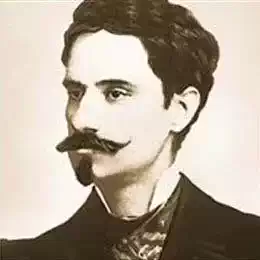
Pedro Kilkerry
1885–1917
· lived 32 years
 BR
BR
BR
Pedro Kilkerry was a Portuguese poet, playwright, and journalist, known for his satirical and anti-clerical work. He was a prominent figure in the Lisbon literary bohemia of the late 19th and early 20th centuries, associated with movements of social and political protest. His writing reflects an irreverent spirit and a sharp critical sense, marking his passage through Portuguese literature with an unmistakable style.
n. 1885-03-10, Santo Antônio de Jesus · m. 1917-03-25, Salvador
35
Views
Bio
Identification and basic context
Pedro Kilkerry was a Portuguese poet, playwright, and journalist, known for his satirical and anti-clerical work. He was born and died in Lisbon. He was a prominent figure in the Lisbon cultural and bohemian life of the late 19th and early 20th centuries, associated with circles of social and political protest.Childhood and education
Little is known about Pedro Kilkerry's childhood and education. However, his career suggests an informal education, marked by his experience in Lisbon's literary and journalistic circles. His work indicates a profound knowledge of the social and political reality of the time, as well as a diverse literary culture.Literary career
Kilkerry began his literary career by publishing poems in newspapers and magazines, quickly gaining notoriety for his satirical and irreverent tone. He was also a prolific playwright, writing plays that often addressed social and political issues critically. His activity as a journalist was fundamental to the dissemination of his work and his insertion into the intellectual debates of the time.Work, style, and literary characteristics
Pedro Kilkerry's work is predominantly satirical, with a strong anti-clerical and social criticism content. He used humor, irony, and parody to expose the hypocrisies of Portuguese society, especially the influence of the Catholic Church. His style is characterized by colloquial language, liveliness, and a brisk rhythm, reflecting his connection to the world of theater and journalism. Among his best-known works are poems and plays that became popular for their boldness and their ability to capture the spirit of the age.Cultural and historical context
Kilkerry lived in a period of great political and social instability in Portugal, marked by the end of the Monarchy and the establishment of the Republic. It was a time of cultural effervescence, with the emergence of new artistic and literary movements, and of strong social and ideological tensions. Kilkerry fits into this context as a critic of the established order, using his art as a form of intervention and protest.Personal life
Pedro Kilkerry's personal life was intrinsically linked to his literary and journalistic activities. He was known for his bohemian lifestyle and his active participation in Lisbon's intellectual circles. His political and anti-clerical convictions were well known and marked his life and work.Recognition and reception
During his lifetime, Pedro Kilkerry enjoyed considerable popularity among the public who appreciated his satirical and irreverent work. However, his protesting nature and the nature of his criticisms, especially of the Church, did not always guarantee him unanimous academic recognition. Today, he is remembered as an important representative of Portuguese satirical literature.Influences and legacy
Kilkerry was influenced by the Portuguese satirical tradition and by literature of social protest. His legacy lies in his courage to address controversial topics and his contribution to the development of satire in Portugal, paving the way for other critical voices in literature.Interpretation and critical analysis
Kilkerry's work can be interpreted as a mirror of the contradictions and hypocrisies of Portuguese society of his time. His criticism of the clergy and traditional institutions reflects a desire for modernization and liberation from oppressive dogmas.Curiosities and lesser-known aspects
Pedro Kilkerry was known for his quick wit and sharp humor, characteristics that made him a charismatic figure at literary gatherings. His active participation in Lisbon's bohemian life is a striking aspect of his personality.Death and memory
Pedro Kilkerry died in Lisbon, leaving a legacy of works that continue to be appreciated for their originality and critical spirit.Poems
0No poems found
Comments (0)
Log in
to post a comment.
No comments yet. Be the first to comment.