
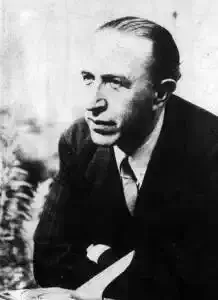
Pedro Salinas
 --
--
Pedro Salinas was a central figure of the Generation of '27, distinguished by a lyrical and intellectual poetry that explored the depths of love, knowledge, and self-awareness. His work is characterized by a sharp reflection on reality and human experience, using purified language and innovative imagery that fuses the everyday with the metaphysical. Recognized for both his academic work and his unique poetic voice, Salinas left a legacy that influenced subsequent generations of poets, establishing himself as one of the foremost exponents of 20th-century Spanish poetry.
n. 1891-11-27, Madrid · m. 1951-12-04, Boston
Bio
Identification and Basic Context
**Full Name:** Pedro Salinas Serrano **Date and Place of Birth:** November 27, 1891, Madrid, Spain. **Date and Place of Death:** December 4, 1951, Boston, Massachusetts, United States. **Family Background, Social Class, and Originating Cultural Context:** Born into a Madrid bourgeois family involved in commerce. His father was a cultured man who fostered his love for reading. **Nationality and Language(s) of Writing:** Spanish. He wrote in Spanish. **Historical Context in Which He Lived:** He lived most of his adult life during the Bourbon Restoration, the Second Spanish Republic, the Civil War, and the subsequent exile, marked by the Franco dictatorship.Childhood and Education
**Family Background and Social Environment:** He came from a well-off family that allowed him access to a good education and cultural circles. **Formal Education and Self-Taught Learning:** He studied Philosophy and Letters at the University of Madrid and earned a doctorate in Law. He was an avid reader and self-taught in many fields. **Early Influences (Readings, Culture, Religion, Politics):** Readings of classical Spanish poets, philosophy, and early 20th-century European literary currents. **Literary, Philosophical, or Artistic Movements Assimilated:** He was influenced by Modernism, but his work would evolve towards his own aesthetic linked to the Generation of '27. **Marking Events in Youth:** The early death of his father and the need to start working.Literary Career
**Beginning of Writing (When and How He Started):** He began writing poetry from a young age, but his work gained greater maturity and recognition from the 1920s onwards. **Evolution Over Time (Stages, Style Changes):** His poetic work can be divided into several stages: his formative period, the consolidation of his personal voice (with "La voz a ti debida"), and the poetry of exile, which is more reflective and melancholic. **Chronological Evolution of His Work:** His main poetry books are "Presagios" (1923), "Seguro azar" (1929), "La voz a ti debida" (1933), "Razón de amor" (1936), "El contemplado" (1946), and "Todo más al día" (1949). **Collaborations in Magazines, Newspapers, and Anthologies:** He actively collaborated in important literary magazines such as "Revista de Occidente," "Litoral," and "Carmen," and participated in the influential "Antología de poetas españoles contemporáneos" (1934), which gave its name to the Generation of '27. **Activity as a Critic, Translator, or Editor:** He was a university professor of Spanish language and literature at various institutions (Madrid, Liverpool, Wellesley College, Johns Hopkins University), a literary critic, and a translator of authors like Proust.Literary Work, Style, and Characteristics
**Main Works with Dates and Production Context:** * "La voz a ti debida" (1933): Considered his masterpiece, it explores love from its beginnings to full realization, with innovative language. * "Razón de amor" (1936): Continues the exploration of love, but with a more reflective and meditative tone. * "El contemplado" (1946): An extensive poem dedicated to the sea, written during his exile in the United States. **Dominant Themes — Love, Death, Time, Nature, Identity, Homeland, Spirituality, etc.:** Love (in its various facets: discovery, possession, loss), the fleetingness of time, the pursuit of knowledge, self-awareness, identity, homeland (especially in exile), nature (particularly the sea). **Form and Structure — Use of Sonnet, Free Verse, Fixed Form, Metrical Experimentation:** He predominantly used free verse, but with great mastery of meter and musicality. His poetic structure is usually long verse and prose poetry. **Poetic Devices (Metaphor, Rhythm, Musicality):** He employed bold and novel metaphors, often based on comparing the abstract with the concrete. His poetry has a conversational rhythm and great musicality. **Tone and Poetic Voice — Lyrical, Satirical, Elegiac, Epic, Ironic, Confessional:** Predominantly lyrical, confessional, and reflective. At times, it delves into the elegiac or philosophical. **Poetic Voice (Personal, Universal, Fragmented, etc.):** A voice that starts from the personal to achieve universality, exploring the human condition. **Language and Style — Vocabulary, Imagistic Density, Preferred Rhetorical Devices:** Cultured yet accessible language, with a rich vocabulary. His style is characterized by clarity, precision, and surprising imagery that often fuses the rational with the irrational. **Formal or Thematic Innovations Introduced in Literature:** He renewed Spanish poetic language, integrating colloquial speech and philosophical reflection into love lyricism. His approach to love is intellectualized but deeply felt. **Relationship with Tradition and Modernity:** He successfully assimilated the Spanish poetic tradition and merged it with European avant-garde currents, creating a personal synthesis. **Associated Literary Movements (e.g., Symbolism, Modernism):** He is associated with the Generation of '27, which inherited Modernism but turned towards the avant-garde and a greater connection with reality. **Lesser-Known or Unpublished Works:** "Fábula de la Cenicienta" (long poem) and other scattered writings.Cultural and Historical Context
**Relationship with Historical Events (Wars, Revolutions, Regimes):** The Spanish Civil War was a turning point that led him to exile, profoundly marking his life and later work. **Relationship with Other Writers or Literary Circles:** He was a central figure in the Generation of '27, maintaining close relationships with Lorca, Alberti, Guillén, etc. He was also friends with Juan Ramón Jiménez. **Generation or Movement to Which He Belongs (e.g., Romanticism, Modernism, Surrealism):** Generation of '27. **Political or Philosophical Stance:** Republican, liberal, with a deep democratic conviction. His exile was a direct consequence of his ideas and his support for the Republic. **Influence of Society and Culture on His Work:** The political and social turbulence of Spain, the intellectual atmosphere of Madrid, and the experience of exile shaped his worldview and poetry. **Dialogues and Tensions with Contemporaries:** He had a fluid dialogue with the poets of his generation, sharing concerns but maintaining his uniqueness. **Critical Reception During His Lifetime vs. Posthumous Recognition:** He received significant recognition during his lifetime, but his work achieved greater projection and appreciation posthumously, especially after the fall of the Franco dictatorship.Personal Life
**Significant Affective and Family Relationships and How They Shaped His Work:** His marriage to Josefina de la Torre (who was also a writer) and his subsequent marriage to Mildred Cooper, as well as his love for Concha de Albornoz, were sources of inspiration for his love poetry. **Literary Friendships and Rivalries:** He maintained deep friendships with the members of the Generation of '27. No significant rivalries are recorded. **Personal Experiences and Crises, Illnesses, or Conflicts:** Exile was a very difficult life experience, marked by nostalgia and a sense of rootlessness. **Parallel Professions (If He Didn't Live Solely Off Poetry):** He was a university professor in Spain and the United States, and a literary critic. **Religious, Spiritual, or Philosophical Beliefs:** He showed an interest in philosophy and a certain spiritual restlessness, although his main focus was human reflection. **Political Stances and Civic Commitment:** He was a staunch defender of the Republic and democratic values, which led him into exile.Recognition and Reception
**Place in National and International Literature:** He is one of the most important Spanish poets of the 20th century, internationally recognized. **Awards, Distinctions, and Institutional Recognition:** He was a member of the Royal Spanish Academy, although he could not take possession of his seat due to exile. He received various tributes and recognitions. **Critical Reception in His Time and Over Time:** He was widely praised for his originality and lyrical depth, and his work has been the subject of continuous study and admiration. **Popularity vs. Academic Recognition:** He enjoys great academic and literary recognition, and his love poetry has also achieved notable popularity.Influences and Legacy
**Authors Who Influenced Him:** Garcilaso de la Vega, Fray Luis de León, Juan Ramón Jiménez, Paul Valéry. **Poets and Movements He Influenced:** He influenced poets of later generations, especially those seeking to renew poetic language and address existential and amorous themes with depth. **Impact on National and World Literature and on Subsequent Generations of Poets:** His impact on Spanish-language poetry, both in Spain and Latin America, is considerable. **Entry into the Literary Canon:** He is a fundamental author of the 20th-century Spanish literary canon. **Translations and International Dissemination:** His work has been translated into numerous languages, and he is studied and appreciated worldwide. **Adaptations (Music, Theater, Film):** Some of his poems have been set to music. **Academic Studies Dedicated to His Work:** There is a vast body of critical bibliography on his work.Interpretation and Critical Analysis
**Possible Readings of His Work:** As an exploration of love, as a reflection of the human condition, as a testament to exile. **Philosophical and Existential Themes:** The nature of love, the fragility of existence, the search for truth and knowledge, identity, and rootlessness. **Controversies or Critical Debates:** The debate often centers on the relationship between his love poetry and his private life, as well as on the interpretation of his language and his worldview.Childhood and Education
**Lesser-Known Aspects of His Personality:** Despite his erudition, he possessed a great sense of humor and great simplicity. **Contradictions Between Life and Work:** His life, marked by exile and separation, sometimes contrasts with the fullness and possession he expresses in some of his most famous love poems. **Marking or Anecdotal Episodes That Illuminate the Author's Profile:** His work as a university professor abroad allowed him to be a cultural bridge between Spain and America. **Objects, Places, or Rituals Associated with Poetic Creation:** Marine landscapes (especially in his exile) and university settings. **Writing Habits:** He is said to have been a methodical and reflective poet, who carefully revised his verses. **Curious Episodes:** He was the introducer of the Generation of '27 at the Residencia de Estudiantes. **Manuscripts, Diaries, or Correspondence:** Significant collections of his manuscripts and correspondence are preserved in various institutions.Death and Memory
**Circumstances of Death:** He died in Boston, USA, from cancer, on December 4, 1951. **Posthumous Publications:** "Todo más al día" (1949, though published during his lifetime in the United States), "Confianza" (1951), "Fragmentos de un poema futuro" (1952), among others.Poems
0No poems found
Comments (0)
No comments yet. Be the first to comment.