

Authors List
Browse our collection of authors

Belén Reyes

Belén Reyes is a poet whose work delves into the depths of human experience, exploring themes such as identity, memory, and introspection with sensitivity and strength. Her poetic style is distinguished by the power of her imagery and the musicality of her verse, creating a unique lyrical universe where reflection and emotion intertwine. Her contribution to contemporary poetry lies in her ability to connect with the reader through an authentic and moving voice, addressing the complexity of personal relationships and the search for meaning in today's world.

Carlos Edmundo de Ory
1923-04-27 – 2010-11-11
Carlos Edmundo de Ory was a Spanish poet, a key figure of the 1950 Generation and one of the founders of the poetic movement "Cántico". His work is characterized by a deep reflection on existence, time, and the human condition, exploring solitude, the fleetingness of life, and the search for meaning. With a refined style, often associated with existentialism and intellectual lyricism, Ory developed a unique poetic voice, marked by melancholy, irony, and lucid introspection. His poetry, devoid of unnecessary rhetorical artifice, seeks essential truth through precise and evocative language, leaving a legacy of intense and coherent work.

Bartolomé Leonardo de Argensola
1562-08-26 – 1631-02-04
Bartolomé Leonardo de Argensola was a distinguished Spanish poet, historian, and humanist of the Golden Age. The twin brother of the also poet Lupercio Leonardo de Argensola, both shared a solid humanistic education and a notable influence from classical and Renaissance Italian poetry. His poetic work, marked by restraint, elegance, and moral reflection, is distinguished by its formal mastery and conceptual depth, addressing themes such as the passage of time, the fleeting nature of glory, and the human condition. In addition to his poetic work, Argensola stood out as a historian, serving as chronicler of Aragon, and as a philologist, contributing to the study and dissemination of classical literature.

Baltasar del Alcázar
1530-01-01 – 1606-01-16
Baltasar del Alcázar was a Spanish poet of the Golden Age, whose work is part of courtly and amorous lyric poetry. Known for his wit and skill in the sonnet, his poetry is characterized by its delicate treatment of love, Petrarchan influence, and a polished, elegant style. Although his output is not extensive, his verses have secured him a place in the history of Spanish poetry.

Antonio Plaza Llamas
1830-06-02 – 1882-08-26
Antonio Plaza Llamas was a Mexican poet and politician, known for his work that reflects the spirit of the Mexican Revolution and the search for national identity. His poetry, often social and patriotic in nature, was characterized by direct and passionate language, with an emphasis on themes such as the homeland, justice, and the people's struggle. He was a relevant figure in the cultural and political life of his time, and his work contributed to forging a poetic identity linked to revolutionary ideals and Mexican nationalism.

Atahualpa Yupanqui
1908-01-31 – 1992-05-23
Atahualpa Yupanqui was a legendary Argentine singer-songwriter, guitarist, and writer, considered one of the fundamental pillars of Latin American folk music. His work is characterized by a deep connection with the roots of the continent, the life of the farmer, and the landscape of the Pampas and the Andes. With poetry that intertwines simplicity and depth, Yupanqui portrayed the identity, struggles, and hopes of the indigenous peoples and rural workers. His style, marked by mastery of the guitar and an unmistakable voice, evoked nostalgia, resistance, and the beauty of the land, becoming a symbol of Latin American culture and identity.
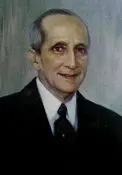
Andrés Eloy Blanco
1896-08-06 – 1955-05-21
Andrés Eloy Blanco was a Venezuelan poet, playwright, and politician, one of the most emblematic figures of modernism and social poetry in Venezuela. His work, characterized by deep lyricism, sharp humor, and strong social denunciation, has touched the hearts of several generations. Recognized for his mastery of language and his ability to intertwine criticism of injustice with the celebration of life and love, Blanco became a symbol of resistance and hope. His figure transcends literature to stand as a moral and cultural reference in Venezuela and Latin America.
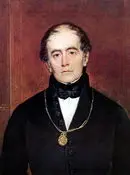
Andrés Bello
1781-11-29 – 1865-10-15
Andrés Bello was a Venezuelan humanist, philologist, jurist, and poet, considered one of the most influential intellectual figures in Latin America during the 19th century. His work spanned fields as diverse as law, grammar, history, philosophy, and poetry, leaving an indelible legacy on Hispanic American culture and thought. He was a passionate advocate for the linguistic unity of Spanish and a promoter of education and science in the region.

Ana Istarú
1960-02-03
Ana Istarú is a Costa Rican poet whose work is characterized by deep introspection and a sharp observation of the human condition. Her poetry explores themes such as love, solitude, memory, and the search for identity, often with direct language and powerful imagery. Throughout her career, she has been recognized for her distinctive lyrical voice and her ability to connect with universal emotions.

Ana Rossetti
1950-05-15
Ana Rossetti is a Spanish poet known for her lyrical work and active participation in the Movida Madrileña. Her poetry explores themes such as the body, eroticism, identity, and social criticism, often with direct and provocative language. In addition to her poetic work, Rossetti has ventured into narrative and essay writing, establishing herself as a relevant voice in contemporary Spanish literature. Her work is characterized by constant experimentation and a deep reflection on the human condition in the modern world.

Amado Nervo
1870-08-27 – 1919-05-24
Amado Nervo was a Mexican poet and diplomat, a prominent figure of literary Modernism and one of the most influential poets of his generation. His work, characterized by simplicity, musicality, and introspection, explores themes such as love, spirituality, death, and the beauty of the everyday. Nervo cultivated a lyrical and melancholic style, evolving towards a more refined and spiritual poetry in his later stages. His legacy lies in his ability to move the reader with verses that are both accessible and profound, and in his contribution to the renewal of poetic language in Spanish.

Álvarez Quintero, Serafín y Joaquín
Serafín and Joaquín Álvarez Quintero were two Spanish brothers and playwrights, known as "the Quintero brothers," who achieved great fame for their costumbrista and popular one-act plays, comedies, and zarzuelas. Their work, characterized by humor, tenderness, and a deep understanding of Andalusian idiosyncrasy, masterfully portrays types and scenes from everyday life, especially in Seville. They brought an optimistic and endearing vision of society to Spanish theater, marked by agile dialogues and lovable characters that have endured in the collective memory.

Alberto Girri
1919-11-27 – 1991-11-16
Alberto Girri was an Argentine poet, essayist, and translator known for his lyrical work marked by reflection on language, everyday reality, and the human condition. His poetry is characterized by an apparent simplicity that hides a profound philosophical inquiry and formal mastery. Girri explored the tension between language and the world, questioning the limits of poetic representation and addressing themes such as identity, time, and the transience of existence. His work, translated into several languages, solidifies him as one of the most important voices in 20th-century Spanish-language poetry.
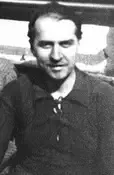
Stephan Roll
1903-06-05 – 1974-05-13

Mona Arshi


John Stammers
1954-01-01

Isabel Neal

Isabel Neal is an American writer and activist, known for her work with the civil rights movement and for her writing that reflects the experiences of the African-American community. Her work addresses themes of social justice, culture, and identity.

Andrew Waterhouse
1955-01-01

Mary-Alice Daniel

John Liles
John Liles is an American author known for his works that explore surrealism, the absurd, and the nature of reality. His works often challenge traditional narrative conventions. He is recognized for his imaginative and often enigmatic approach to fiction.

Jill Osier
1974-01-01
Jill Osier is an American poet known for her lyrical work that explores the connection between nature, memory, and human experience. Her poetry is often praised for its musicality, vivid imagery, and a deep appreciation for the natural world, often serving as a mirror to human emotions and reflections. Osier has a sensitive and contemplative approach to writing, seeking to capture the essence of fleeting moments and the beauty found in familiar landscapes. Her work invites readers to a reflective pause, valuing the simplicity and depth found in observations of the everyday and the surrounding environment.

Desiree C. Bailey
Desiree C. Bailey is an American poet and novelist known for her exploration of identity, heritage, and the African-American experience. Her work often intertwines elements of fantasy and magical realism to address complex themes of belonging and ancestry.

Duy Doan
Duy Doan is a contemporary poet and writer, whose works explore the intersection of identity, culture, and personal experience. His poetry is often marked by vivid and introspective language, addressing themes such as belonging, memory, and the search for meaning in a constantly changing world. Doan's work reflects a keen sensitivity to the nuances of the human condition, offering unique perspectives on the complexities of modern life. He establishes himself as a relevant poetic voice, whose literary contributions resonate with an audience that values depth and authenticity.

Yanyi