

Authors List
Browse our collection of authors

Fray Luis de León

Fray Luis de León was a prominent Spanish poet, humanist, and theologian of the Golden Age. His poetic work, characterized by serenity, harmony, and the pursuit of inner peace, is inspired by nature and mystical experience. After a period of imprisonment, his return to the professorial chair and public life marked a milestone in the literature of his time. He is remembered for his didactic prose and his refined lyricism, which position him as an essential figure of ascetic and Renaissance literature in Spanish.

Gabino-Alejandro Carriedo
Spanish poet whose work is characterized by a deep reflection on the human condition, the passage of time, and the search for meaning. His verses, often laden with melancholy and subtle musicality, explore the intimacy of the self and its relationship with the universe. Through careful language and evocative imagery, Carriedo delves into the mysteries of existence, memory, and love, creating a unique and moving poetic universe that has left a significant mark on contemporary Spanish poetry.
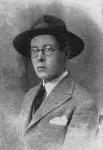
Francisco Luis Bernárdez
1900-10-05 – 1978-10-24
Francisco Luis Bernárdez was an Argentine poet whose work is characterized by a deep, spiritual, and reflective lyricism, often marked by the influence of philosophy and theology. His poetry explores themes such as faith, doubt, the mystery of existence, transcendence, and the search for God. With a refined style and language rich in symbolism, Bernárdez managed to create a poetic work of great spiritual depth. His figure is relevant within 20th-century Argentine poetry, standing out for his originality and his inquiry into the fundamental questions of the human being.

Francisco Villaespesa
1877-10-15 – 1936-04-09
Francisco Villaespesa was a Spanish poet, prolific and very popular in his time, known for his romantic and modernist poetry, with themes centered on love, melancholy, and exoticism. His style is characterized by musicality, sensory richness, and careful metric form. Although his work had a great impact in his time, his legacy has been subject to later critical debate.

Francisco Gregorio de Salas
1729-01-29 – 1808-12-03
Francisco Gregorio de Salas was a Spanish writer and politician of the 19th century. His work is part of late romanticism and incipient realism, addressing social and political issues of his time. He excelled in both poetry and prose, showing a concern for public affairs and a particular sensitivity to the problems of his era. His figure represents an important link in the transition of literary currents of the 19th century in Spain.

Francisco de Medrano
1570-01-01 – 1607-01-01
Francisco de Medrano was a Spanish poet of the Golden Age, whose work is inscribed within the Baroque current. Known for his careful style and his deep reflection on themes such as love, the transience of life, and death, Medrano demonstrated great technical skill in his compositions, often marked by an elegiac tone and a melancholic vision of the world.

Francisco de la Torre
Francisco de la Torre was a Spanish poet whose work, although late within the Golden Age, stands out for its formal refinement and deep sensibility. Known for his learned style and mastery of metrics, he explored themes such as love, nature, and mythology with a polished lyrical voice. His production, largely collected posthumously, is a valuable testament to the cultured lyricism of his time.

Francisco de Figueroa
1634-01-16 – 1691-10-04
Francisco de Figueroa was a poet and humanist of the Spanish Golden Age, known for his erudition and his skill in composing verses, especially in Latin. His work, marked by the influence of Renaissance humanism, addresses classical and mythological themes with notable rhetorical skill and a profound knowledge of Greco-Latin sources. Despite not having an extensive production in Castilian, his figure is relevant as an exponent of the literary culture of his time and his contribution to the study and dissemination of classical literature.

Fernando de Herrera
1534-01-01 – 1597-01-01
Fernando de Herrera was a Spanish poet and writer of the Golden Age, known for his grandiloquent style and profound erudition. His work is characterized by rhetorical complexity and the pursuit of formal perfection, which earned him the nickname "el Divino". He is considered a key figure in the transition from the Renaissance to the Baroque in Spanish poetry, notably influencing later poets with his use of verse and elevated themes.

Francisco de Aldana
– 1578-08-04
Francisco de Aldana was a Spanish poet of the Golden Age, whose work is characterized by his profound religiosity, his interest in metaphysics, and his elevated and rhetorical style. Despite a life marked by war and military service, Aldana left behind a poetic production of great value, influenced by Petrarch and classical tradition. His poetry explores themes such as divine love, the fleetingness of life, and the search for spiritual perfection, all expressed with careful language and precise meter. His figure is representative of the complexity of the Renaissance man, divided between the ideal and earthly reality.

Evaristo Carriego
1883-05-07 – 1912-10-13
Evaristo Carriego was an Argentine poet whose work focused on the life and environments of the Buenos Aires slums, anticipating lunfardo as poetic material. His poems crudely and melancholically portray the marginalization, poverty, crime, and life of the lower classes of Buenos Aires at the end of the 19th and beginning of the 20th centuries. Although his poetic output was relatively brief and marked by an early death, Carriego is considered a precursor to tango in poetry and a social chronicler of his time, whose work continues to resonate for its authenticity and its deep connection to Argentine popular roots.

Félix María de Samaniego
1745-10-12 – 1801-08-11
Félix María de Samaniego was a Spanish writer primarily known for his fables, a genre he cultivated with mastery and a keen sense of humor. His work is inscribed in the tradition of Aesop and La Fontaine, adapting and creating short stories with morals that subtly criticize the customs and vices of the society of his time. With a clear and direct style, Samaniego used the fable as a vehicle for teaching and moral reflection, earning a prominent place in Spanish didactic literature.

Eugenio Florit
1903-10-15 – 1999-06-22
Eugenio Florit was a Cuban poet whose work is characterized by his deep lyricism and formal mastery. His poetry, often imbued with a reflective melancholy, explores universal themes such as love, the transience of time, and the search for transcendence. He is associated with the Generation of the '20s in Cuba, a group of writers who sought to renew poetic expression and address the complexities of the human and national experience.
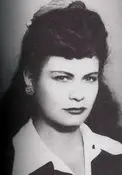
Eunice Odio
1919-10-18 – 1974-03-23
Costa Rican poet, Eunice Odio is an essential voice in 20th-century Spanish-language poetry. Her work is distinguished by a profound exploration of the human condition, spirituality, death, and the search for identity, often through language charged with symbolism and powerful imagery. Her poetry transcends geographical and temporal boundaries, inviting existential and transcendent reflection.

Enrique González Martínez
1871-04-13 – 1952-02-19
Enrique González Martínez was a Mexican poet, doctor, and diplomat, a central figure of late modernism and a precursor of avant-garde poetry in Mexico. His work is characterized by a deep reflection on time, the fleeting nature of life, and the search for transcendence, with a refined language and great musicality. Through his poetry, he explored themes such as melancholy, solitude, and death, but also the beauty of the moment and the persistence of the spirit. His influence on subsequent generations of Mexican poets was considerable.

Enrique Villagrasa González
Enrique Villagrasa González was a Spanish poet whose work is characterized by deep introspection and careful language. His verses explore universal themes such as love, the passage of time, and the human condition, often tinged with melancholy and a constant search for meaning. His poetic career developed in a context of literary renewal, where his personal voice managed to find a distinctive space. The connection with nature and reflection on existence are fundamental pillars in his poetic corpus.

Dina Posada
1946-01-01
Dina Posada is a prominent figure in contemporary literature, known for her introspective and deeply reflective poetry. Her work is characterized by an intimate exploration of the human condition, addressing themes such as memory, identity, the passage of time, and the search for meaning in an often fragmented world. With careful language and exquisite sensitivity, Posada manages to move the reader through verses that evoke inner landscapes and universal emotions, consolidating herself as an essential poetic voice today.
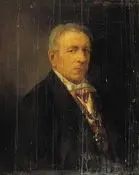
Duque de Rivas
1828-09-13 – 1914-11-07
Ángel de Saavedra, Duke of Rivas, was a multifaceted figure in Spanish literature, excelling as a poet, playwright, and politician. His work is part of Romanticism, a movement of which he was one of its greatest representatives in Spain. With works like "Don Álvaro o la fuerza del sino" (Don Álvaro or the Force of Destiny), he revolutionized Spanish Romantic theater, characterized by its dramatic intensity, the conflict between destiny and free will, and the exaltation of passions. His poetry, also of a Romantic nature, explores themes such as love, freedom, history, and nature, often with a grandiloquent and emotional tone. The Duke of Rivas was not only a literary creator but also a relevant actor in the political life of his time, which influenced his worldview and his work.

Delmira Agustini
1886-10-24 – 1914-07-06
Delmira Agustini was an Uruguayan poet, a prominent figure of literary modernism in Hispanic America. Her work is characterized by a profound exploration of sensuality, eroticism, and feminine subjectivity, often framed within a context of social and moral repression for women of her time. Agustini is recognized for her thematic audacity and innovative language, which challenged the literary and social conventions of the early 20th century. Despite her short life, her poetry left an indelible mark on the literature of her country and the continent, being considered a precursor to literary feminism.

Diego de Torres y Villarroel
– 1770-06-19
Diego de Torres y Villarroel was a Spanish writer, physician, and professor known for his literary work, which spanned from poetry to satirical and didactic prose. His life was marked by an eccentric personality and a sharp intellect that earned him fame and controversy in his time. He is remembered for his lively style and keen observation of society, reflected in works that showcase both his scientific knowledge and his more playful and critical literary side.

David Escobar Galindo
1943-10-04
David Escobar Galindo is a Salvadoran poet, essayist, and diplomat. His poetic work is characterized by a deep reflection on identity, history, and the human condition, often tinged with melancholic lyricism and a keen social awareness. He has been a prominent figure in El Salvador's cultural life, promoting literature and the arts through his diplomatic work and writings.

Cristóbal de Castillejo
– 1550-06-12
Cristóbal de Castillejo was a 16th-century Spanish poet, belonging to the current of courtly and humanist poetry. He is considered the last great representative of cancioneril poetry and one of the precursors of Petrarchism in Spain. His work is characterized by formal elegance, the musicality of verse, and the exploration of themes such as love, the fleetingness of time, and melancholy, often with a tone of disillusionment and resignation before the vanities of the world. He was a keen observer of court life, of which he was often critical.

Carlos Pellicer
1899-01-16 – 1977-02-16
Carlos Pellicer was a distinguished Mexican poet, essayist, and diplomat, considered one of the key figures of 20th-century Mexican poetry. His work is distinguished by a deep sensuality, a love for the land and nature, and an ability to capture the essence of Mexico's landscape and culture. Recognized for his lyrical and evocative style, Pellicer explored themes such as beauty, time, memory, and Mexican identity, leaving a poetic legacy that celebrates the sensory and spiritual richness of his country.

Carolina Coronado
1820-12-12 – 1911-01-15
Carolina Coronado was a prominent Spanish poet and writer of the 19th century, a key figure of Romanticism in Spain. Known for her passionate lyricism and her commitment to social causes, she explored themes such as love, freedom, and the condition of women in her work. Her poetry is characterized by deep sensitivity and expressive force that distinguished her in her time.