

Authors List
Browse our collection of authors

José Juan Tablada

1871-04-03 – 1945-08-02
Mexican poet and diplomat, a pioneer of modernism and the avant-garde in his country's poetry. Tablada is recognized for his experimental boldness, especially in introducing the haiku into Spanish, and for his fusion of Eastern and Western influences. His work explores themes such as ephemeral beauty, melancholy, and aesthetic renewal, marking a before and after in 20th-century Mexican and Latin American poetry.

José Gautier Benítez
1848-04-12 – 1880-01-24
José Gautier Benítez was a Puerto Rican poet, a prominent figure of Romanticism on the island. His work, marked by a deep love for his homeland, is characterized by the exaltation of Caribbean nature and patriotic sentiment. He is recognized for his passionate lyricism and his commitment to Puerto Rican identity, being one of the precursors of the national poetry of Puerto Rico.

José Coronel Urtecho
1906-02-28 – 1994-03-19
José Coronel Urtecho was a multifaceted figure in Nicaraguan art and culture, primarily recognized for his work as a poet and for being one of the founders of the avant-garde movement in Nicaragua. His poetic work is distinguished by its experimentalism, humor, irreverence, and its deep connection to Nicaraguan identity, exploring themes such as history, mythology, and daily life with bold and original language. In addition to his prolific literary career, Coronel Urtecho was a distinguished painter, diplomat, and cultural critic, leaving an indelible mark on the artistic and intellectual landscape of his country.
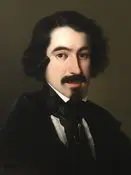
José de Espronceda
1808-03-25 – 1842-05-23
José de Espronceda was a Spanish poet and playwright, a leading figure of Romanticism in his country. His life, marked by rebellion, exile, and overflowing passions, is reflected in a body of work charged with lyricism, melancholy, and a profound spirit of freedom. Espronceda is known for his narrative poems, his passionate sonnets, and his historical dramas, establishing himself as a symbol of romantic dissatisfaction and quest.
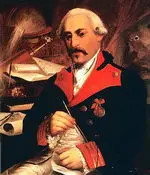
José Cadalso
1741-10-08 – 1782-02-26
José Cadalso was a Spanish military officer, writer, and thinker of the Enlightenment, known mainly for his satirical and critical work of the society of his time. His agile prose and wit allowed him to address topics such as morality, customs, and national identity, often with an ironic and reflective tone. His most famous work, 'Cartas marruecas' (Moroccan Letters), is a paradigmatic example of the didactic and moralizing literature of the 18th century, where through the eyes of foreign characters, the vices and virtues of Spain are criticized. Cadalso is a key figure for understanding Enlightenment thought in Spanish literature.
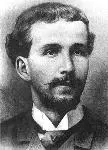
José Asunción Silva
1865-11-27 – 1896-05-24
José Asunción Silva was a Colombian poet, a central figure of literary modernism in Hispanic America. His work, although scarce in volume, is of exceptional quality, marked by melancholy, musicality, and profound introspection. Silva explored themes such as death, unrequited love, the fleetingness of time, and the pursuit of ideal beauty, using innovative and rhythmically sophisticated language. He is considered one of the precursors of contemporary poetry in the Spanish language.
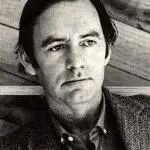
Jorge Teillier
1935-06-24 – 1996-04-22
Chilean poet Jorge Teillier is a central figure of the so-called "Generation of the '50s" in Chile, a group of writers who sought to renew Chilean poetry with a more direct language and themes centered on daily life, memory, and landscape. His work is characterized by melancholy, nostalgia for the past, and a profound sense of the local, portraying the rural world and the small towns of Chile with a lyrical and evocative voice.

José Antonio Ramos Sucre
1890-06-09 – 1930-06-13
José Antonio Ramos Sucre was a Venezuelan poet whose work is part of the modernist current and avant-garde poetry of the early 20th century. His literary production, although brief, is of profound lyrical and reflective quality, exploring themes such as the fleetingness of time, melancholy, death, and the search for transcendence. His style is characterized by careful language, subtle musicality, and evocative imagery, which position him as one of the most important voices in Hispanic American poetry of his time, despite his early demise.

Jorge Manrique
1440-01-01 – 1479-03-27
Jorge Manrique was a 15th-century Spanish poet whose work is framed within the transition between medieval lyricism and the Renaissance. He is especially remembered for his "Coplas a la muerte de su padre" (Coplas on the Death of His Father), an elegiac poem that has become a landmark of Castilian language poetry. In this work, Manrique reflects on the transience of life, the vanity of worldly glories, and equality before death, with a sober and profound style that transcends his era.

Jorge Riechmann
1962-03-24
Jorge Riechmann is a Spanish poet, translator, and essayist, known for his deep connection with ecology and social criticism. His poetic work, often reflective and committed in nature, addresses themes such as nature, justice, memory, and utopia. He has been an important voice in contemporary Spanish poetry, combining philosophical reflection with vigorous lyricism.
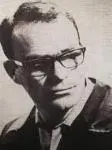
Jorge Debravo
1938-01-31 – 1967-08-04
Jorge Debravo was a Uruguayan poet whose work is distinguished by a deep and reflective lyricism, marked by the influence of existentialism and a constant inquiry into the human condition. His poetry explores themes such as solitude, lack of communication, the passage of time, and the search for meaning in an often desolate world. His style is characterized by direct yet evocative language, often laden with melancholy and a particular sensitivity to the most intimate aspects of life experience. Despite his early death, Debravo left a significant mark on Uruguayan poetry, being considered an important voice of his generation.

Jaime Torres Bodet
1902-04-17 – 1974-05-13
Jaime Torres Bodet was a distinguished Mexican poet, diplomat, and academic. His poetic work is characterized by a deep reflection on the human condition, time, memory, and the search for meaning in life. As a public figure, he held important roles in diplomacy and education, serving as Secretary of Public Education and Director-General of UNESCO. His legacy combines literary excellence with an unwavering social and cultural commitment.

Iván Tubau
1937-08-17 – 2016-11-13
Iván Tubau is a Spanish poet whose work is characterized by an intimate and reflective lyricism, often tinged with melancholy and a deep connection with the inner and outer landscape. His poetry explores themes such as solitude, the passage of time, love, and the search for meaning in everyday life, using careful language and suggestive imagery that invites introspection. Considered a relevant voice in contemporary Spanish-language poetry, Tubau has managed to build a personal and moving poetic universe, marked by authenticity and a sensitivity that resonates with many readers.

Ismael Enrique Arciniegas
1865-01-12 – 1938-01-23
Ismael Enrique Arciniegas was a Colombian writer, journalist, and diplomat. He stood out for his agile prose and his interest in historical and biographical topics. Throughout his career, he explored various facets of literature and journalism, leaving a legacy of works that reflect his deep connection with Hispanic-American culture. His journalistic and literary work was marked by a keen observation of reality and a polished style. Arciniegas contributed significantly to the enrichment of Colombian literature and the dissemination of his country's culture through his writings and his diplomatic work.

Hernando de Acuña
Hernando de Acuña was a Spanish poet of the Golden Age, known for his love lyrics and his skill in imitating Italian models. His work is part of the Renaissance, showing influences from Petrarch and Garcilaso de la Vega. He was characterized by a polished style and an elegant and measured expression of feelings, exploring themes such as courtly love, feminine beauty, and the transience of time. Although his output was not extensive, he left a significant mark on the poetry of his time, being considered one of the continuators of Garcilasan lyricism and a poet of notable sensitivity.

Ignacio de Luzán
1702-03-28 – 1754-05-19
Ignacio de Luzán was an influential Spanish writer and intellectual of the 18th century, a key figure of the Enlightenment in Spain. His most important work, "La Poética" (1737), is considered a milestone in Spanish literary criticism, introducing the principles of Neoclassicism and laying the groundwork for a renewal of literary theory and practice in the country. He stood out for his erudition and his defense of reason, clarity, and good taste in art and literature, advocating for the imitation of classical models and the adaptation of aesthetic norms to the Spanish reality.
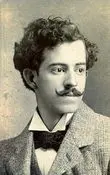
Guillermo Valencia
Guillermo Valencia was a Colombian poet, politician, and diplomat, recognized as one of the most important figures of Modernism in Hispanic America. His poetry is characterized by formal perfection, musicality, and the pursuit of classical beauty, often inspired by Greco-Latin and mythological themes. Valencia was also a prominent public intellectual, holding important roles in his country's politics and diplomacy, which is reflected in the breadth of his vision and his civic commitment.

Gutierre de Cetina
– 1554-01-01
Gutierre de Cetina was a Spanish poet of the Golden Age, known for his love lyrics of Italian influence. His work is framed within Petrarchan lyricism, with a careful form and an idealized treatment of love, often focused on the figure of an unattainable lady. He was an important figure in the transition from traditional Castilian poetry towards new Renaissance forms, adapting the sonnet and Italian meter to the Spanish language with great mastery. His poetry is representative of courtly love and the refined expression of feelings.

Guillermo Aguirre y Fierro
1887-01-01
Mexican poet and essayist, Guillermo Aguirre y Fierro has cultivated a literary work marked by deep reflection on identity, history, and the human condition. His poetry, often philosophical in nature, is distinguished by the richness of its language and the complexity of its imagery, inviting contemplation and analysis. Aguirre y Fierro has also distinguished himself through his essayistic work, in which he addresses themes of literature, culture, and society with acuity and erudition. His literary career consolidates him as an important voice within contemporary Mexican literature, capable of engaging with tradition and offering new perspectives to cultural debates.

Gonzalo de Berceo
1198 – 1264
Gonzalo de Berceo was a Spanish poet, considered the first poet identified by name of the Castilian Renaissance school and one of the introducers of Italian metrics in Spanish poetry. His work, focused on the exaltation of the Christian faith and the Virgin Mary, is characterized by its simplicity, devotion, and a language close to the people. Through his "miracles" and "lives of saints," he offered a didactic and emotional vision of medieval religiosity, marking a milestone in Spanish literature for his ability to connect the divine with the human through poetic word. His influence extended to later generations, consolidating his figure as a fundamental pillar of religious poetry in Castilian.

Gloria Fuertes
1917-07-28 – 1998-11-27
Spanish poet known for her direct, simple, and deeply human style, which often moves between tenderness, irony, and social protest. Her work, accessible to all audiences, addresses themes such as love, loneliness, injustice, childhood, and nature with an unmistakable voice, full of musicality and sensitivity. Gloria Fuertes became a symbol of popular and committed poetry, leaving an indelible legacy in Spanish and Latin American literature.
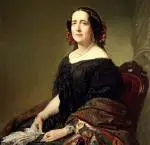
Gertrudis Gómez de Avellaneda
1814-03-23 – 1873-02-01
Gertrudis Gómez de Avellaneda was a prominent Cuban writer, recognized for her romantic poetry and theatrical work. Her writing is characterized by passion, emotional intensity, and the exploration of themes such as love, freedom, and justice. Despite facing the social limitations imposed on women of her time, she managed to publish and gain recognition in the literary circles of Spain and America. Her legacy endures as a symbol of the struggle for female artistic expression and a fundamental exponent of Hispanic American Romanticism.

Garcilaso de la Vega
1501 – 1536-10-14
Garcilaso de la Vega was a Spanish poet and soldier, a key figure in the introduction of the Renaissance and Italian poetic forms, such as the sonnet and the lira, into the Castilian language literature. His work, marked by the influence of Petrarchism, is characterized by purified lyricism, the idealization of love and nature, and a deep melancholy. Garcilaso elevated Spanish poetry to new heights of formal and expressive perfection.

Gaspar María de la Nava Álvarez
1745-06-04 – 1807-06-07
Gaspar María de la Nava Álvarez was a poet whose work is framed within the Spanish literary tradition. Through his verses, he explored recurring themes in lyric poetry, seeking formal beauty and the expression of universal feelings. His style, although rooted in past currents, attempted to connect with the sensibility of his time, leaving a legacy of poems that reflect the depth of the human soul.