

Authors List
Browse our collection of authors
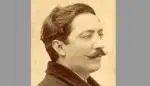
Julio Flórez

1867-05-22 – 1923-02-07
Julio Flórez was a Colombian poet, recognized as one of the greatest exponents of late romanticism in Hispanic America. His work is characterized by an intense expression of feelings, idealized love, melancholy, disillusionment, and a deep connection with nature. Considered the "Poet of Love", Flórez captivated his readers with passionate and melodious verses that resonated with the emotions of an era marked by romantic idealism and the longing for freedom.

Julio Herrera y Reissig
1875-01-09 – 1910-03-09
Julio Herrera y Reissig was a Uruguayan poet, a key figure of Hispano-American modernism, whose work is distinguished by its verbal exuberance, its baroque style, and its imaginative originality. His poetry is a whirlwind of dazzling images, bold metaphors, and a deep yearning for beauty and the exotic. His style, often complex and sensory, consecrates him as a renovator of poetic language in Spanish, exploring the musicality of verse and the plasticity of words to create dreamlike and suggestive worlds. Despite a brief life and a literary production limited to a few volumes, his impact on later generations of poets was significant, establishing him as one of the undisputed masters of Spanish-language poetry.

Julia de Burgos
1914-02-17 – 1953-07-06
Julia de Burgos was a Puerto Rican poet whose work is characterized by its lyrical intensity, social commitment, and profound exploration of identity, love, and freedom. Her poetry, marked by a powerful and often rebellious female voice, addresses themes such as social injustice, the condition of women, and the longing for self-determination. Considered one of the most important voices in 20th-century Hispano-American poetry, her legacy transcends borders, inspiring generations of readers and writers through her courage, passion, and unwavering pursuit of truth and beauty.

Julián del Casal
1863-11-07 – 1893-10-21
Cuban poet of great relevance in the transition from Romanticism to Modernism, Julián del Casal is recognized for his profound sensitivity and the exploration of themes such as melancholy, solitude, and the fleetingness of life. His work is characterized by a careful musicality and a rich, often decadent imagery, reflecting the aesthetic currents of his time and his own introspection.

Juan Pablo Forner y Segarra
1756-02-17 – 1797-03-16
Juan Pablo Forner y Segarra was a Spanish lawyer, writer, and politician, known for his active participation in public life and his satirical and critical writings. His work ranges from legal treatises to literary and political works, always with a sharp and often combative tone. He was a relevant figure in the turbulent political and intellectual landscape of late 18th and early 19th century Spain.

Juan Meléndez Valdés
1754-03-11 – 1817-05-24
Spanish Enlightenment poet, Juan Meléndez Valdés is a representative figure of neoclassicism and preromanticism in Spanish literature. His work, marked by the influence of Horace and the sensibility of his time, addresses themes such as friendship, love, nature, and reflection on the human condition, with a style that evolves from classical serenity towards greater emotionality.
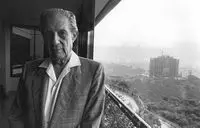
Juan Liscano
1915-07-07 – 2001-02-17
Juan Liscano was a prominent Venezuelan poet, literary critic, and essayist. His poetic work is characterized by a profound reflection on existence, identity, and the human condition, often tinged with melancholy and a sharp perception of reality. Liscano explored diverse poetic forms, from free verse to more classical structures, always maintaining a singular voice and refined language. He was an influential figure in Venezuelan culture, not only for his literary production but also for his work as a cultural manager and critic, leaving an important legacy in 20th-century Hispanic American literature.

Juan de Tassis y Peralta
1582-01-01 – 1622-08-21
Juan de Tassis y Peralta, count of Villamediana, was a prominent Spanish poet and playwright of the Golden Age. Known for his wit and his satirical and burlesque style, his work is part of the conceptist current, with an acute use of metaphor and wordplay. Despite a life marked by courtly intrigue and a tragic death, his poetry left a significant mark for its audacity and originality, exploring themes such as love, social criticism, and the fleeting nature of time with an unmistakably modern voice for his time.

Juan de Salinas
Juan de Salinas was a Spanish poet whose work is framed within the literary tradition of his time, exploring with sensitivity recurring themes such as love, nature, and the transience of life. His poetry is distinguished by careful language and a particular musicality, characteristics that allowed him to connect with the spirit of his era. Through his verses, he conveyed an introspective and often melancholic vision of existence, leaving a literary legacy that reflects the depth of the human experience.

Juan de Mena
– 1456-01-01
Juan de Mena was a Spanish poet of the Pre-Renaissance, considered one of the introducers of Italian forms and style in Castilian poetry. His masterpiece, "Laberinto de Fortuna" (Labyrinth of Fortune), is a complex and ambitious allegorical poem that reflects the influence of humanism and classical culture. He was characterized by a learned, artificial language, rich in Latinisms, seeking to elevate Castilian to the level of classical languages.

Juan de Iriarte
1702-12-15 – 1771-08-23
18th-century Spanish Jesuit scholar, noted for his lexicographical and philological work. His most famous work is the "Critical Dictionary of the Most Celebrated Poets of Spain," an important compilation and analysis of Spanish poetry that, despite its limitations and criticisms, served as a fundamental reference for the study of literature of his time and later. His figure represents the Enlightenment and encyclopedic zeal.

Juan de Dios Peza
1852-06-29 – 1910-03-16
Juan de Dios Peza was a Mexican poet and playwright recognized for his poetry of a popular and sentimental nature. His work, often centered on themes such as love, the homeland, and daily life, deeply connected with the feelings of the Mexican people of his time. He is considered one of the representative poets of late Romanticism in Mexico, although his style also incorporated elements of costumbrismo and accessible language that facilitated its dissemination. His facet as a playwright was also relevant, contributing to Mexican theater with works that reflected the customs and values of society. Peza left a legacy of verses that endure for their emotionality and their ability to evoke national identity, being remembered as a poet of the people.

Juan de Arguijo
– 1622-08-07
Juan de Arguijo was a Spanish poet of the Golden Age, known for his metric skill and his adherence to the poetic currents of his time. His work, although not extensive, is characterized by formal perfection and the exploration of traditional themes such as love, death, and the fleeting nature of time. He is associated with the influence of Garcilaso de la Vega and his poetry is framed within Renaissance and early Baroque lyricism, showing a notable capacity for the sonnet and other educated poetic forms. His figure, although less prominent than that of other contemporaries, represents an important link in the evolution of Spanish poetry towards the Baroque.

Juan Boscán
1490-01-01 – 1542-09-21
Juan Boscán was a Spanish Renaissance poet, mainly known for his work in adapting the sonnet and other Italian poetic forms to the Castilian language. His work, along with that of Garcilaso de la Vega, laid the foundations for modern Spanish poetry, introducing a new lyrical and metrical sensibility. Although his production was not very extensive, his impact on Spanish poetry was transcendental, paving the way for the innovations that would characterize the Golden Age. His figure is fundamental to understanding the transition from medieval to Renaissance poetry in Spain.
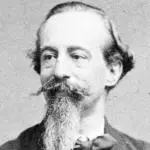
José Zorrilla
1953-01-01 – 2001-07-15
José Zorrilla was a Spanish poet and playwright, a towering figure of Romanticism in his country. His most famous work, "Don Juan Tenorio", became a classic of Spanish theater and a popular tradition performed every year. He was characterized by his vigorous style, his overflowing imagination, and his ability to evoke the legendary past and human passions. Despite his personal and financial ups and downs, he left an indelible legacy in Spanish literature.

Juan Bautista de Arriaza y Superviela
Juan Bautista de Arriaza y Superviela was a distinguished Spanish poet and politician of the 19th century, known mainly for his patriotic poetry and his lyrical compositions of a sentimental nature. His work reflected the turbulent historical circumstances of his time, especially the nationalist fervor and political tensions of Spain during the Restoration. Arriaza is remembered for his ability to evoke patriotic feelings and for poetry that, while belonging to tradition, also engaged with the concerns of his era. His figure represents that of an intellectual committed to his time and to the lyrical expression of collective and individual passions.

José Santos Chocano
1875-05-14 – 1934-12-13
Peruvian poet, a towering figure of Hispanic-American modernism, Chocano is known for his grandiloquent style and his deep connection with the nature and history of America. His work is characterized by exuberant language, rich sensory imagery, and a patriotic fervor that exalts the identity and landscape of the continent. Throughout his life, he explored themes such as indigenism, the epic of the conquest, and the search for a poetic voice of his own that would resonate with the grandeur of the New World.

José María Pemán
1897-05-08 – 1981-07-19
José María Pemán was a Spanish writer, journalist, and playwright known for his poetry and his work as a lecturer. His poetic work, often traditional in style and with a marked nationalist character, earned him great popularity in his time. He was a very active public figure, participating in discussion groups and cultural events, and his figure was closely linked to the events of 20th-century Spain, especially the Civil War and the Franco dictatorship. His literary legacy is a subject of debate, but his impact on the Spanish culture of his time is undeniable.

José María Hinojosa
1904-09-17 – 1936-08-22
Spanish poet, a prominent figure of the Generation of '27, although his work is inscribed within the avant-garde and surrealism. His poetry, marked by a deep sensuality and a bold exploration of the erotic and the Dionysian, is characterized by its impactful language and provocative imagery. Despite a brief literary production, his influence was felt in the avant-garde currents of the time.

José María Gabriel y Galán
1870-06-28 – 1909-01-06
José María Gabriel y Galán was a Spanish poet known for his work deeply rooted in popular tradition and the Extremaduran landscape. His poetry, often costumbrista and lyrical in nature, is characterized by formal simplicity and expressive authenticity. He addressed themes such as rural love, nature, popular religiosity, and village life, managing to capture the essence of life in Extremadura of his time. His style, close to traditional lyrics and folklore, earned him a prominent place in Spanish literature of the late 19th and early 20th centuries, being recognized as the "poet of the Extremaduran countryside".
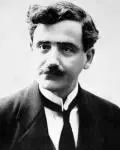
José María Eguren
1874-07-07 – 1942-04-19
Peruvian poet, precursor of modernism and avant-garde in his country. His work is characterized by introspection, melancholy, and the exploration of themes such as time, death, and identity. Eguren is known for his lyrical and musical style, which often evokes dreamlike and mysterious atmospheres. Considered one of the great renovators of Hispanic American poetry, his influence extended to subsequent generations of poets, consolidating him as a fundamental figure of Peruvian and universal literature.

José María de Heredia
1842-11-22 – 1905-10-03
José María de Heredia was a renowned Cuban poet, known as the 'Prince of Verses' and one of the foremost exponents of Parnassianism in the Spanish language. His work is characterized by formal perfection, the plasticity of his imagery, and the evocation of historical, exotic, and mythological themes. In addition to his poetic work, Heredia had a distinguished political and diplomatic career, which led him to live in different countries, influencing his worldview and his literary output.

José Lezama Lima
1910-12-19 – 1976-08-09
José Lezama Lima was an influential Cuban poet, essayist, and novelist, a central figure in 20th-century Latin American literature and one of the foremost exponents of surrealism and the avant-garde in the region. Recognized for his baroque language, his erudition, and his profound exploration of imagery, history, and mythology, Lezama Lima constructed a unique and complex literary universe. His work, dense and polysemic, addresses themes such as identity, memory, religion, eroticism, and artistic creation, inviting an ever-renewed and challenging reading.

José María Blanco-White
1775-07-11 – 1841-05-20
José María Blanco-White was a Spanish writer, poet, journalist, and critic, known for his essayistic and poetic work. His critical thinking and deep reflection on Spanish identity and culture earned him a prominent place in the literature of his time. He was a keen observer of society and a defender of liberal ideas, which was reflected in his journalism and literary production.