

Authors List
Browse our collection of authors
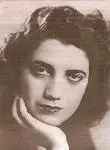
Meira Delmar

1922-04-21 – 2009-03-18
Meira Delmar was a Cuban poet, essayist, and literary critic. Her work is characterized by deep introspection, the exploration of themes such as time, memory, and identity, and a refined and precise language. Throughout her career, she established herself as one of the most important voices in 20th-century Cuban poetry, distinguished by her formal rigor and intellectual acuity. Her influence extends to several generations of poets in Cuba and Latin America.

Miguel Ramos Carrión
– 1915-08-08
Miguel Ramos Carrión was a distinguished Spanish writer of the 19th century, primarily known for his work as a playwright and poet. His work is part of the Realism period and the customs theater of the time, although he also ventured into the lyrical genre with particular sensitivity. Throughout his career, he demonstrated a great ability to capture the spirit of his time and translate it into his texts, earning a place in the Madrid literary scene. His poetic production, although perhaps less prolific than his theater, reveals a deep connection with the universal themes of love, nature, and life reflection, characterized by careful and emotional expression.

Marqués de Santillana
1398-08-19 – 1458-03-25
The Marquis of Santillana was a key figure in 15th-century Castilian literature. He stood out for his work as a poet and patron, introducing new metric forms and themes into the lyric poetry of his time. His poetic work, influenced by the Italian tradition, laid the foundations for the subsequent development of poetry in the Spanish language. Through his writings, he reflected both his personal concerns and the sociopolitical context of the era.
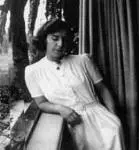
Marilina Rébora
1919-01-07 – 1999-09-19
Marilina Rébora is an Argentine writer and poet whose work is characterized by a profound exploration of identity, memory, and nature. Her poetry, often marked by introspective lyricism, addresses the human experience with particular sensitivity and careful language. She has also cultivated narrative and essay writing, establishing herself as a relevant voice in the contemporary literature of her country, with a body of work that dialogues between the personal and the universal.

Mariano Brull. Cuba
1891-02-24 – 1956-06-08
Mariano Brull was a Cuban poet whose work is mainly associated with creacionismo and the literary avant-gardes of the early 20th century. His poetry is distinguished by a constant search for formal and thematic novelty, exploring the poetic image as the central element of creation. He was a promoter of the avant-gardes in Cuba and a poet who sought to integrate modernity and experimentation into his work. His legacy remains as a reference for the innovative Cuban poetry of his time.

Manuel María Flores
Manuel María Flores was a Mexican poet, journalist, and politician, a prominent figure of Romanticism and journalism in Mexico. His poetic work is characterized by the exaltation of feelings, love, homeland, and nature, with a passionate and often melancholic style. As a journalist, he was a prolific chronicler of his time, addressing social and political issues with a vibrant and critical language. His legacy lies in the renewal of Mexican poetic language and his contribution to the consolidation of the press as a space for public debate and influence.

Manuel José Othón
1858-06-14 – 1906-11-28
Manuel José Othón was a Mexican poet, considered a relevant figure of Parnassianism in Mexico and a precursor of Modernism. His poetic work is characterized by formal perfection, musicality, and the pursuit of aesthetic beauty, often inspired by nature and classical themes. Despite his relatively scarce production, his influence on Mexican poetry of the late 19th and early 20th centuries was significant, laying the groundwork for the renewal of poetic language in his country.

Manuel José Quintana
1772-04-11 – 1857-03-11
Manuel José Quintana was a distinguished Spanish poet and politician of Neoclassicism and Pre-Romanticism. He is recognized for his civic and patriotic poetry, which exalted the ideals of freedom and progress in a context of political and social upheaval in Spain. His work, marked by a careful style and an elevated tone, reflected the concerns of his time, seeking to reconcile neoclassical reason with the new sensibilities that announced Romanticism. His figure was important in the literary and intellectual life of the early 19th century.
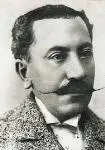
Manuel Gutiérrez Nájera
1859-12-22 – 1895-02-03
Manuel Gutiérrez Nájera was a prominent Mexican poet, short story writer, and literary critic, considered one of the precursors of modernism in Spanish America. His work, marked by elegance, musicality, and melancholy, addressed themes such as love, ephemeral beauty, lost childhood, and introspection. Through a refined style and careful language, Nájera introduced new aesthetic sensibilities that laid the groundwork for the renovation of poetry on the continent.
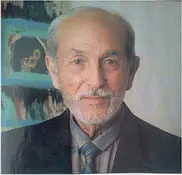
Manuel del Cabral
1907-03-07 – 1999-05-14
Manuel del Cabral was a prominent Dominican poet, essayist, and diplomat, whose work is characterized by a deep exploration of Caribbean identity, the history of his land, and the human condition. His poetry, often laden with symbolism and musicality, addresses themes such as love, death, social injustice, and the search for freedom. Recognized for his lyrical style and social commitment, Del Cabral left an important legacy in the literature of the Dominican Republic and Latin America. His work as a diplomat also allowed him to promote Dominican culture abroad, establishing himself as a key figure in his country's representation.

Manuel Bretón de los Herreros
1796-01-01 – 1873-01-01
Manuel Bretón de los Herreros was a prolific Spanish playwright and poet of the 19th century, primarily known for his comedies of manners and his costumbrista poetry. His work is characterized by humor, irony, and a keen observation of Madrid society of his time. Through his characters and situations, he portrayed the daily life, vices, and virtues of the bourgeoisie and the popular classes. He was a key figure in Spanish Romantic theater, although his style remained close to classical and popular tradition.
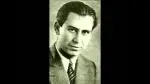
Manuel Altolaguirre
1905-06-29 – 1959-07-26
Manuel Altolaguirre was a Spanish poet, linked to the Generation of '27 movement. His work is characterized by an intimate and reflective lyricism, often tinged with melancholy and a deep connection to the Andalusian landscape. He explored themes such as love, the passage of time, and the transience of existence, employing a refined and musical language. His work as a publisher and cultural manager was also significant, contributing to the dissemination of the poetry of his time.
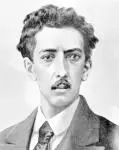
Manuel Acuña
1849-08-27 – 1873-12-06
Manuel Acuña was a Mexican poet considered one of the most representative figures of Romanticism in his country. His work, marked by a deep melancholy and heightened sensitivity, addresses themes such as unrequited love, the fleetingness of life, and death. Despite his short existence, he left an indelible mark on Mexican literature, being remembered for his romantic fervor and tragic life.

Macedonio Fernández
1874-06-01 – 1952-02-10
Macedonio Fernández was an Argentine writer, thinker, and poet, a central figure of the literary avant-garde of the early 20th century in Latin America. Known for his philosophical thought and literary experimentation, Fernández was a proponent of aesthetic and conceptual ruptures, significantly influencing authors like Jorge Luis Borges and other members of the "Martín Fierro" group. His work, often fragmented, playful, and marked by irony, challenges traditional narrative and poetic conventions. Despite his limited output published during his lifetime, his intellectual legacy and influence on the development of modern literature are invaluable. Fernández is remembered as a creator of literary "wit games" and a precursor to metafiction and textual deconstruction.

Lupercio Leonardo de Argensola
1559-12-14 – 1613-03-02
Lupercio Leonardo de Argensola was a distinguished Spanish poet and military man, known for his poetic work which is framed within courtly lyrics and satirical poetry. His production is characterized by the sharpness of his wit, formal perfection, and a style that often borders on irony and humor, addressing universal themes with a critical and observant perspective. As a military man, he participated in various campaigns, experiences that undoubtedly enriched his worldview and his writing.

Luis Palés Matos
1898-03-20 – 1959-02-23
Luis Palés Matos was a central figure in 20th-century Puerto Rican and Latin American poetry, known primarily as the foremost exponent of "Afro-Antilleanism" in lyric poetry. His work is characterized by the fusion of African, Antillean, and Spanish elements, creating poetry of great musicality, sensuality, and vitality. Through rich and evocative language, he explored themes such as Caribbean identity, the sensuality of tropical nature, and the influence of African culture on the soul of the Caribbean. His poetry is a celebration of life, race, and the land of his birth, marked by unmistakable rhythm and sonority.

Luis Cañizal de la Fuente
Luis Cañizal de la Fuente was a Spanish poet whose work is part of the generation of the 50s, also known as the "generation of the mid-century." His poetry is characterized by profound introspection, the exploration of existential themes, and a constant search for authenticity. Although he did not achieve the notoriety of other contemporaries, his work represents a unique voice within post-war Spanish poetry, marked by reflection on time, memory, and the human condition. His style, often marked by careful language and a particular lyrical sensitivity, earned him the appreciation of critics and select readers.

Luis G. Urbina. México
Luis G. Urbina was a prominent Mexican poet and literary critic, a key figure of Modernism in his country. His work is characterized by the musicality of verse, the pursuit of formal beauty, and the exploration of themes such as love, melancholy, and the passage of time. With elegant prose and a refined style, Urbina contributed significantly to the consolidation of literary Modernism in Hispano-America.

Luis Barahona de Soto
1548-01-01 – 1595-11-05
Luis Barahona de Soto was a Spanish poet of the Golden Age, recognized for his lyric and epic work. His poetry is characterized by profound erudition, careful language, and a constant exploration of philosophical and existential themes, with a clear influence from classical and Renaissance tradition. Despite his relevance in the literary landscape of his time, his figure is often overshadowed by that of other great poets of the Golden Age. His work, although not very extensive, offers a particular vision of the sensibility and concerns of his era, marked by the complexity of thought and the pursuit of formal perfection.

Leopoldo Marechal
1900-06-11 – 1970-06-26
Leopoldo Marechal was a distinguished Argentine writer, primarily recognized for his poetic and novelistic work. His writing is characterized by a profound existential and metaphysical inquiry, exploring themes such as identity, time, and the search for meaning. Marechal is the author of a singular body of work that departs from the prevailing literary currents of his time, forging his own unmistakable style. His novel "Adán Buenosayres" is considered a masterpiece of Argentine and Latin American literature, marking a milestone in 20th-century narrative. His equally dense and reflective poetry addresses transcendental issues with formal mastery and careful language. Throughout his career, Marechal maintained an independent intellectual stance and a rigorous dedication to his art, leaving a literary legacy of great depth and resonance.

León Felipe
1884-04-11 – 1968-09-18
Spanish poet, León Felipe is an unmistakable voice in 20th-century poetry, marked by a deep religiosity and an existential commitment. His work is characterized by the apparent simplicity of his language, the depth of his reflections on life, death, and transcendence, and a constant search for authenticity. Through a style that is both colloquial and elevated, he explored universal themes with a compassionate and hopeful outlook.
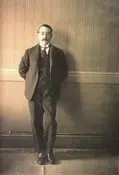
Leopoldo Lugones
1874-06-13 – 1938-02-18
Leopoldo Lugones was an Argentine poet, journalist, and diplomat, a central figure of literary modernism in Hispanic America. His work is characterized by a profound renovation of poetic language, metrical experimentation, and vast erudition. He explored themes such as the cosmos, mythology, history, and intimacy, with a style that oscillated between musicality, sensuality, and melancholy, leaving an indelible legacy in Spanish-language poetry.

Leandro Fernández de Moratín
1760-03-10 – 1828-06-21
Leandro Fernández de Moratín was a Spanish playwright and prose writer, considered the most important figure of theatrical Enlightenment in Spain. His work is characterized by the application of Neoclassical rules, with a marked didactic purpose and social custom reform, especially regarding the condition of women and arranged marriages. A master of dialogue and characterization, his comedies are a critical reflection of the society of his time, as well as models of neoclassical theatrical precepts.

León de Greiff
1895-07-22 – 1976-07-11
León de Greiff was a Colombian poet whose work is characterized by profound musicality, a language rich in neologisms, and a style that oscillates between the classical and the avant-garde. His poetry explores universal themes such as love, death, time, and the human condition, often with a melancholic and reflective tone. Recognized as one of Colombia's great poets, his figure is associated with bohemianism and a life dedicated to art. His influence extends to several generations of poets, solidifying his place as a pillar of Hispano-American literature.