
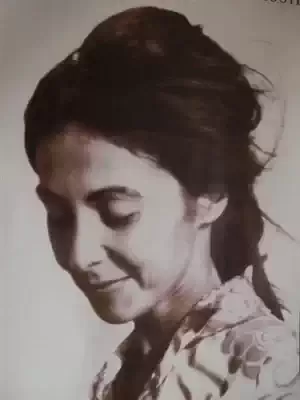
Fiama Hasse Pais Brandão
1938–2007
· lived 68 years
 PT
PT
PT
Fiama Hasse Pais Brandão was a Portuguese poet, playwright, and translator, known for her work marked by formal experimentation and the exploration of existential and social themes. Her writing is characterized by dense language and a strong rhythmic component, often associated with the Surrealist movement and concrete poetry. Throughout her career, she explored various forms of expression, including theater and poetic performance, leaving a significant legacy in contemporary Portuguese-language poetry.
n. 1938-08-15, Lisboa · m. 2007-01-19, Lisboa
75
Views
Bio
Identification and basic context
Fiama Hasse Pais Brandão, whose full name was Maria da Assunção Hasse Pais Brandão, was born on April 9, 1938, and passed away on January 17, 2007. She was Portuguese and wrote in Portuguese. Her family and social background, though not detailed, appear to have provided her with a solid educational foundation that would influence her intellectual and artistic development.Childhood and education
Fiama Hasse Pais Brandão's childhood and youth were marked by an environment that fostered an interest in arts and culture. Her intellectual education was diverse, encompassing not only literature but also other areas of knowledge that would be reflected in her multifaceted work. She absorbed influences from avant-garde artistic and literary movements, which would go on to shape her own poetic language.Literary career
Her literary activity began in the 1950s, with a production that gradually consolidated in the following decades. Fiama Pais Brandão was an active figure in the Portuguese literary scene, participating in various cultural initiatives and collaborating with publications of the time. Her work evolved over time, demonstrating a constant search for new forms of expression and a deepening of her central themes.Work, style, and literary characteristics
Among her most significant works are "O Assobio no Vento" (1958), "Morfismos" (1961), "Novos Poemas" (1961), "O Fio do Tempo" (1962), "O Contexto da Noite" (1966), "O Trono de Ossos" (1967), "A Casa de Vidro" (1970), "O Zodíaco" (1971), "O Sangue" (1972), "A Palavra" (1973), "O Homem" (1975), "O Mar" (1976), "A Morte" (1978), "O Amor" (1979), "O Sol" (1980), "A Lua" (1980), "As Estrelas" (1981), "A Noite" (1981), "O Dia" (1982), "O Ano" (1983), "A Vida" (1984), "O Tempo" (1985), "O Espaço" (1986), "O Céu" (1987), "A Terra" (1988), "A Água" (1989), "O Fogo" (1990), "O Ar" (1991), "O Vento" (1992), "O Som" (1993), "A Luz" (1994), "A Cor" (1995), "A Forma" (1996), "O Movimento" (1997), "A Transformação" (1998), "A Destruição" (1999), "A Criação" (2000), "A Existência" (2001), "A Transcendência" (2002), "O Infinito" (2003), "O Nada" (2004), "O Tudo" (2005), "O Ser" (2006). The dominant themes in her poetry include identity, the human condition, time, death, love, and transcendence. Her work is marked by formal experimentation, exploration of free verse, musicality, and an innovative vocabulary, with a strong imagistic and surrealistic charge. She was associated with Surrealism and experimental poetry movements.Work, style, and literary characteristics
Cultural and historical context Fiama Pais Brandão lived through a period of significant social and political transformations in Portugal, including the Salazar dictatorship and the transition to democracy. Her work sometimes reflects social and existential critique, fitting within a cultural context of renewal and artistic experimentation, engaging in dialogue with other voices of contemporary Portuguese poetry.Work, style, and literary characteristics
Personal life Little detailed information about Fiama Pais Brandão's personal life is publicly known, but her work reveals a deep reflection on existence and human relationships. Her dedication to writing and the arts marked her life.Work, style, and literary characteristics
Recognition and reception Fiama Pais Brandão is recognized as one of the most important voices in 20th-century Portuguese poetry. Her work has been the subject of study and analysis, and her formal and thematic experimentation has shaped the evolution of Portuguese-language poetry.Work, style, and literary characteristics
Influences and legacy Her work was influenced by Surrealist and avant-garde poets. Her legacy lies in her formal innovation and thematic depth, inspiring subsequent generations of poets and artists in Portugal and other Portuguese-speaking countries. Her poetry continues to be studied and disseminated.Work, style, and literary characteristics
Interpretation and critical analysis Fiama Pais Brandão's poetry has been interpreted from various perspectives, highlighting the analysis of her existential themes and her innovative language. The complexity and richness of her work offer multiple readings and critical debates.Work, style, and literary characteristics
Curiosities and lesser-known aspects Her facet as a translator and playwright, in addition to poetry, reveals the breadth of her artistic talent. Her dedication to experimentation led her to explore new forms of poetic presentation.Work, style, and literary characteristics
Death and memory Fiama Hasse Pais Brandão passed away in 2007, leaving behind an important poetic legacy. Her work continues to be remembered and celebrated, maintaining its relevance in Portuguese literature.Poems
0No poems found
Videos
50
Comments (0)
Log in
to post a comment.
No comments yet. Be the first to comment.