
Quotes
Quotes to inspire and reflect
Theirs not to make reply,
Wearing all that weight
Was there a man dismay’d?
I hold it true, whate’er befall;
In Memoriam.
Tho’ much is taken, much abides; and tho’
For my purpose holds
The deep
He works his work, I mine.
How dull it is to pause, to make an end,
Much have I seen and known; cities of men
And the stately ships go on
I cannot rest from travel; I will drink

Time is a kind friend, he will make us old.

[ Paying tribute to Eleanor Roosevelt after her death on 7 Nov. 1962 :] I have lost more than a belovedfriend. I have lost an inspiration. She would rather light a candle than curse the darkness, and her glow has warmed the world.
We travel together, passengers on a little spaceship, dependent on its vulnerable reserves of air and soil; all committed for our safety to its security and peace; preserved from annihilation only by the care, the work, and, I will say, the love we give our fragile craft. We cannot maintain it half fortunate, half miserable, half confident, half despairing, half slave—to the ancient enemies of man—half free in a liberation of resources undreamed of until this day. No craft, no crew can travel safely with such vast contradictions. On their resolution depends the survival of us all.
[The Republican Party] had to be dragged kicking and screaming into the twentieth century.
Our nation stands at a fork in the political road. In one direction lies a land of slander and scare; the land of sly innuendo, the poison pen, theanonymous phone call and hustling, pushing, shoving; the land of smash and grab andanything to win. This is Nixonland. But I say toyou that it is not America.
Do you, Ambassador Zorin, deny that theU.S.S.R. has placed and is placing medium-and intermediate-range missiles and sites in Cuba? Yes or no? Don’t wait for the translation. . . . I am prepared to wait for my answer until Hell freezes over, if that’s your decision. And I am also prepared to present the evidence in this room!
The time to stop a revolution is at the beginning, not the end.
I yield to no man—if I may borrow thatmajestic parliamentary phrase—I yield to no man in my belief in the principle of free debate, inside or outside the halls of Congress. The sound of tireless voices is the price we pay for the right to hear the music of our own opinions. But there is also, it seems to me, a moment at which democracy must prove its capacity to act. Every man has a right to be heard; but no man has the right to strangle democracy with a single set of vocal cords.
The problem of cat versus bird is as old as time. If we attempt to resolve it by legislation whoknows but what we may be called upon to takesides as well in the age old problems of dogversus cat, bird versus bird, or even bird versusworm. In my opinion, the State of Illinoisand its local governing bodies already haveenough to do without trying to control felinedelinquency.
Let’s talk sense to the American people. Let’stell them the truth, that there are no gains without pains, that we are now on the eve of great decisions, not easy decisions, likeresistance when you’re attacked, but a long, patient, costly struggle which alone can assure triumph over the great enemies of man—war, poverty, and tyranny—and the assaults uponhuman dignity which are the most grievous consequences of each.
I have spent all my life under a Communist regime and I will tell you that a society without any objective legal scale is a terrible one indeed. But a society with no other scale but the legal one is not quite worthy of man either.
A society based on the letter of the law and never reaching any higher fails to take advantage of the full range of human possibilities. The letter of the law is too cold and formal to have a beneficial influence on society. Whenever the tissue of life is woven of legalistic relationships, this creates an atmosphere of spiritual mediocrity that paralyzes man’s noblest impulses.
The Gulag Archipelago had already begun its malignant life and would shortly metastasize throughout the whole body of the nation.
A great writer is, so to speak, a second government. That’s why no regime anywhere has ever loved its great writers, only its minor ones.

Literary intellectuals at one pole—at the other scientists, and as the most representative, the physical scientists. Between the two a gulf of mutual incomprehension—sometimes (particularly among the young) hostility and dislike, but most of all lack of understanding.
A good many times I have been present at gatherings of people who, by the standards of the traditional culture, are thought highly educated and who have with considerable gusto been expressing their incredulity at the illiteracy of scientists. Once or twice I have been provoked and have asked the company how many of them could describe the Second Law of Thermodynamics. The response was cold: it was also negative. Yet I was asking something which is about the scientific equivalent of: Have you read a work of Shakespeare’s?

A Boy Named Sue.
The separation between the two cultures has been getting deeper under our eyes; there is now precious little communication between them. . . . The traditional culture . . . is, of course, mainly literary . . . the scientific culture is expansive, not restrictive.

Our names,
I see you stand like greyhounds in the slips,

It seems she hangs upon the cheek of night
Do not swear at all.
Et Vigny plus secret ,

Say to the seceded States, “Wayward sisters, depart in peace.”

While the South is hardly Christ-centered, it is most certainly Christ-haunted.
Everywhere I go I’m asked if I think the universities stifle writers. My opinion is that they don’t stifle enough of them. There’s many a best-seller that could have been prevented by a good teacher. The idea of being a writer attracts a good many shiftless people, those who are merely burdened with poetic feelings or afflicted with sensibility.
In case of an accident, anyone seeing her dead on the highway would know at once she was a lady.
I have found that anything that comes out of the South is going to be called grotesque by the Northern reader, unless it is grotesque, in which case it is going to be called realistic.

Rain falls into the open eyes of the dead
The ghosts of the villages trail in the sky Making a new twilight.
who should moor at his edge
Then I will no longer
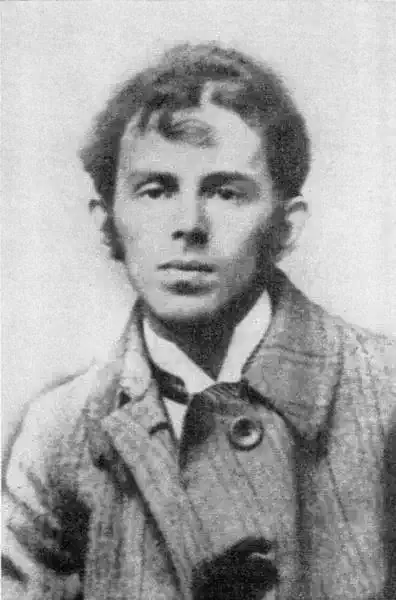
Our lives no longer feel ground under them.
He forges decrees in a line like horseshoes,

To see the earth as we now see it, small and blue and beautiful in that eternal silence where it floats, is to see ourselves as riders on the earth together, brothers on that bright loveliness in the unending night—brothers who see now they are truly brothers.