

Quotes
Quotes to inspire and reflect
Beneath the blossoms with a pot of wine,
Since Life is but a Dream,

Though the Witch knew the Deep Magic, there is a magic deeper still which she did not know. Her knowledge goes back only to the dawn of Time.
Either this man [Jesus] was, and is, the Son of God: or else a madman or something worse. You can shut Him up for a fool, you can spit at Him and kill Him as a demon; or you can fall at His feet and call Him Lord and God. But let us not come with any patronizing nonsense about His being a great human teacher. He has not left that open to us. He did not intend to.

We are dying, we are dying, we are all of us dying.
Have you built your ship of death, O have you?
And if tonight my soul may find her peace
It is the three strange angels.
John Thomas says good-night to Lady Jane, a little droopingly, but with a hopeful heart.

In a sense that I am unable to explicate further, the proponents of competing paradigms practice their trades in different worlds.
As in political revolutions, so in paradigm choice—there is no standard higher than the assent of the relevant community. To discover how scientific revolutions are effected, we shall therefore have to examine not only the impact of nature and of logic, but also the techniques of persuasive argumentation effective within the quite special groups that constitute the community of scientists.
“Normal science” means research firmly based upon one or more past scientific achievements, achievements that some particular scientific community acknowledges for a time as supplying the foundation for its further practice.
I hope the Pacific is as blue as it has been in my dreams. I hope .
The man in black fled across the desert, and the gunslinger followed.

Let you hold in mind, girls, that your beauty must pass
In a car like the Roxy I’d roll to the track,

To arrive at the truth in all things, we ought always to be ready to believe that what seems to us white is black if the hierarchical Church so defines it.
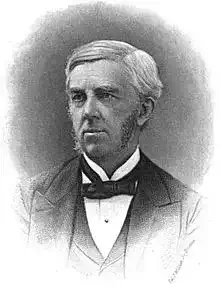
[ Of Franklin D. Roosevelt, after meeting him when Holmes was in his nineties and Roosevelt had just become president, 1933 :] A second-class intellect, but a first-class temperament.
[ In response to a well-wisher who called out “Now justice will be administered in Washington” as Holmes embarked to take his seat on the U.S. Supreme Court, 1902 :] Don’t be too sure. I am going there to administer the law .
Life seems to me like a Japanese picture which our imagination does not allow to end with the margin. We aim at the infinite and when our arrow falls to earth it is in flames.
No generalization is wholly true—not even this one.
The riders in a race do not stop short when they reach the goal. There is a little finishing canter before coming to a standstill. There is time to hear the kind voice of friends and to say to one’s self: “The work is done.” But just as one says that, the answer comes: “The race is over, but the work never is done while the power to work remains.” The canter that brings you to a standstill need not be only coming to rest. It cannot be, while you still live. For to live is to function. That is all there is in living.
If there is any principle of the Constitution that more imperatively calls for attachment than any other it is the principle of free thought—not free thought for those who agree with us but freedom for the thought that we hate.
The government ought not to use evidence obtained and only obtainable, by a criminal act. . . . For my part I think it a less evil that some criminals should escape than that the Government should play an ignoble part.
The power to tax is not the power to destroy while this Court sits.
It is better for all the world, if instead of waiting to execute degenerate offspring for crime, or to let them starve for their imbecility, society can prevent those who are manifestly unfit from continuing their kind. The principle that sustains compulsory vaccination is broad enough to cover cutting the Fallopian tubes. . . . Three generations of imbeciles are enough.
Taxes are what we pay for civilized society.
But I have long thought that if you knew a column of advertisements by heart, you could achieve unexpected felicities with them. You can get a happy quotation anywhere if you have the eye.
It is said that this manifesto is more than a theory, that it was an incitement. Every idea is an incitement.
Upon this point a page of history is worth a volume of logic.
It will need more than the Nineteenth Amendment to convince me that there are no differences between men and women, or that legislation cannot take those differences into account.
I . . . probably take the extremest view in favor of free speech, (in which, in the abstract, I have no very enthusiastic belief, though I hope I would die for it).
But when men have realized that time has upset many fighting faiths, they may come to believe even more than they believe the very foundations of their own conduct that the ultimate good desired is better reached by free trade in ideas—that the best test of truth is the power of the thought to get itself accepted in the competition of the market, and that truth is the only ground upon which their wishes safely can be carried out. That at any rate is the theory of our Constitution. It is an experiment, as all life is an experiment.
Persecution for the expression of opinions seems to be perfectly logical. If you have no doubt of your premises or your power and want a certain result with all your heart you naturally express your wishes in law and sweep away all opposition.
I abhor, loathe, and despise these long discourses, and agree with Carducci the Italian poet who died some years ago that a man who takes half a page to say what can be said in a sentence will be damned.
The common law is not a brooding omnipresence in the sky but the articulate voice of some sovereign or quasi-sovereign that can be identified.
I do not think we need trouble ourselves with the thought that my view depends upon differences of degree. The whole law does so as soon as it is civilized. . . . Negligence is all degree—that of the defendant here degree of the nicest sort; and between the variations according to distance that I suppose to exist and the simple universality of the rules in the Twelve Tables of the Leges Barbarorum, there lies the culture of two thousand years.
A constitution is not intended to embody a particular economic theory. . . . It is made for people of fundamentally differing views, and the accident of our finding certain opinions natural and familiar or novel and even shocking ought not to conclude our judgment upon the question whether statutes embodying them conflict with the Constitution of the United States.
We are very quiet there [at the Supreme Court], but it is the quiet of a storm centre, as we all know.
This case is decided upon an economic theory which a large part of the country does not entertain. If it were a question whether I agreed with that theory, I should desire to study it further and long before making up my mind. But I do not conceive that to be my duty, because I strongly believe that my agreement or disagreement has nothing to do with the right of a majority to embody their opinions in law.
The Fourteenth Amendment does not enact [the economic theories of] Mr. Herbert Spencer’s Social Statics.
Great cases like hard cases make bad law. For cases are called great, not by reason of their real importance in shaping the law of the future, but because of some accident of immediate overwhelming interest which appeals to the feelings and distorts the judgment. These immediate interests exercise a kind of hydraulic pressure which makes what previously was clear seem doubtful, and before which even well settled principles of law will bend.
The remoter and more general aspects of the law are those which give it universal interest. It is through them that you not only become a great master in your calling, but connect your subject with the universe and catch an echo of the infinite, a glimpse of its unfathomable process, a hint of the universal law.
It is revolting to have no better reason for a rule of law than that so it was laid down in the time of Henry IV. It is still more revolting if the grounds upon which it was laid down have vanished long since, and the rule simply persists from blind imitation of the past.
For the rational study of the law the black-letter man may be the man of the present, but the man of the future is the man of statistics and the master of economics.
The external and immediate result of an advocate’s work is but to win or lose a case. But remotely what the lawyer does is to establish, develop, or illuminate rules which are to govern the conduct of men for centuries; to set in motion principles and influences which shape the thought and action of generations which know not by whose command they move.
The prophecies of what the courts will do in fact, and nothing more pretentious, are what I mean by the law.
The truth is, that the law is always approaching, and never reaching, consistency. It is forever adopting new principles from life at one end, and it always retains old ones from history at the other, which have not yet been absorbed or sloughed off. It will become entirely consistent only when it ceases to grow.