
Quotes
Quotes to inspire and reflect
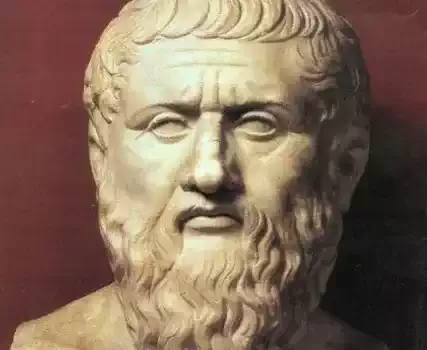
There can be no fairer spectacle than that of a man, who combines the possession of moral beauty in his soul with the outward beauty of form, corresponding and harmonizing with the former, because the same great pattern enters both.
19
There is, in my view, the birth of society that each of us, far from being sufficient to itself, on the contrary need a large number of people
18
Those who don't know must learn from those who do.
17
There are three arts which are concerned with all things. One which uses, another which makes, and a third which imitates them.
18
The wrong use of a thing is far worse than the non-use.
15
There are few people so stubborn in their atheism who when danger is pressing in will not acknowledge the divine power.
17
The useful is the noble and the hurtful is the base
16
The truth is, O men of Athens, that God only is wise; and by his answer he intends to show that the wisdom of men is worth little or nothing.
13
The true lover of knowledge naturally strives for truth, and is not content with common opinion, but soars with undimmed and unwearied passion till he grasps the essential nature of things.
16
The true order of going, or being led by another, to the things of love, is to begin from the beauties of earth and mount upwards for the sake of that other beauty, using these steps only, and from one going on to two, and from two to all fair forms to fair practices, and from fair practices to fair notions, until from fair notions he arrives at the notion of absolute beauty, and, at last, knows what the essence of beauty is.
17
The worst type of man behaves as badly in his waking life as some men do in their dreams.
18
The whole life of the philosopher is a preparation for death.
16
The wise man will want to be ever with him who is better than himself.
17
The thing to be done does not choose, I imagine, to tarry the leisure of the doer, but the doer must be at the beck of the thing to be done, and not treat it as a secondary affair.
17
The soul takes nothing with her to the next world but her education and her culture. At the beginning of the journey to the next world, one's education and culture can either provide the greatest assistance, or else act as the greatest burden, to the person who has just died.
34
The State which we have founded must possess the four cardinal virtues of wisdom, courage, discipline and justice ... Justice is the principle which has in fact been followed throughout, the principle of one man one job, of minding ones own business, in the sense of doing the job for which one is naturally fitted and not interfering with other people.
16
The soul of him who has education is whole and perfect and escapes the worst disease, but, if a man's education be neglected, he walks lamely through life and returns good for nothing to the world below.
17
The reason is that they utter these words of theirs not by virtue of a skill, but by a divine power - otherwise, if they knew how to speak well on one topic thanks to a skill, they would know how to speak about every other topic too.
19
The soul takes flight to the world that is invisible but there arriving she is sure of bliss and forever dwells in paradise.
21
The rhetorician need not know the truth about things; he has only to discover some way of persuading the ignorant that he has more knowledge than those who know.
20
The point which I should first wish to understand is whether the pious or holy is beloved by the gods because it is holy, or holy because it is beloved of the gods.
13
The purpose of education is to give to the body and to the soul all the beauty and all the perfection of which they are capable.
14
The plan grows under the author's hand; new thoughts occur to him in the act of writing; he has not worked out the argument to the end before he begins.
17
The philosopher is in love with truth, that is, not with the changing world of sensation, which is the object of opinion, but with the unchanging reality which is the object of knowledge.
14
The perfect state is one where men weep and rejoice over the same things.
16
The tools that would teach men their own use would be beyond price.
14
The partisan, when he is engaged in a dispute, cares nothing about the rights of the question, but is anxious only to convince his hearers of his own assertions.
17
The people always have some champion whom they set over them and nurse into greatness. This and no other is the root from which a tyrant springs; when he first appears, he is a protector.
15
The only real ill-doing is the deprivation of knowledge.
18
The object of education is to teach us to love what is beautiful.
18
The more the pleasures of the body fade away, the greater to me is the pleasure and charm of conversation.
19
The matter is as it is in all other cases: If it is naturally in you to be a good orator, a notable orator you will be when you have acquired knowledge and practice.
21
The philosopher whose dealings are with divine order himself acquires the characteristics of order and divinity.
23
The man who finds that in the course of his life he has done a lot of wrong often wakes up at night in terror, like a child with a nightmare, and his life is full of foreboding: but the man who is conscious of no wrongdoing is filled with cheerfulness and hope.
25
The makers of fortunes have a second love of money as a creation of their own, resembling the affection of authors for their own poems, or of parents for their children, besides that natural love of it for the sake of use and profit which is common to them and all men. And hence they are very bad company, for they can talk about nothing but the praises of wealth.
18
The man deserved his fate, deny it who can; yes, but the fate did not deserve the man.
18
The love, more especially, which is concerned with the good, and which is perfected in company with temperance and justice, whether among gods or men, has the greatest power, and is the source of all our happiness and harmony, and makes us friends with the gods who are above us, and with one another.
21
The like is not the friend of the like in as far as he is like; still the good may be the friend of the good in as far as he is good.
18
The key is not to live but to live well.
17
The good are like one another, and friends to one another; and ... the bad, as is often said of them, are never at unity with one another or with themselves, but are passionate and restless: and that which is at variance and enmity with itself is not likely to be in union or harmony with any other thing.
19
The greatest penalty of evildoing; namely, to grow into the likeness of bad men.
14
The helpful is beautiful; only the harmful is ugly.
18
The excellence and righteousness for each thing depend solely on the use for which it was created. This naturally means that the user has the most experience of it and must tell the maker how it works best.
21
The desire for sex turns the penis into a disobedient thing with a mind of its own. Like an animal that will not listen ..it tries to take complete control.
15
The constrained performance of bodily labour does, it is true, exert no evil influence on the body; but in the case of the mind, no study, pursued under compulsion, remains rooted in the memory.
18
That's what education should be ... the art of orientation. Educators should devise the simplest and most effective methods of turning minds around. It shouldn't be the art of implanting sight in the organ, but should proceed on the understanding that the organ already has the capacity, but is improperly aligned and isn't facing the right way.
20
Strange times are these in which we live when old and young are taught falsehoods in school. And the person that dares to tell the truth is called at once a lunatic and fool
24
Take a look around, then, and see that none of the uninitiated are listening. Now by the uninitiated I mean the people who believe in nothing but what they can grasp in their hands, and who will not allow that action or generation or anything invisible can have real existence.
21