
Quotes
Quotes to inspire and reflect
Tell that to the marines—the sailors won’t believe it.
A lawyer without history or literature is a mechanic, a mere working mason; if he possesses some knowledge of these, he may venture to call himself an architect.
The criminals came in so fast that they were fain to execute them first and afterwards try them at leisure.
“That sounds like nonsense, my dear.”
Your Lordship will probably recollect where the Oriental tale occurs, of a Sultan who consulted Solomon on the proper inscription for a signet-ring, requiring that the maxim which it conveyed should be at once proper for moderating the presumption of prosperity and tempering the pressure of adversity. The apophthegm supplied by the Jewish sage was, I think, admirably adapted for both purposes, being comprehended in the words “And this also shall pass away.”
For him no Minstrel raptures swell;
And dar’st thou, then,
In peace, Love tunes the shepherd’s reed;

May memory restore again and again
Marxism is a religion. To the believer it presents, first, a system of ultimate ends that embody the meaning of life and are absolute standards by which to judge events and actions; and, secondly, a guide to those ends which implies a plan of salvation and the indication of the evil from which mankind, or a chosen section of mankind, is to be saved.
The opening up of new markets, foreign or domestic, and the organizational development from the craft shop and factory to such concerns as U.S. Steel illustrate the same process of industrial mutation . . . that incessantly revolutionizes the economic structure from within , incessantly destroying the old one, incessantly creating a new one. This process of Creative Destruction is the essential fact about capitalism.
Mit der Dummheit kämpfen Götter selbst vergebens .
The spirit of a people, its cultural level, its social structure, the deeds its policy may prepare—all this and more is written in its fiscal history, stripped of all phrases. He who knows how to listen to its message here discerns the thunder of world history more clearly than anywhere else.
Die Weltgeschichte ist das Weltgericht .
Whatever is not forbidden is permitted.

Many words have no legal meaning. Others have a legal meaning very unlike their ordinary meaning. For example, the word “daffy-down-dilly.” It is a criminal libel to call a lawyer a “daffy-down-dilly.” Ha! Yes, I advise you never to do such a thing. No, I certainly advise you never to do it.
As years come in and years go out

You smug-faced crowds with kindling eye
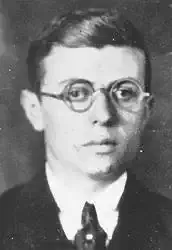
[ Declining to accept the Nobel Prize for Literature :]
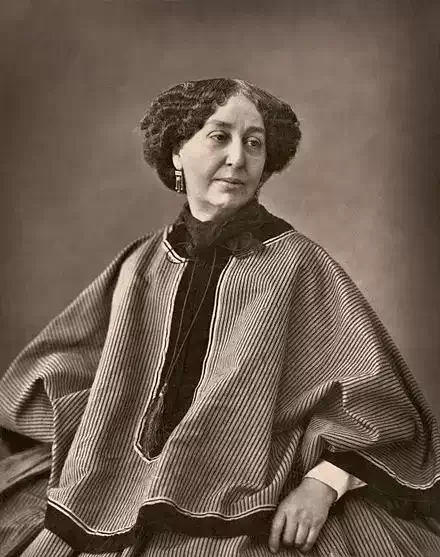
The most ominous conflict of our time is the difference of opinion, of outlook, between men of letters, historians, philosophers, the so-called humanists, on the one side and scientists on the other. The gap cannot but increase because of the intolerance of both and the fact that science is growing by leaps and bounds.
Man cannot will unless he has first understood that he can count on nothing but himself: that he is alone, left alone on earth in the middle of his infinite responsibilities, with neither help nor succor, with no other goal but the one he will set for himself, with no other destiny but the one he will forge on this earth.
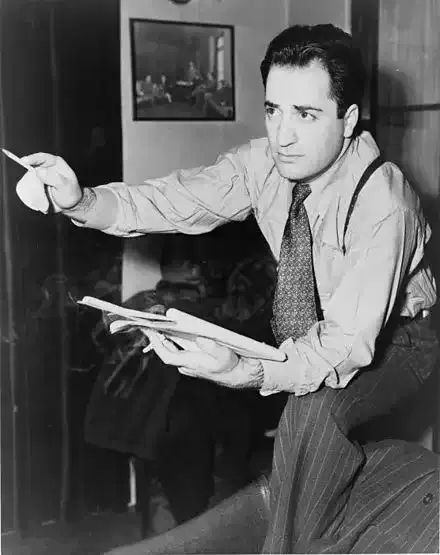
In the time of your life, live—so that in that good time there shall be no ugliness or death for yourself or for any life your life touches.
If you give to a thief he cannot steal from you, and then he is no longer a thief.
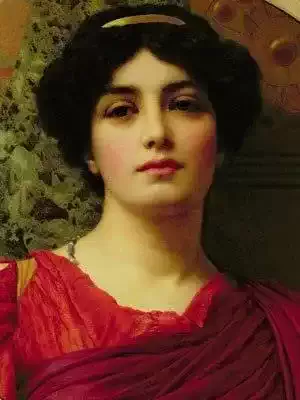
The moon has set, and the Pleiades; it is midnight, and time passes, and I sleep alone.
There is no God and Mary is His Mother.
It is a great advantage for a system of philosophy to be substantially true.
There is nothing impossible, therefore, in the existence of the supernatural; its existence seems to me decidedly probable; there is infinite room for it on every side.
My atheism, like that of Spinoza, is true piety towards the universe and denies only gods fashioned by men in their own image, to be servants of their human interests.
Scepticism is the chastity of the intellect, and it is shameful to surrender it too soon or to the first comer.
I like to walk about amidst the beautiful things that adorn the world; but private wealth I should decline, or any sort of personal possessions, because they would take away my liberty.
Miracles are propitious accidents, the natural causes of which are too complicated to be readily understood.
What religion a man shall have is a historical accident, quite as much as what language he shall speak.
Each religion, so dear to those whose life it sanctifies, and fulfilling so necessary a function in the society that has adopted it, necessarily contradicts every other religion, and probably contradicts itself.
That life is worth living is the most necessary of assumptions, and were it not assumed, the most impossible of conclusions.
Dear World, I am leaving you because I am bored. I feel I have lived long enough. I am leaving you with your worries in this sweet cesspool. Good luck.
And they tell me you are brutal and my reply is: On the faces of women and children I have seen the marks of wanton hunger.
Two years, ten years, and passengers ask the conductor:
Art for art’s sake is an empty phrase. Art for the sake of the true, art for the sake of the good and the beautiful, that is the faith I am searching for.
They tell me you are wicked and I believe them, for I have seen your painted women under the gas lamps luring the farm boys.
Happiness lies in the consciousness we have of it.
Faith is an excitement and an enthusiasm, a state of intellectual magnificence which we must safeguard like a treasure, not squander on our way through life in the small coin of empty words and inexact, pedantic arguments.

[ Of Rome :] A venal city ripe to perish, if a buyer can be found.
Punica fide .

Intellectual freedom is essential to human society—freedom to obtain and distribute information, freedom for open-minded and unfearing debate, and freedom from pressure by officialdom and prejudices.
Freedom of thought is the only guarantee of the feasibility of a scientific democratic approach to politics, economy, and culture.
It is much more difficult to judge oneself than to judge others. If you succeed in judging yourself rightly, then you are indeed a man of true wisdom.
Although human life is priceless, we always act as if something had an even greater price than life. . . . But what is that something?
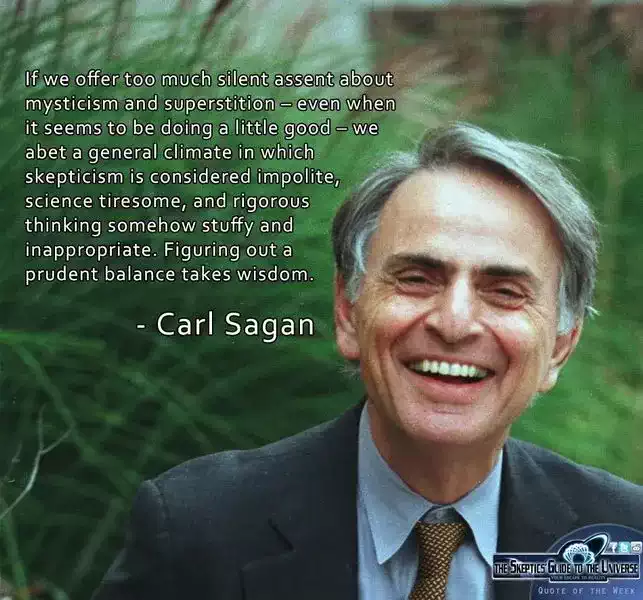
In science it often happens that scientists say,