

Quotes
Quotes to inspire and reflect
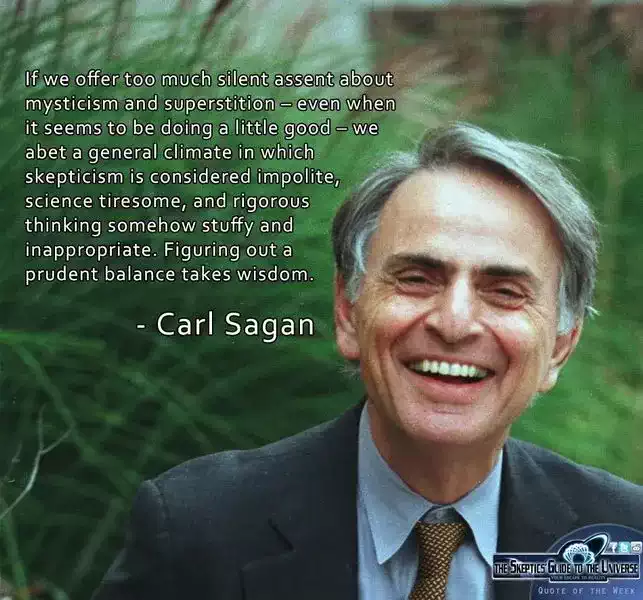
A galaxy is composed of gas and dust and stars—billions upon billions of stars.
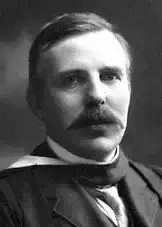
If you can’t explain your physics to a barmaid, it is probably not very good physics.
[Science may be divided into either one of] physics and stamp-collecting.
[ Responding to the statement, “Lucky fellow Rutherford, always on the crest of the wave” :] Well, I made the wave, didn’t I?
From the results so far obtained it is difficult to avoid the conclusion that the long-range atoms arising from collision of *3 particles with nitrogen are not nitrogen atoms but probably atoms of hydrogen, or atoms of mass 2. If this be the case, we must conclude that the nitrogen atom is disintegrated under the intense forces developed in a close collision with a swift *3 particle, and that the hydrogen atom which is liberated formed a constituent part of the nitrogen nucleus.
Radioactivity is shown to be accompanied by chemical changes in which new types of matter are being continually produced. . . . The conclusion is drawn that these chemical changes must be sub-atomic in character.
In order to explain these and other results, it is necessary to assume that the electrified particle passes through an intense electric field within the atom. The scattering of the electrified particles is considered for a type of atom which consists of a central electric charge concentrated at a point and surrounded by a uniform spherical distribution of opposite electricity equal in amount.
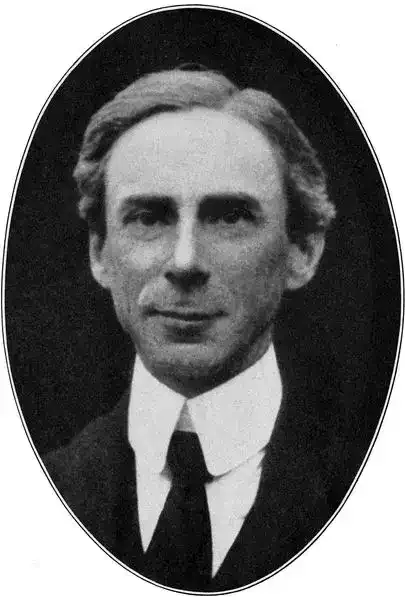
[ Of Aldous Huxley :] You could always tell by his conversation which volume of the Encyclopedia Britannica he’d been reading. One day it would be Alps, Andes, and Apennines, and the next it would be the Himalayas and the Hippocratic Oath.
The opinions that are held with passion are always those for which no good ground exists; indeed the passion is the measure of the holder’s lack of rational conviction. Opinions in politics and religion are almost always held passionately.
Aristotle maintained that women have fewer teeth than men; although he was twice married, it never occurred to him to verify this statement by examining his wives’ mouths.
A dog cannot relate his autobiography; however eloquently he may bark, he cannot tell you that his parents were honest but poor.
One is often told that it is a very wrong thing to attack religion, because religion makes men virtuous. So I am told; I have not noticed it.
The psychology of adultery has been falsified by conventional morals, which assume, in monogamous countries, that attraction to one person cannot coexist with a serious affection for another. Everybody knows that this is untrue.
We are thus led to a somewhat vague distinction between what we may call “hard” data and “soft” data. . . . I mean by “hard” data those which resist the solvent influence of critical reflection, and by “soft” data those which, under the operation of this process, become to our minds more or less doubtful.

There was a rocky valley between Buxton and Bakewell. . . . You enterprised a railroad . . . you blasted its rocks away. . . . And now, every fool in Buxton can be at Bakewell in half-an-hour, and every fool in Bakewell at Buxton.
Taste . . . is the only morality. . . . Tell me what you like, and I’ll tell you what you are.
Great nations write their autobiographies in three manuscripts—the book of their deeds, the book of their words, and the book of their art.
Life being very short, and the quiet hours of it few, we ought to waste none of them in reading valueless books.
Whereas it has long been known and declared that the poor have no right to the property of the rich, I wish it also to be known and declared that the rich have no right to the property of the poor.
Value is the life-giving power of anything; cost, the quantity of labor required to produce it; price, the quantity of labor which its possessor will take in exchange for it.
Let us reform our schools, and we shall find little reform needed in our prisons.
I believe the right question to ask, respecting all ornament, is simply this: Was it done with enjoyment—was the carver happy while he was about it?
He is the greatest artist who has embodied, in the sum of his works, the greatest number of the greatest ideas.
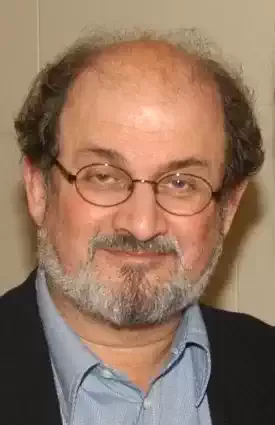
Your blasphemy, Salman, can’t be forgiven. . . . To set your words against the Words of God.
Literature is the one place in any society where, within the secrecy of our own heads, we can hear voices talking about everything in every possible way.
To be born again . . . first you have to die.
A poet’s work. . . . To name the unnamable, to point at frauds, to take sides, start arguments, shape the world, and stop it from going to sleep.

The secret of the Great Stories is that they have no secrets. The Great Stories are the ones you have heard and want to hear again. The ones you can enter anywhere and inhabit comfortably. They don’t deceive you with thrills and trick endings. They don’t surprise you with the unforeseen. They are as familiar as the house you live in. Or the smell of your lover’s skin. You know how they end, yet you listen as though you don’t. In the way that although you know that one day you will die, you live as though you won’t. In the Great Stories you know who lives, who dies, who finds love, who doesn’t. And yet you want to know again. That is their mystery and their magic.
I was born in the city of Bombay . . . once upon a time. No, that won’t do, there’s no getting away from the date: I was born in Doctor Narlikar’s Nursing Home on August 15th, 1947. . . . On the stroke of midnight, as a matter of fact.
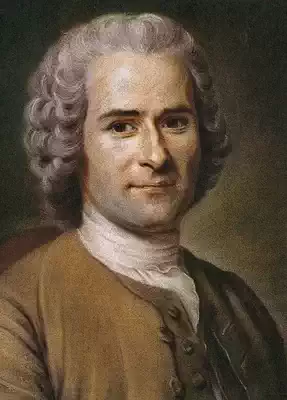
At length I recollected the thoughtless saying of a great princess, who, on being informed that the country people had no bread, replied, “Then let them eat cake.”
I am commencing an undertaking, hitherto without precedent, and which will never find an imitator. I desire to set before my fellows the likeness of a man in all the truth of nature, and that man myself.
If we take the term in the strict sense, there never has been a real democracy, and there never will be. It is against the natural order for the many to govern and the few to be governed. It is unimaginable that the people should remain continually assembled to devote their time to public affairs, and it is clear that they cannot set up commissions for that purpose without the form of administration being changed.
Everything is good as it leaves the hands of the Author of things; everything degenerates in the hands of man. He forces one soil to nourish the products of another, one tree to bear the fruit of another. He mixes and confuses the climates, the elements, the seasons. He mutilates his dog, his horse, his slave. He turns everything upside down; he disfigures everything; he loves deformity, monsters. He wants nothing as nature made it, not even man; for him, man must be trained like a school horse; man must be fashioned in keeping with his fancy like a tree in his garden.

[ Contrasting writers in the United States and in Eastern Europe :] In my situation, everything goes and nothing matters; in their situation, nothing goes and everything matters.
L’homme est né libre, et partout il est dans les fers .
All that we don’t know is astonishing. Even more astonishing is what passes for knowing.
Old age isn’t a battle; old age is a massacre.
I write fiction and I’m told it’s autobiography, I write autobiography and I’m told it’s fiction, so since I’m so dim and they’re so smart, let them decide what it is or it isn’t.
In Israel it’s enough to live—you don’t have to do anything else and you go to bed exhausted. Have you ever noticed that Jews shout? Even one ear is more than you need.
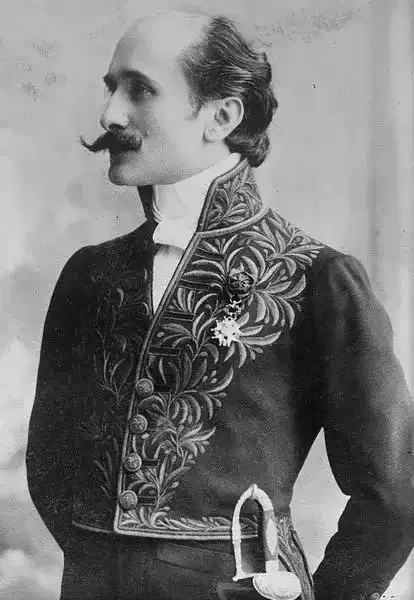
There is one crown I bear away with me,
Now vee may perhaps to begin. Yes?
The Cadets of Gascoyne.

I could carve out of a banana a Justice with more backbone than that.
I took the canal zone and let Congress debate, and while the debate goes on the canal does also.
I have only a second rate brain but I think I have a capacity for action.
[ On the presidency :] I have got such a bully pulpit!
The various admirable movements in which I have been engaged have always developed among their members a large lunatic fringe.
The man who wrongly holds that every human right is secondary to his profit must now give way to the advocate of human welfare, who rightly maintains that every man holds his property subject to the general right of the community to regulate its use to whatever degree the public welfare may require it.